



Tokyo cannot shift its moral burden onto others









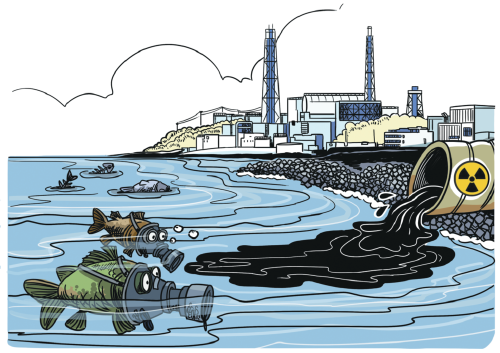
The anxiety of Japan's top diplomat in Hong Kong over the difficulties most Japanese restaurants face in the city, due to its ban on Japanese seafood imports, is fully understandable. But it is highly improper for Japanese Consul General in Hong Kong Kenichi Okada to urge the government of the Hong Kong Special Administrative Region to lift the ban to show "a stark contrast between the mainland and Hong Kong".
In saying that Hong Kong can make decisions separately from the Chinese mainland under the "one country, two systems" framework, Okada is doing nothing but trying to take advantage of the ban to smear the central authorities.
The major reasons Okada gave for the SAR government lifting the ban imposed on imports of Japanese seafood, as a result of Tokyo going ahead with the discharging of nuclear-contaminated water from the Fukushima nuclear power plant since August last year, included the G7 having called for a lifting of the ban and the Japanese side continuously keeping the SAR government updated with the data related to environmental impacts of its toxic water discharge.
Neither of the two reasons holds water. The whole world knows that the G7's stance on the issue is dictated by Washington's pro-Japan diplomacy in exchange for the latter's support for the United States' "value diplomacy" in the Asia-Pacific.
While the environmental data provided by Japan itself lacks objectivity and transparency. No responsible government can afford to bet people's health on the impartiality of that data.
Despite the wide concerns of the world, especially those of its neighbors, Japan has chosen the cheapest way of disposing of the nuclear-contaminated water, a process that will last for at least three decades. Instead of working closely with its neighbors to address their concerns and look for the safest way to deal with the water, Japan feels no qualms about playing a thief-crying-stop-thief trick.
Okada should be reminded that the difficulties many Japanese restaurants face in Hong Kong and elsewhere in the world are by no means caused by local government's prudent way of dealing with seafood imports from Japan but the Japanese government's irresponsible way of disposing of the nuclear-contaminated water. The more moral burden that Japanese diplomats try to put on the shoulders of others, the more they are showing that the Japanese government is indebted to its own people and the rest of the world.





