


1,800-year-old documents provide intriguing insight into governance










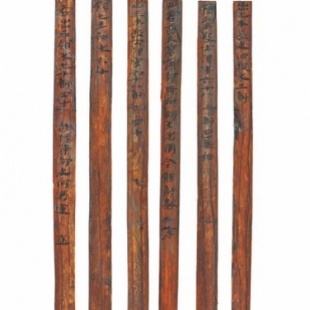
For example, some slips reveal how townships and villages were designated and governed during the Wu era. Other unearthed pieces showed contracts for paying tax and recordings of the operation of tin mines, which reflected in detail the economic activities of the city.
Indeed, researchers, through this information, were able to locate a tin mine and smelting site about 10 kilometers away from the city ruins. Chen considers the mutually matched evidence to provide key references for further study of nonferrous metal utilization in the Hunan region.
The province is a national hub for the industry even today.
Trivial details about office life can also be illuminating. Slips were used by officials to practice their writing while others documented where they stayed overnight during business trips.
"Some slips are like today's business cards," Chen adds. "People wrote down their names, honorary titles, and native places on the wood to socialize. They often wrote their own names in an artistic way. So these slips were not only for practical use, but also as a way to appreciate each other's calligraphy."
Qi Dongfang, an archaeology professor at Peking University, says that "in history books, we see grand pictures of national affairs and key events. Thanks to these slips, we can vividly understand history from the mundane details of people's everyday life, which is more touching."
Other than the highlighted documentations, archaeologists also unearthed urban roads, moats and other constructions, gradually portraying a comprehensive portrait of a key city on the ancient route linking today's Hunan and nearby Guangdong provinces.
"The site is a microcosm of how the central dynasty governed and developed the regions along the Nanling Mountains in South China," Chen says. "It's physical evidence to mark how the unity of our country emerged from diversity."