



Greater cohesion









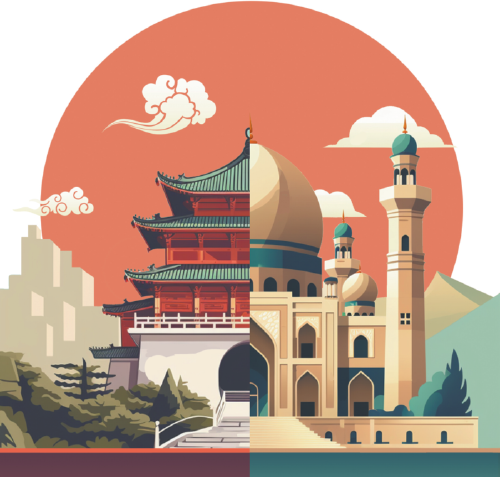
Dialogue and understanding among cultures and beliefs are a prerequisite for global peace and development
Throughout history, civilizations around the world have actively engaged with each other, fostering a rich cross-pollination of ideas and ideologies that have propelled societies toward progress and enlightenment. This exchange of knowledge and ideals has served as a catalyst for innovation and advancement, shaping the cultural and intellectual landscape of humanity.
In the context of Malaysia, a significant milestone in this intercultural exchange occurred in the 15th century with Chinese mariner Zheng He's expedition to Melaka. This event marked the beginning of a profound engagement between the Confucian and Islamic worlds. The convergence of these two influential philosophical and religious traditions laid the groundwork for a unique blend of ideas and practices, fostering a harmonious coexistence that continues to shape Malaysia's cultural tapestry.
Fast forward to the modern era, in 1995, the University of Malaya in Kuala Lumpur hosted a Confucian-Islamic dialogue of the modern era. This event provided a platform for meaningful discussions and intellectual exchange among scholars, thinkers and practitioners. The dialogue served as a testament to Malaysia's commitment to fostering harmony and mutual respect among diverse communities.
Such efforts to facilitate dialogue and understanding between different cultures and belief systems are paramount. By engaging in meaningful conversations and embracing diverse perspectives, societies can bridge gaps in understanding and build trust. The mutual understanding cultivated through such interactions not only enriches individual lives but also contributes significantly to the broader global community.
Regrettably, history also bears witness to numerous episodes where civilizations were divided and conflicts arose. In 1993, Samuel Huntington published The Clash of Civilization, emphasizing the potential for conflict rather than the possibilities of coexistence between the world's diverse civilizations. This perspective, unfortunately, has cast a shadow over the 21st century, where the global landscape has been marred by instances of discord and tension.
The Sept 11 terrorist attacks on the United States in 2001 stand out as a poignant example of a clash between civilizations. The aftermath saw the Western world pitted against the Islamic world, deepening existing rifts and sowing seeds of mistrust between these two cultural spheres. Subsequently, as China ascended on the global stage, tensions have shifted to the Confucian East. Today, the ongoing Israel-Palestine conflict continues to escalate, further straining relations between civilizations and threatening to escalate into widespread hostilities.
This prevailing atmosphere of fragmentation and hostility underscores the urgent need for dialogue between civilizations. Now, more than ever, it is imperative for nations and cultures to come together in meaningful conversations, fostering understanding and empathy amid the discord. By engaging in open dialogue, societies can bridge the gaps that have led to divisions and conflict, and find common ground and shared values that can pave the way for peaceful coexistence.
In 2013, Chinese President Xi Jinping introduced the concept of a community with a shared future for mankind. This idea aimed to foster a collective destiny for humanity, emphasizing the importance of collaboration, mutual understanding and harmony among diverse civilizations.
This concept laid the foundation for President Xi's latest proposal, the Global Civilization Initiative, a forward-looking endeavor designed to promote cooperation and trust among nations on a global scale.
In March this year, when President Xi and Malaysian Prime Minister Anwar Ibrahim met in Beijing, both leaders agreed to cooperate on the Global Civilization Initiative to promote Asian civilizations. Their shared commitment to this initiative reflects a mutual understanding of its transformative power in strengthening international relations and fostering the peaceful coexistence of nations.
It is worth noting that China and Malaysia have long established robust people-to-people bonds. Recent developments, exemplified by projects such as the Confucius Institutes and the presence of Xiamen University campus in Malaysia, have further promoted cultural exchanges, fostering education cooperation, and enhancing mutual understanding between the two nations.
Building upon this strong foundation, and by actively promoting efforts such as the continuation of the Confucian-Islamic dialogue and ongoing research into the legacy of Zheng He, China and Malaysia have demonstrated their shared aspiration not only to strengthen the trust between the two countries but also cultivate greater cohesion within the wider Confucian-Islamic world.
The bonds among civilizations stand as a cornerstone for global peace and harmony. Unfortunately, as the 21st century undergoes fundamental geopolitical reconfiguration, trust among civilizations is eroding. This underscores the urgency for intensified exchanges and mutual learning between civilizations. Now, more than ever, deepening understanding and cooperation among diverse cultures are imperative. China and Malaysia have the potential to pave the way, serving as a beacon of inspiration in fostering a wider bridge of understanding between the two civilizations.
The author is the president of the Malaysia-China Friendship Association and former Malaysian ambassador to China. The author contributed this article to China Watch, a think tank powered by China Daily. The views do not necessarily reflect those of China Daily.
Contact the editor at editor@chinawatch.cn.





