



Upgraded bilateral FTA aimed at solidifying market accessibility









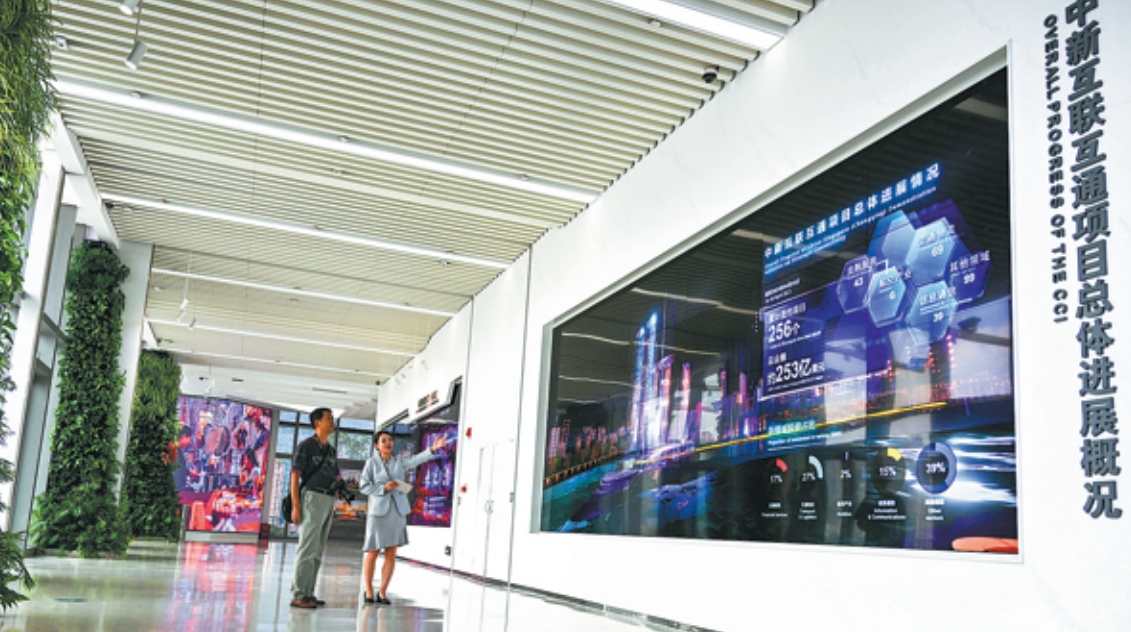
September. Wang Quanchao / Xinhua
Enhanced bilateral trade and economic relations between China and Singapore will prove mutually advantageous by fostering stronger business connections among signatory countries of the Regional Comprehensive Economic Partnership pact, experts and corporate executives predicted.
With a strong desire to nurture additional sources of growth, China and Singapore signed a memorandum of understanding on April 1 and announced the substantive conclusion of subsequent negotiations on an upgraded bilateral free trade agreement.
Both sides will continue the follow-up works of legal review and translation of the texts, and fulfill their respective domestic procedures to sign the agreement as soon as possible, according to information released by China's Ministry of Commerce.
The upgraded China-Singapore free trade agreement, which would boost market access for businesses in both countries, includes a new stand-alone chapter on telecommunications and incorporates high-level economic and trade rules on national treatment, market access, transparency and the digital economy, among others.
Signed by China's Minister of Commerce Wang Wentao and Singapore's Minister for Trade and Industry Gan Kim Yong, the memorandum affirmed there will be no rollback of opening-up measures in the service trade and investment sectors.
Pan Yuanyuan, an associate researcher at the Chinese Academy of Social Sciences' Institute of World Economics and Politics in Beijing, said the agreement represents a significant and practical step taken by China to harmonize with high-standard international economic and trade regulations while at the same time extending its openness to the global community.
Due to its limited landmass and natural resources, Singapore excels in service-oriented sectors and related industries, encompassing logistics, tourism, aviation, retail, shipping, healthcare, education, finance and the advancement of smart cities, said Zhang Jianping, head of the Center for Regional Economic Cooperation at the Beijing-based Chinese Academy of International Trade and Economic Cooperation.
The follow-up initiatives and growing China-Singapore trade volume will give full play to the two countries' respective strengths and help them respond tangibly to the growth of the RCEP and the Belt and Road Initiative, said Zhang.
"Singapore has mature business experience in Southeast Asian and South Asian countries," he added. "Joint development of Chinese and Singaporean companies can be a win-win situation in developing third-party markets, using China's capital and technology and Singapore's operational experience and business connections."
Driven by the fast growth of the RCEP agreement, China and Singapore saw their trade value grow 4.4 percent year-on-year to $71.9 billion in the first eight months of 2023, data from China's General Administration of Customs showed.
China exports mainly construction materials, machinery, agricultural products, computers, raw materials, electronics, furniture, toys, textiles, garments and household appliances to Singapore. Supported by a strong transit trade development model, Singapore mainly ships electromechanical equipment, plastic, rubber, chemical and mineral products to China.
In April 2022, Singapore surpassed Japan for the first time to become China's largest cumulative source of foreign investment. As of March 2023, it had accumulated $134.83 billion worth of investment in China, while China's cumulative investment in Singapore stood at $81.24 billion, said the Ministry of Foreign Affairs.
Meanwhile, SP Group, the Singaporean national power grid operator and a wholly owned subsidiary of Temasek Holdings, Singapore's sovereign wealth fund, plans to increase investment in China's clean energy sector.
Stanley Huang, CEO of SP Group, said the company, which owns and operates Singapore's electricity and gas transmission and distribution network, plans to own and operate a portfolio of 7-gigawatt solar assets and 240,000 refrigeration tons of district cooling capacity in China.










