BRI shares many similarities with UN SDGs









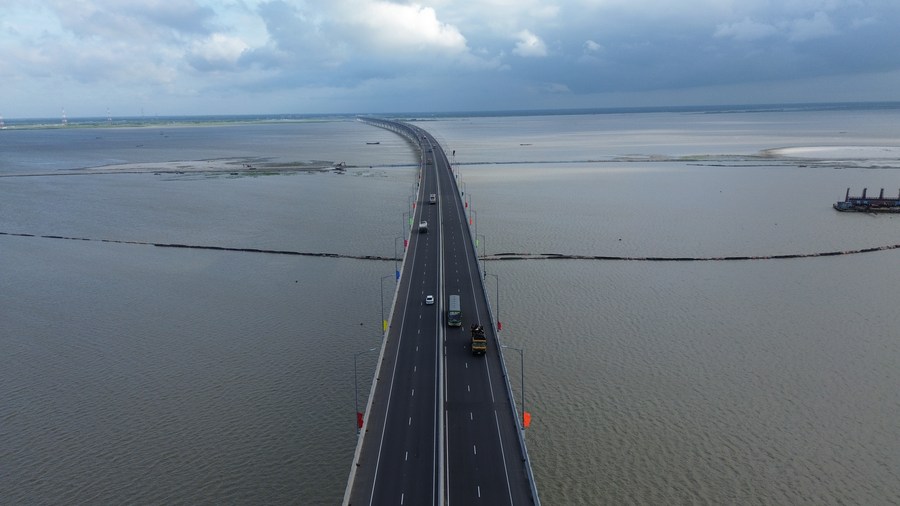
Ten years ago, China put forward the Belt and Road Initiative, a global development drive to improve regional integration, increase trade and drive economic progress in participating countries. As of June 2023, China had signed BRI cooperation agreements with more than 150 countries.
What China has continued to facilitate under the BRI -- policy coordination, infrastructure connectivity, unimpeded trade, financial integration, and closer people-to-people ties -- shares many similarities with the 17 Sustainable Development Goals of the United Nations 2030 Agenda.
There is a clear match between the BRI's focus on infrastructure and industrial investment and the mandate of my organization, the United Nations Industrial Development Organization, the UN specialized agency to promote sustainable industrial development.
Looking at the world around us, we must talk about crises and challenges.
A world where a billion people go to bed hungry every day.
A world where precious resources are getting scarcer -- just think about water, the essence of life. Demand for water has doubled since 1960 and, for half the people on this planet, demand is now starting to exceed what's available.
A world where this year's "Earth Overshoot Day" was Aug 2, meaning that if all people lived and consumed like those in much of the United States or Western Europe, we would need three Earths.
A world where the impact of climate change is hitting people in the Global South the hardest.
We must recognize that we share one world and bear responsibility for global developments.
Our world is interdependent: everything is connected to everything else. We are one world, one planet, with one future.
We must revitalize our commitment to the 2030 Agenda for Sustainable Development, the United Nation's plan of action focused on the needs of the poorest and most vulnerable.
We need the participation of all countries, all stakeholders and all people. We need a new spirit of strengthened global solidarity.
UNIDO has a long history of cooperation with China, ever since the People's Republic of China was recognized as a member. Over the past five decades or so, UNIDO, in cooperation with the government of China, has implemented hundreds of technical cooperation projects, helping thousands of Chinese technicians to upgrade their skills and hundreds of technical centers and institutions to enhance their capacity.
UNIDO is glad to have played a role in the country's structural transformation and industrial development that has lifted hundreds of millions of Chinese out of poverty.
China and UNIDO have also worked together to foster industrial development in other developing countries. As the largest developing country, China is a strong partner of the developing world, and the BRI is extending this partnership.
UNIDO is the bridge for the transfer of technology, knowledge and investments. I want UNIDO to actively engage with the BRI to support the positive effects in developing countries, namely reducing poverty and creating jobs while ensuring the sustainability of investment projects.
At UNIDO, I have created a new unit for South-South and Triangular Industrial Cooperation. We are strengthening cooperation with the Asian Infrastructure Investment Bank and with the New Development Bank.
Together, we can build synergies to build up agribusiness to end hunger, share new technology for more effective climate action, and create fair and sustainable supply chains.
And together we can help the BRI fulfill its potential to act as an accelerator for the achievement of the SDGs and close the financing gap to boost investment in clean energy, industry, infrastructure and climate resilience.
Editor's note: Gerd Mueller is director general of the United Nations Industrial Development Organization.
The views expressed in this article are those of the author and do not necessarily reflect the positions of Xinhua News Agency.