


Archaeological efforts deepen understanding of early-stage modern humans









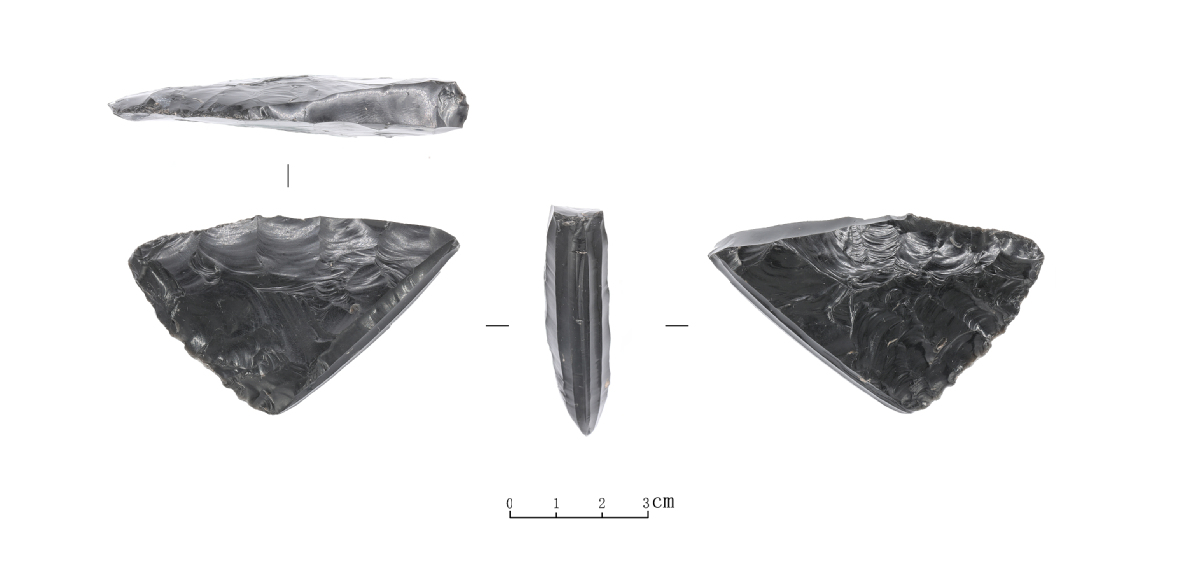
New archaeological efforts have revealed development of lithic tools in the Changbai Mountain area in Jilin province, enriching understanding of the evolution, spread and lifestyle of early-stage modern humans in Northeast Asia, the National Cultural Heritage Administration said at a news conference in Beijing on Sept 28.
Nearly 20,000 stone tools and animal fossils have been discovered from the three stages of cultural remains at the Dadong site in Helong city, Jilin province. The site dates from roughly 50,000 years ago to around 15,000 years ago, belonging to the late Paleolithic period.
It covers about 4 square kilometers, with its core area exceeding 500,000 square meters. Wang Youping, an archaeology professor at Peking University, highlighted the site’s unusual large size for the Paleolithic period.
“This is the largest open-air site of the late Paleolithic period with clearest cultural sequence in Northeast China as of now,” said Xu Ting, a researcher at Liaoning University who is responsible for the excavation at the Dadong site.
The site was initially discovered in 2007, with the first excavation taking place in 2010. Since 2021, a new round of active archaeological study has been carried out by Jilin Institute of Cultural Relics and Archaeology and Liaoning University in order to gain a deeper understanding of local cultural sequence, and migration and communication patterns of people in the Paleolithic era.
Simple lithic cores and flakes and a great number of animal fossils were found from the first stage of cultural remains, dating back to between 50,000 to 30,000 years ago. The second stage, dating from 28,000 to 24,000 years ago, revealed the presence of blade and microblade tools. The third stage, spanning 17,000 to 15,000 years ago, also yielded microblade tools, according to Xu.
“Discovery of three types of archaeological cultures is a key finding at this site,” said Wang.