



Cooperation remains mainstream of China-EU ties









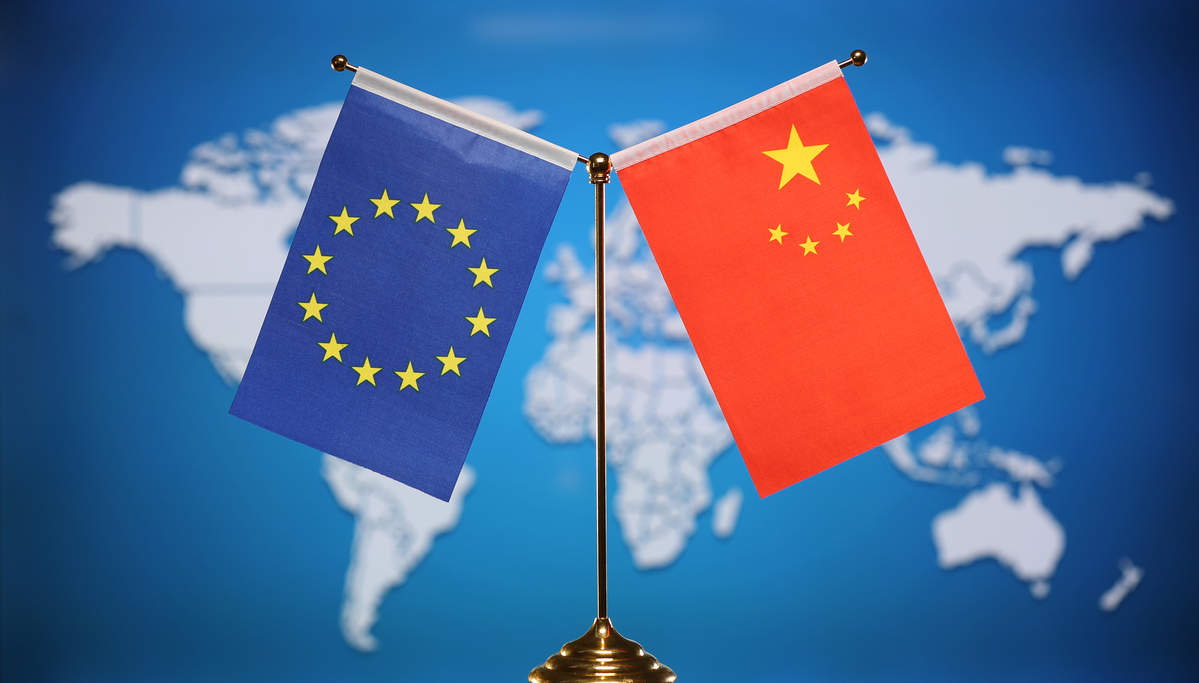
For the first time since the onset of the COVID-19 pandemic, Chinese and European Union (EU) officials convened for a high-level economic and trade dialogue here Monday, reaching a host of "win-win results" through "candid and pragmatic" talks.
It shed light on how the world's second-largest economy and the European trading bloc are working to mend rifts and enhance cooperation amid a sluggish global economic recovery.
In fact, China and Europe have long forged a strong economic interdependence. Over the past 20 years, the volume of China-EU trade has increased by almost nine times. EU investment in China has nearly tripled, and China's investment in the EU has grown from zero to today's 104.4 billion U.S. dollars.
Bucking the trend of a slow global recovery, bilateral trade between China and the EU reached a record high of 847.3 billion dollars in 2022, representing a year-on-year growth of 2.4 percent. This translates to over 1.6 million dollars in trade occurring between the two sides per minute on average.
Describing Chinese and European economies as "so interdependent," Bruno Guigue, a French international affairs expert, warned "Either we succeed together or we fail together." In his view, the two share a common future of mutually beneficial cooperation in areas where the expertise of one can be used by the other.
Down the road, the "mutually beneficial cooperation" is poised to yield returns, especially as the European economy finds itself increasingly dragged by high inflation and weak demand. The European Commission recently lowered its economic growth forecast for the EU in 2023 from 1 percent to 0.8 percent, and in 2024, from 1.7 percent to 1.4 percent.
That's where the Chinese market comes into play as a slew of European companies seek to expand their presence in the world's leading market.
In April, Volkswagen announced a 1-billion-euro (about 1.05 billion dollars) investment plan in China for a R&D center of electric Intelligent Connected Vehicles. Spanish grinding machine manufacturer Danobat Group established its sixth-largest experience center in Shanghai this year, accelerating its localization in China. To serve the Chinese market, Bosch Group, a German auto supplier, also made substantial investments in building an EV and autonomous driving research base in the Chinese city of Suzhou.
Clearly, in order to explore new markets, a growing number of EU companies are "voting with their feet." As China opens up even wider with an improving business environment, more will jump on the bandwagon. A recent poll, commissioned by the European Council on Foreign Relations, revealed the view that China is a "necessary partner" for Europe prevails in almost every surveyed country.
No need to elude the challenges ahead. Two weeks ago, the EU announced an anti-subsidy investigation into Chinese electric vehicles imports, which is of a protectionist nature.
Such actions reflect more on the lagging EV sector in Europe rather than that of China. And European observers have already voiced their concern.
Regarding the investigation, Ferdinand Dudenhoeffer, director of CAR Center Automotive Research Duisburg in Germany, stated, "There is a very great risk ... We need cooperation with China, not a trade war. That would be a bad scenario for Germany, since Germany would lose a great deal."
Instead of systemically reducing so-called "dependencies" on China, the EU should walk the talk as it claimed that it is not intent on "de-risking." So long as the two sides continue to manage their differences through dialogue and consultation, a fair, non-discriminatory, and predictable market environment can be maintained.
Following EU Trade Commissioner Valdis Dombrovskis, who just co-chaired with Chinese officials the 10th High-level Economic and Trade Dialogue on Monday, the bloc's Energy Commissioner Kadri Simson and top diplomat Josep Borrell are reported to visit China in the near future.
The increasing exchanges are a potent testament to the broad common interests between the two sides and the fact that cooperation remains the mainstream of bilateral ties. The bigger the pie of China-Europe cooperation, the more vibrant their businesses and people will become, and the faster the world economy will recover.





