



Profound lessons to be learned from modern-day lunar missions









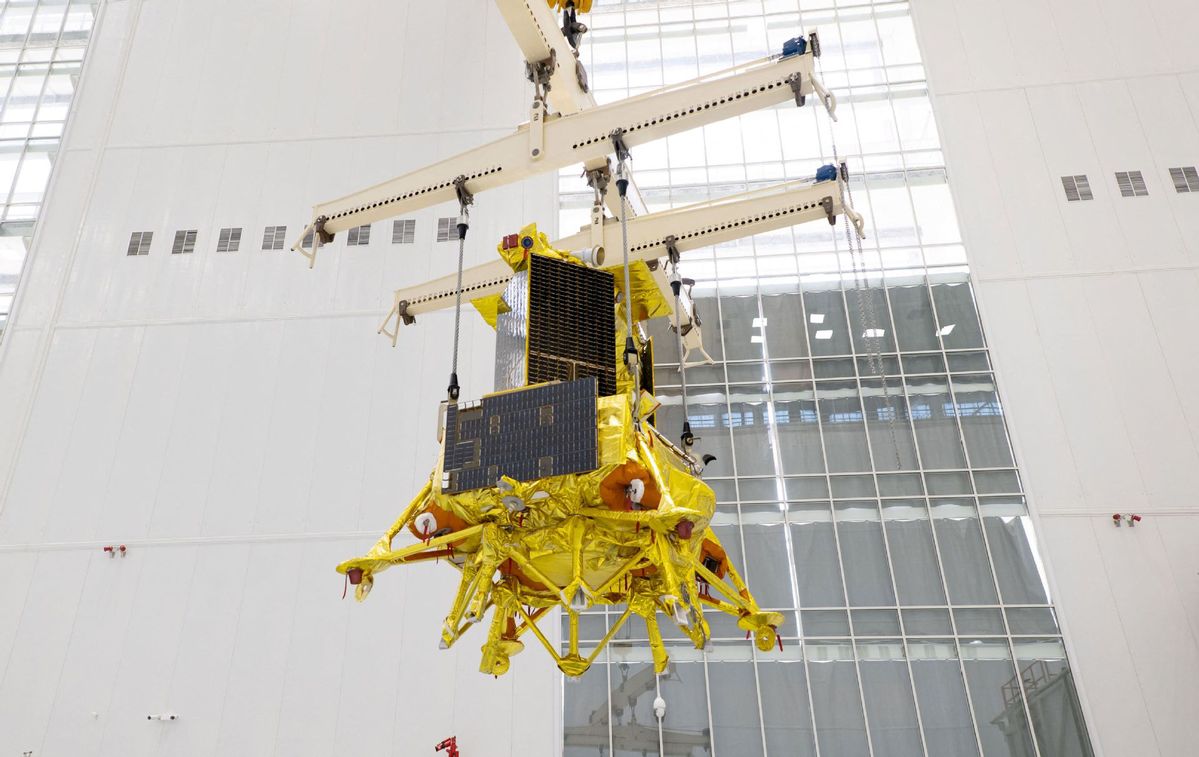
Russia's State Space Corporation Roscosmos announced on Sunday that its Luna-25 module had crashed onto the moon surface after it went into an unplanned orbit.
The Russian lunar detector was sent into lunar orbit on August 11 and had hoped to beat India's Moon Mission-3 to become the first to land on the south pole region of the moon. The same day, the Indian Space Research Organization announced that its Moon Mission-3 will land on the lunar surface on August 23. The lunar mission was launched on July 14 and if successful, India will become the fourth country to soft-land on the surface of the moon, after the United States, the Soviet Union and China. Earlier, the US National Aeronautics and Space Administration publicly said that if the development of key systems cannot keep up, the Artemis 3 manned lunar landing program may eventually drop the plan to land astronauts on the moon.
The erstwhile Soviet Union was once the world's leading space power, triggering a race to the moon with the US. After nearly half a century, the Russians restarted the lunar landing project, using the same earlier Soviet-era code name of Luna-25. Russia would have become the first country to soft land on the moon's south pole, but the Roscosmos statement brings that ambition to a halt for now.
The renewed race to the moon attaches greater value to investment efficiency and returns, and almost all projects are aimed at lunar resources and the value of the moon as a transit station for space activities. Russia chose to land on the south pole of the moon because it hopes to find solid water on the side of the moon where the sun never shines, while the US' Artemis project adopts a commercial bidding model. Commercial companies are even directly involved in Japan and Israel with a lot of foreign ready-made technologies used, and India tries to use mature technology so as to reduce costs and development risks and difficulties.
However, unlike in the Cold Warera, the modern lunar mission race seems not to have sailed smoothly, even encountering a "hard landing" because of political factors. Lunar exploration is a science, in which nonscientific factors only make things worse. This is probably the most profound lesson brought to us by the renewed lunar contest between major powers.





