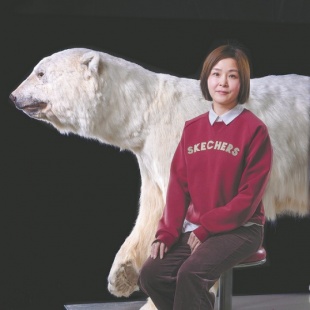



Bodies of work










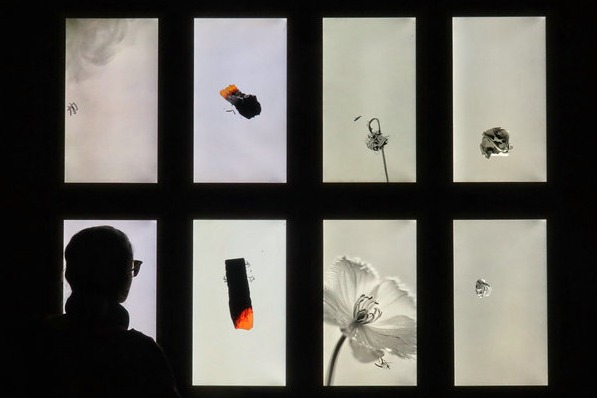
"Life undergoes a new evolution within time and space, and those dissolved 'paintings' are no longer mere reflections and records; they are reborn through the dissolution of time and technology," she explains.
After graduating from college, where she studied photography, in 2001 Zhao landed a job teaching photography at the Dalian Medical University's Art School.
At first, her work didn't have anything to do with medical science. That was until she saw her colleagues from other departments taking pictures of blood vessels of the upper limbs in 2003.
"It looked mysterious and a bit like red coral, and I got curious," she recalls.
Zhao started to collaborate with her anatomist co-workers when the university sought her professional help in photographing a specimen of brain nerves.
Her initial impression toward such subjects was mostly dictated by her reaction toward their special odor.
"Tears would start running uncontrollably because the smell of formaldehyde was so overpowering," she says, adding that the odor also stuck to her clothes.
As she made inroads into specimen photography, she came to appreciate the magical and beautiful internal workings of the animals and developed her way of presenting them to the audience for scientific purposes.
Works intended to assist medical research have highly demanding requirements for shooting positions, lighting ratio and color control, she says.
"Scientific photography involves preparing equipment and lighting based on the intended use. There can be significant variations in the shooting methods and techniques," Zhao explains.
For example, between four and 14 flashlights may be used, depending on the size of the subject, the light meter readings and still life platform, and a clean background has to be in place.
"An attempt is made to present anatomical specimens in an appropriately 'beautified' manner without deviating from medical presentation," Zhao says.
"The goal is to enhance the specimen's visibility and reduce the distance between the public and the specimens," she adds.
Some of her photos have made their way into domestic textbooks and science exhibitions at home and abroad.