Agricultural heritage systems mushroom in East Asia









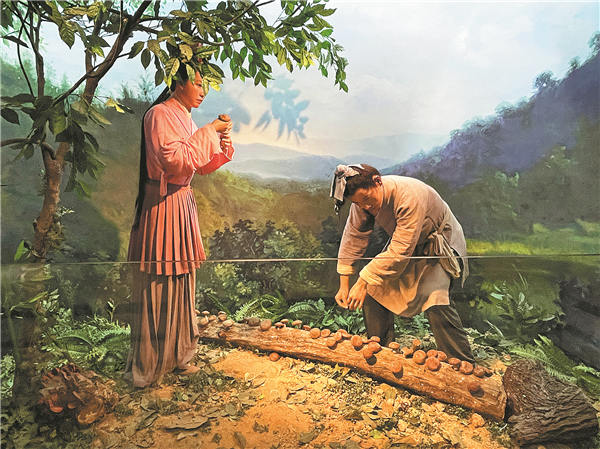
Wu Xinglong, 67, skillfully wields an axe to chop small incisions into a long log, in a forest in Qingyuan county, Lishui city, Zhejiang province.
He is practicing an old technique to artificially cultivate xianggu (an edible fungus), which is also called shiitake — these small cuts provide the best environment for spores to thrive and grow.
Over 800 years ago, Wu Sangong, a local resident, invented the traditional method, and the cultivation of shiitake in Qingyuan has flourished ever since, becoming the main livelihood of local farmers.
"The shiitake possesses good quality, boasting a bright color, substantial size and abundant nutritional value," Wu says.
In 2002, the Food and Agriculture Organization of the United Nations launched its Globally Important Agricultural Heritage Systems list. Last year, Qingyuan Forest-Mushroom Co-culture System, which is based on mushroom cultivation through rational use of forest resources, was designated as a GIAHS site.
So far, there are 78 designated GIAHS sites in 24 countries, including 19 in China. Those in China, Japan and South Korea account for over half of the global total.
In 2013, the East Asia Research Association for Agricultural Heritage Systems, which aims to boost research cooperation on agricultural heritage systems among China, Japan and South Korea, was established.
The 7th ERAHS Conference, which was supposed to be held in 2020 but was postponed due to the COVID-19 pandemic, was recently held in Qingyuan county, drawing about 160 scholars and experts from China, Japan and South Korea.
"The conference has witnessed a surge in enthusiastic participation, highlighting the growing interest and dedication toward agricultural heritage. It has promoted protection of agricultural heritage and enhanced awareness among those who were involved in its management and the local community," says Min Qingwen, executive chairman of ERAHS.
"The research results and protection experience of the three countries can be used by others for reference in agricultural heritage."
Kazuhiko Takeuchi, a consultant to ERAHS, recalls that the formation of ERAHS stems from the shared passion among agricultural heritage experts in these three countries and their recognition of the numerous cultural similarities they share.
"Over the past decade, experts from the three countries have forged strong relationships and engaged in cooperative endeavors, resulting in significant progress for the industry as a whole," he says.