Belt, Road a boon for global cooperation









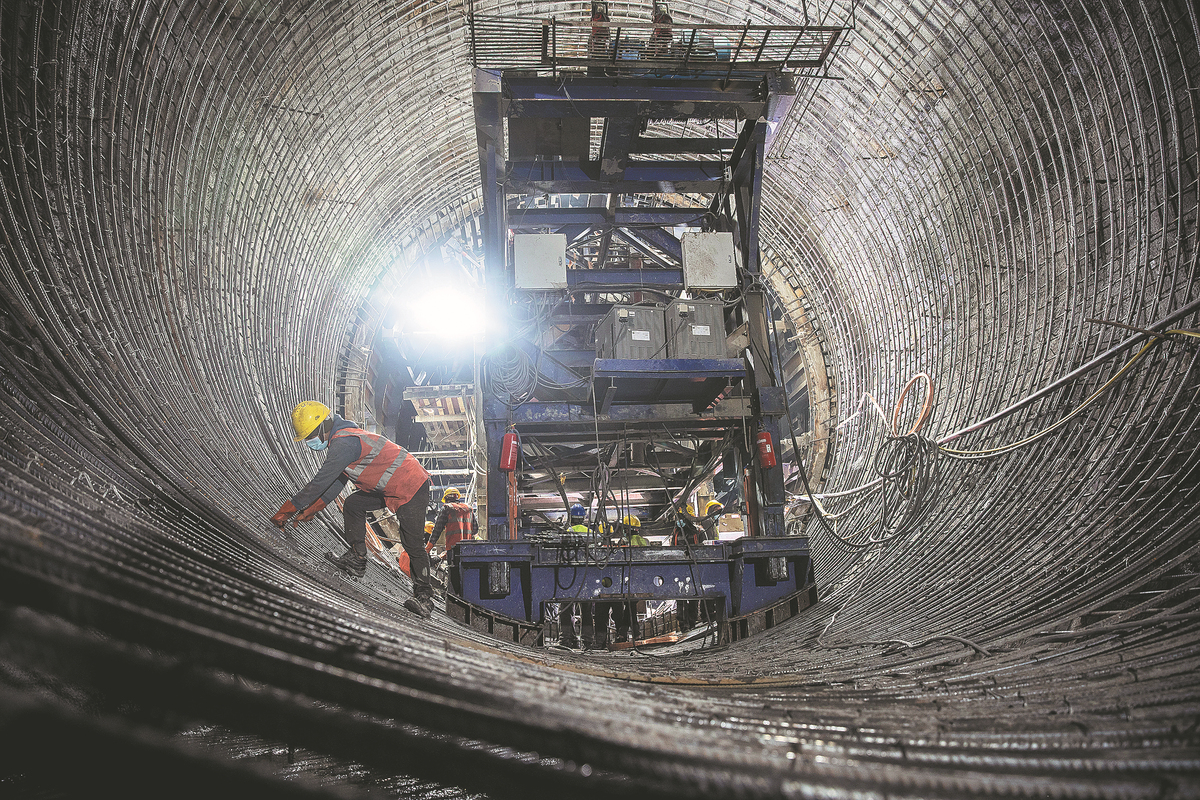
In wake of pandemic slowdowns, decade-old initiative plays major role in China's partnerships with other nations, regions
After setting up a delivery services venture between China and Southeast Asia in 2019, Best Inc of Hangzhou, Zhejiang province, said it had handled only a limited number of online orders placed by Southeast Asian consumers through Chinese e-commerce platforms.
Best had hoped to expand its presence in Belt and Road Initiative-related markets. But at the time, they were new to the market and not yet widely known.
Things, however, have changed significantly. The company, which has continued to add to its infrastructure in the region, said it has experienced significant growth in recent years.
Driven by the increasing demand, Best now ships dozens of standard twenty-foot equivalent units of containers from Chinese ports to Southeast Asian countries each month. The company said its business in that category witnessed a 45 percent year-on-year surge in the first quarter of 2023.
"The tangible expansion of the BRI and its various forms of cooperation have greatly contributed to the remarkable growth of Best's sales. Among the notable impacts, our warehouses in Malaysia have experienced a significant upsurge in transportation services for large and heavy cross-border goods from China in recent months," said Zhu Jiashu, deputy general manager of Best Global, the group's international arm.
Best to date has established service branches in countries and regions such as Japan, Australia and Southeast Asia, and built a logistics network in five countries, including Vietnam and Thailand in the Asia-Pacific region.
To facilitate inclusive development through cooperative projects around the world, China proposed the Silk Road Economic Belt and the 21st Century Maritime Silk Road in 2013. Known collectively as the BRI, the initiative has grown into one of the most promising platforms for international cooperation, forging a new pathway toward inclusive globalization that delivers shared benefits, officials said.
Market watchers said a series of big-ticket projects like high-speed railway projects in Indonesia, port expansion in Djibouti and a nuclear power facility in the United Kingdom are all shining examples of achievements under the initiative.
Apart from developing game-changing infrastructure projects such as railroads, hospitals, power plants, as well as bulk and container ports in countries in need, the BRI has created growth in areas such as trade in services, new foreign trade formats and digital and green development internationally, said Gao Lingyun, director of the international investment division at the Institute of World Economics and Politics, which is part of the Chinese Academy of Social Sciences.
With steady progress in advancing high-quality Belt and Road cooperation, the initiative is expected to continue to make emerging economies stronger and shorten the growth gap between landlocked and coastal areas in many parts of the world, Gao said.
State-owned Power Construction Corp of China, or PowerChina, announced in early May that it had signed an engineering, procurement and construction contract to build the Kahama photovoltaic power project, the first of its kind in Tanzania. Such contracts are common in the construction industry, officials said.
Designed with a total installed capacity of 10.33 megawatts, the project will include surveys and design, equipment purchases and construction and installation of the photovoltaic zone and a 3-kilometer power export line.
Once operational, the project will improve Tanzania's power source structure, promote the development of the country's clean energy strategy and boost its economic development, said Chen Guanfu, vice-president of PowerChina's overseas business unit.
The BRI has put the idea of globalization into practice, officials said. By connecting infrastructure, it helps to boost trade, attract investment and foster people-to-people exchanges, said Zhang Jianping, deputy director of the academic committee of the Beijing-based Chinese Academy of International Trade and Economic Cooperation under the Ministry of Commerce.
In terms of advancing international production capacity cooperation and modern infrastructure projects, Chinese companies have also been working with foreign partners such as Germany's Siemens AG, France's Schneider Electric SE and Switzerland's ABB Group to develop infrastructure in economies covered by the initiative, he said.