



EV battery recycling a growing niche









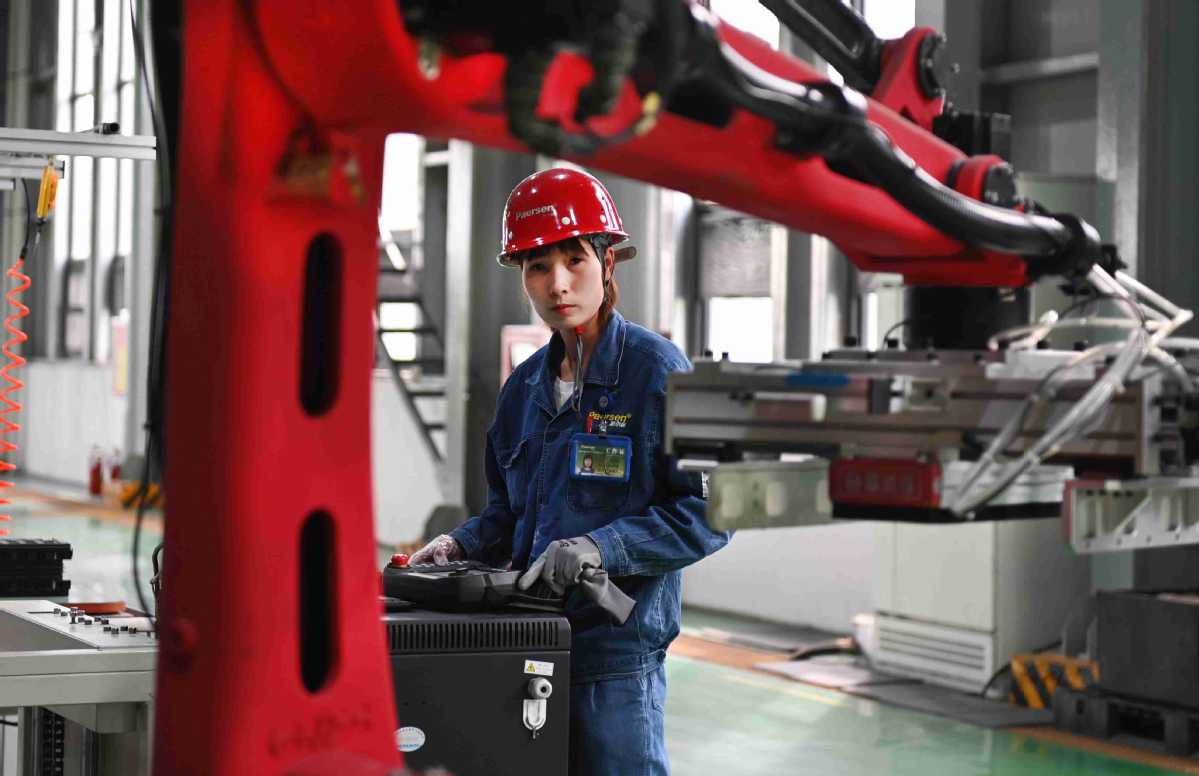
Policy support for sector to create new growth point for enterprises, experts say
Liu Yun, who purchased an electric vehicle in 2017, is baffled by current battery recycling procedures as the batteries experience shortened endurance with years of use. The cost of replacing a new battery can easily match that of a cheap car.
With China being a major market for EVs, many owners like Liu are facing similar issues. Estimates from the China Passenger Car Association show that sales of new energy vehicles — among which most are EVs — will reach 8.5 million units, accounting for about 36 percent of total car sales this year.
Experts said with more supportive policies in the pipeline, the recycling of lithium batteries will become a new growth point in the new energy market with more investments going to technological innovation in battery disposal, recycling and business models.
On Monday, the Ministry of Industry and Information Technology organized a seminar in Beijing on measures concerning the recycling and utilization of EV batteries. The ministry said it will expedite the formulation of management measures, strengthen industry norms and regulations, and continuously improve the recycling and utilization system for used batteries.
Such measures will support key technological breakthroughs and the widespread adoption of dismantling and efficient reuse of retired batteries, the ministry said at a forum earlier last week.
Zheng Lingguo, co-founder of EVShine, a unit of LongShine Technology Group Co Ltd, said that there are increasing issues such as reduced driving range, limited storage capacity and slow charging for EV batteries after around six-eight years of use. Therefore, timely replacement is necessary to avoid a decrease in user experience and potential safety hazards.
According to a report jointly released by research firm EVTank and the China Yiwei Institute of Economics, the amount of discarded lithium-ion batteries recycled in China reached 415,000 metric tons in 2022, a year-on-year increase of 75.8 percent.
Among them, lithium-iron phosphate batteries are still mainly used for secondary utilization, while batteries such as ternary lithium batteries and lithium cobalt oxide batteries are disassembled and recycled.
Despite the relatively lower cost of driving NEVs compared to traditional fossil fuel-powered vehicles, the price of battery replacement remains high. According to financial services provider UBS, well-known battery manufacturers, such as Samsung, Panasonic and LG, have an average battery cost of $150 per kilowatt-hour. For an electric vehicle with a range of 600 kilometers, the battery pack's capacity is approximately 55-60 kWh and the cost of purchasing a new one is around $9,000.
With such a vast market, an increasing number of companies are entering the battery recycling industry. The EVTank report said against the backdrop of significant increases in raw material prices, the recycling and disassembly of discarded lithium-ion batteries saw explosive growth in 2022, with the industry's market size reaching 15.44 billion yuan ($2.18 billion), a year-on-year growth rate of 182.8 percent.
"Due to the consistently high prices of lithium carbonate, the economical benefits of recycling, disassembling and reusing lithium iron phosphate batteries have gradually become evident," said Lin Boqiang, head of the China Institute for Studies in Energy Policy at Xiamen University.
Several companies such as GH Tech have begun to establish production lines for the recycling, disassembly and reuse of lithium iron phosphate batteries, according to EVTank.
Automakers are also stepping up their efforts in this field. Li Auto Inc said it has been in communication and cooperation with battery recycling and processing organizations across China to set up battery recycling sites and facilities.
The company said recycling valuable metals from discarded batteries is important to reduce environmental damage and create economic benefits.
EVTank predicts that with the continuous improvement in technology, increasing recycling rates and improved industry regulation, the industry will see a more promising outlook with increasing economic viability.
Lin said that the industry still needs further efforts on the regulation of battery recycling companies that are small-scale, scattered or have disorderly operations, which are incapable of carrying out safe and environmentally friendly battery recycling processes.











