



US tech war against China unwarranted and self-destructive: Indian media









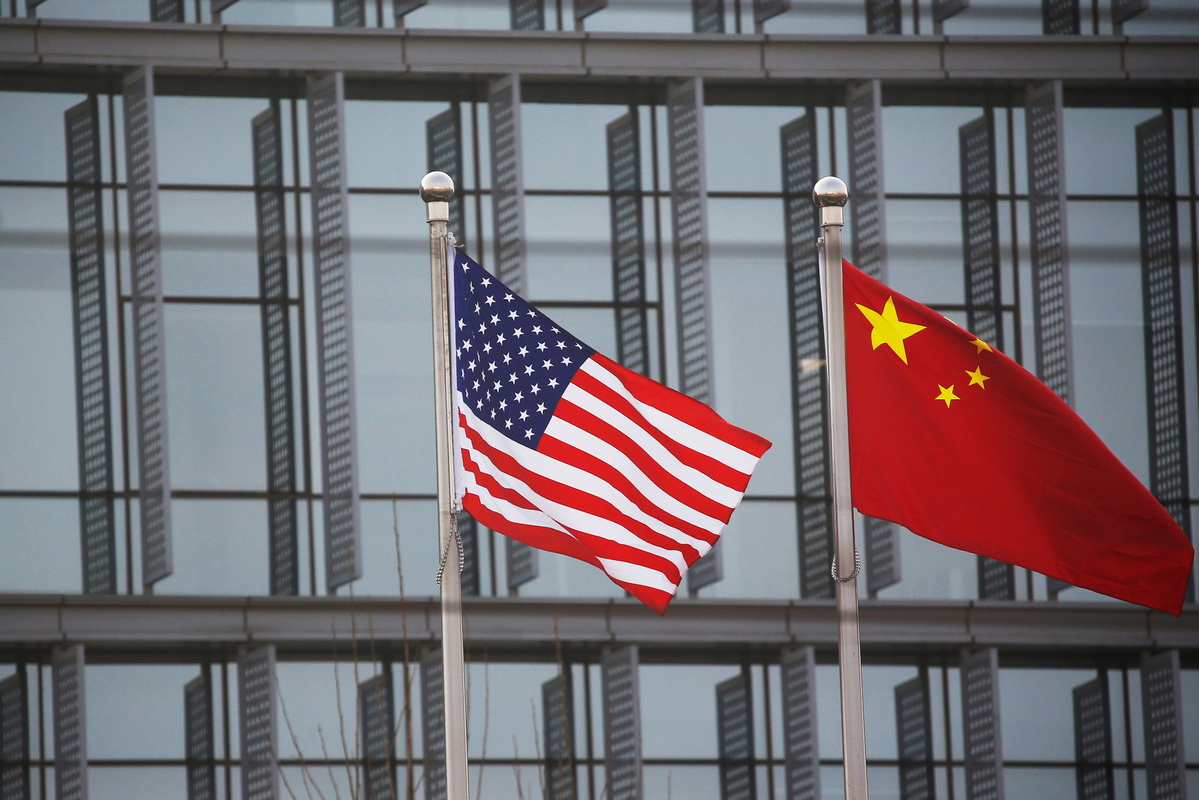
US President Biden's expanded technology war is bad news to American business, financial giants, high-tech and consumers. Over time, it will penalize Asian recovery and global economic prospects.
Under pressure to clarify its economic and security policies toward China, the Biden administration recently dispatched two top emissaries to "explain” that the US does not seek to decouple from China (which it effectively seems to be doing).
However, both Treasury Secretary Janet Yellen and National Security Adviser Jake Sullivan left unanswered how Washington plans to curb tech transfers and investments to China. That fostered the perception the new US measures could harm investors and disruptive to the world's trading system.
In early 2021, former WTO economist Anne Krueger warned that President Trump's modus operandi had been "to bully China on trade, foreign investment, cyberspace, e-commerce, intellectual property, the South China Sea, Taiwan, and other issues.”
After all, these measures have broad and untargeted negative implications, especially at a time when the US economy is teetering at the edge of recession, facing a spreading banking crisis and rising debt default risk.
Whatever is the Biden administration's short-term debt-limit strategy, the US long-term economic challenges have only begun and tech war will make them worse.
In addition to the proposed ban against foreign investment by US firms in Chinese tech companies, the administration now wants to restrict what kinds of technology can be sold in China. With their initial focus on high-end semiconductors, the guidelines may extend to artificial intelligence, quantum computing, electric vehicles and rare earth metals; in brief, the perceived emerging industries of the future.
Ironically, both the White House and a bipartisan group in Congress have had a hard time to achieve consensus on the outward investment controls.
For weeks, the Biden administration pledged to unveil China investment curbs in cooperation with its allies before the G7 summit. That did not happen. Instead, only in its 51starticle, the Hiroshima communique states that G7 partners "stand together” in their respective relations with China, but individual members will "act in [their] national interest.”
Despite the administration's effort to multilateralize its misguided policies, the US will likely be mainly alone in having to walk the talk.
Whatever meager security benefit the Biden administration hopes to gain from withholding US investment and international recognition from Chinese tech firms may be offset by the huge collateral damage that these new restrictions are likely to cause in the US and worldwide.
Over time, the restrictions may also virtually ensure that Americans will not learn from Chinese tech companies, many of which are already at or close to the top of their fields in science and technology.
Biden's tech restrictions will over time penalize US businesses, investors and consumers, derail global recovery and drag US allies into a geopolitical stagnation, while causing massive losses in missed opportunities. It is the wrong thing to do at the wrong time.
Dr. Dan Steinbock is an internationally recognized strategist of the multipolar world and the founder of Difference Group. He has served at India, China and America Institute (US), Shanghai Institutes for International Studies (China) and the EU Center (Singapore). He has published many books and reports on the global technology sector.





