



Enhanced ties help countries flourish together









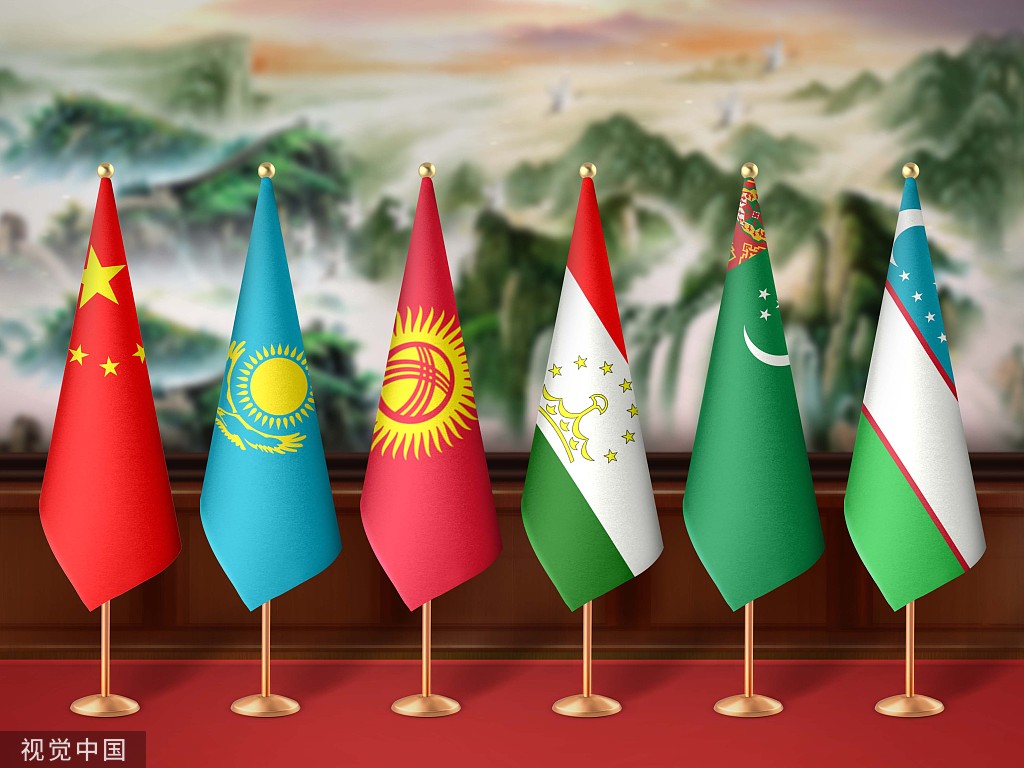
China and Central Asian states have a history of dynamic links and cordial relations, and the inception of the old Silk Road further strengthened the relationship. Since then, China and Central Asia have developed a diverse partnership in trade, economy and culture, with Central Asia becoming a connecting node between East and West.
Now we can find a galaxy of different ethnicities and nations that are flourishing together.
China has given Central Asia high priority. President Xi Jinping chose Kazakhstan as the place to introduce his vision of the Belt and Road Initiative in 2013.
In addition, the China-Central Asia-West Asia Economic Corridor was born. The corridor starts from China's Xinjiang Uygur autonomous region and traverses Central Asia before reaching the Gulf, the Mediterranean Sea and the Arabian Peninsula. The corridor crosses five Central Asian countries — Kazakhstan, Kyrgyzstan, Tajikistan, Uzbekistan and Turkmenistan — and 17 countries and regions in West Asia including Iran, Saudi Arabia and Turkiye. It is a tailor-made program for connectivity of a landlocked region.
Unfortunately, Central Asia is also a victim of the political games of Western countries, which also have made efforts to introduce a liberal economic system, Western democracy and values at the cost of national systems and interests. Deliberate misinformation efforts were made to malign national models of governance, often via so-called independent think tanks and independent media outlets. On top of everything, they attach conditions to cooperation and assistance.
They did not stop there. After failure to convince governments, they opted for instigating people to go against governments in the name of governance and economy. Attempts were made to stage "color revolutions" in the region to bring Western-style rule, but failed. Fortunately, Central Asia survived the wave by putting the region's house in order and building strong mechanisms of cooperation among themselves and with China.
In this context, President Xi's proposal of the BRI was perceived as fresh air in a congested environment. Since then, China has continuously worked to create economic opportunities. Due to continuous efforts by all, China is now a major trading partner of countries in the region.
China has also enhanced investment in the states. Chinese investment in the region reached $40 billion in 2020. In addition, China is a reliable source of financing. It is important to highlight that China provides financing without conditions and with the spirit of help.
Since the first virtual meeting between President Xi and the heads of state of Central Asia, their relationships have become more dynamic.
China has played a positive role in helping countries in the region. Xi has encouraged them to enhance economic, energy and security relationships and has assisted them in bringing to reality their dreams of development by their preferred path of governance and development.
In pursuing a shared agenda of win-win cooperation for development and sustainable peace, leaders of China and Central Asia are meeting on Thursday and Friday in Xi'an, Shaanxi province.
The summit is important in the context of regional and global dynamics.
First, the Russia-Ukraine conflict is a matter of grave concern for China and Central Asian states. Second, the Afghanistan situation is complicated and poses serious challenges for Central Asia. Third, the original supply chains have been disturbed. Fourth, the economic and financial crisis in the West is further aggravating economic difficulties.
It is expected that the summit will address the concerns and pave the way for cooperation as the BRI marks its 10-year anniversary. The leaders are expected to push for more cooperation in the fields of energy, connectivity, trade and investment.
For example, China can provide opportunities for connectivity through the China-Central Asia-West Asia corridor and the China-Pakistan Economic Corridor. In addition, investment can be a key area for discussion.
The author, a political economist, is CEO of the Asian Institute of Eco-civilization Research and Development in Pakistan, and author of Understanding China for Future Cooperation.


- Communist Youth League of China has nearly 78.34 million members
- Niche tourism steals spotlight in China's bustling May Day holiday travel season
- Visit to Eswatini in spite of earthquake at home criticized
- Xinjiang entrepreneur Li Jianhong killed in Albanian car crash
- Henan massage parlor fire claims six lives
- Hebei hosts unmanned flight contest





