



Let commerce lead Australia and China's relations









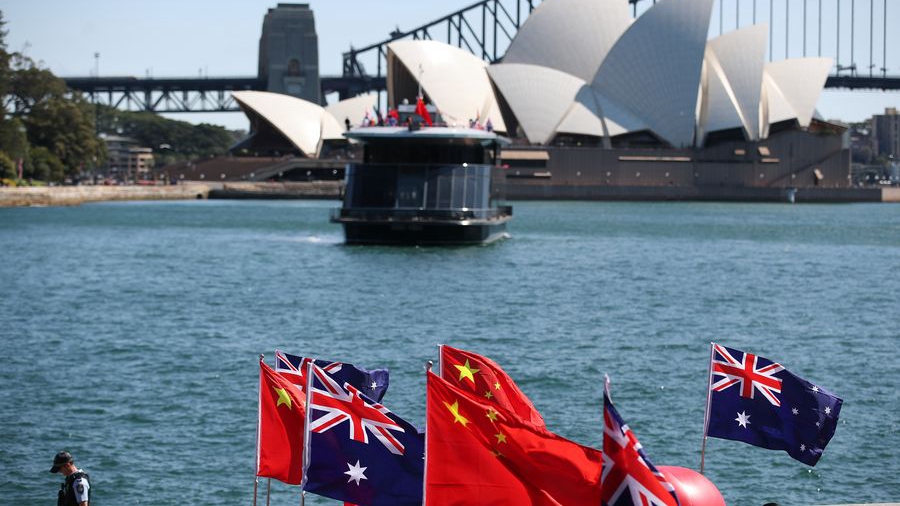
Australia and China need to continue to focus on shared interests rather than differences as relations grow, including the green economy
Ahead of traveling to China as part of Australia’s first business delegation in three years, I’ve been reflecting on how the commercial ties between our two markets can be deepened.
The re-opening of China’s borders comes at a time of renewed optimism in Australia for stronger relations between our two markets.
After a difficult few years, the relationship has thawed, largely from people being able to connect again.
Putting any differences to the side, it’s important to remember that the two nations’ respective prosperity has remained closely tied for a long time and as we move further into 2023, it is in this nexus of shared interest where Australia should apply the most energy.
For example, more than 35 percent of Australia’s exports of goods and services – including iron ore, coal and liquefied natural gas - are exported directly to China. That is larger than the combined total of South Korea, India, Japan, the US and the UK.
As we move further into 2023, the playbook to continue re-building the relationship between both markets will be to utilize the sectors that provide the most mutual benefit including commodities, education and tourism.
In the commodities sector, Australia will focus on remaining a reliable supplier to China as it re-opens and seeks to continue its urban development.
Two-way tourism is an obvious cornerstone sector. Prior to the pandemic, China was Australia's largest tourism source reaching more than 1.4 million in 2019 and adding more than $12 billion to the Australian economy].
When it comes to education, China has been Australia’s largest source of international students since 2002. This continued throughout the pandemic with Australia’s official education data showing 37 percent of Chinese students enrolled offshore - compared to 8 percent of Indian students.
With China’s borders re-opening, Australia is making a large play for attracting its students again with several of Australia’s state governments announcing grants to lure Chinese students to their respective universities.
Moreover, Australia is making proactive efforts to attract Chinese talent by adjusting its visa program to extend Chinese students stay in Australia as they leave university and begin to enter the workforce. This is a positive for China to support its youth employment opportunities.
An additional path that offers exponential two-way economic growth for both markets is through our respective green economies.
At a national level, Australia and China have made significant commitments on carbon emissions reduction and are moving to use more clean energy.
But the scale of the challenge is huge, but so are the opportunities.
At a national level, Australia and China have made significant commitments on carbon emissions reduction and are moving to use more clean energy.
In 2022, China's renewable capacity overtook coal capacity for the first time. It is also home to the largest share of the world’s solar photovoltaics and wind turbine manufacturing and accounts for 70 percent of the world’s EV manufacturing, according to the International Energy Agency.
Meanwhile, Australia intends to shift 80 percent of its energy to renewable sources over the next seven years to 2030.
What makes it more compelling is that both markets need each other.
Australia is a leader in managing the increasing integration of renewables onto the grid, which is proving to be the challenge of some Chinese provinces. More broadly, Australia has a world-leading training regime for renewable science, engineering solutions and installation, which will be prized in China.
Conversely, Australia needs know-how in advanced manufacturing and it also needs capital. The Australian government has stated it wants to be a renewables superpower but achieving these ambitions requires AUD76 billion ($50.79bn) in investment by 2030 with only one third of that was expected to come from public investment.
So where can Australia and China start the process of building these green ties?
Delegations, like the Australia China Business Council, which is heading to China this week, will also help build bridges.
Elsewhere, banks like HSBC will be conduits. Transition finance is a core part of our strategy and banks like ours are pivoting more lending toward supporting clients and industries that are showing meaningful transition inroads.
As we reach toward 40 years of diplomatic ties between Australia and China in the later part of 2023, it’s important to reflect on what has been achieved but also what lies ahead. Australia and China’s prosperity and survival is intricately linked – that is why we need to collaborate.
Obviously, further building the trade and investment flows among our cornerstone sectors of commodities, education and tourism is a must.
Beyond these sectors, the green economy offers a chance to re-program our collective economic and political trajectory in a way that is positive and necessary for all.
Antony Shaw is the CEO of HSBC Australia.
The opinions expressed here are those of the writer and do not necessarily represent the views of China Daily and China Daily website.
If you have a specific expertise, or would like to share your thought about our stories, then send us your writings at opinion@chinadaily.com.cn, and comment@chinadaily.com.cn.





