



Japan recklessly shunning its responsibilities: China Daily editorial









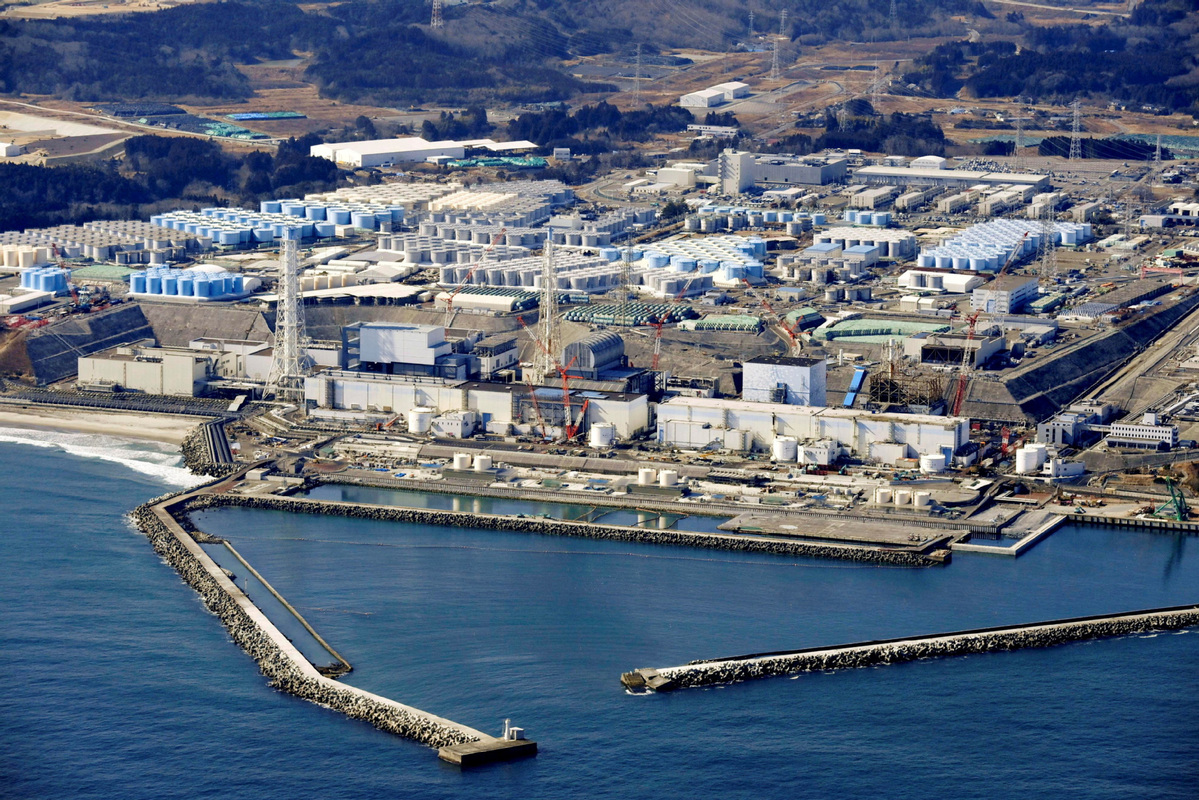
On April 13, 2021, despite fierce opposition both at home and abroad, Japan announced its decision to discharge contaminated radioactive wastewater from the tsunami-devastated Fukushima Daiichi Nuclear Power Plant into the sea.
The operator of the plant, Tokyo Electric Power Company, said that it would take two years for the release to start. Now the operation of equipment needed for its nuclear-contaminated wastewater dumping plan has already begun as a precursor to the wastewater's final release into the ocean.
The Japanese government and TEPCO have been dredging up every reason they can think of to defend their ocean-dump plan, but these essentially boil down to a word game in which the water is referred to as "treated nuclear wastewater" rather than "nuclear contaminated wastewater".
The difference between the two lies in the former being water used to cool down devices in a normally operating nuclear power plant while the latter is water that contains radioactive substances from damaged nuclear reactors. The former is rendered safe after standard processes, while the latter lacks international practices and needs strict expert evaluation of the best disposal method. The millions of tons of water in Fukushima that served to cool down the melted nuclear reactors belong to the second.
A similar trick Japan is playing is mixing the nuclear contaminated water with seawater in a well and discharging the mixture into the sea through an undersea tunnel that stretches 1 kilometer from the shore. Japan used this to claim the issue "should not be discussed" at the London Dumping Convention and Protocol meeting. But there is no difference between "piping" the radioactive water into the sea underground and "dumping" it from the shore. It is still radioactive.
It should be noted that nine of the 17 openly reported lawsuits of Japanese residents or fishermen against the Japanese government or TEPCO from 2017 to 2022 that have completed their trial found the defendants responsible.
The Japanese government and TEPCO continue to disregard the harm that the contaminated water will do to the marine environment and human health, and they are rushing to present a fait accompli by recklessly pressing ahead with the discharge plan.
By urging Japan to be cautious on the nuclear contaminated water issue, China is only acting as a voice of reason. The nuclear contaminated water has had direct contact with the melted reactors. It contains over 60 radionuclides, many of which cannot be treated effectively with existing technologies. Some long-lived radionuclides may spread with ocean currents and form a bio-concentration effect.
Japan should act responsibly and consider other options instead of careering ahead with the ocean discharge plan so it can shift the risks onto the international community.





