


A cultural phenomenon
Inspired by traditional artifacts and elements, young artist breathes life into history and legends, tapping into a growing confidence in Chinese heritage, Cheng Yuezhu reports.










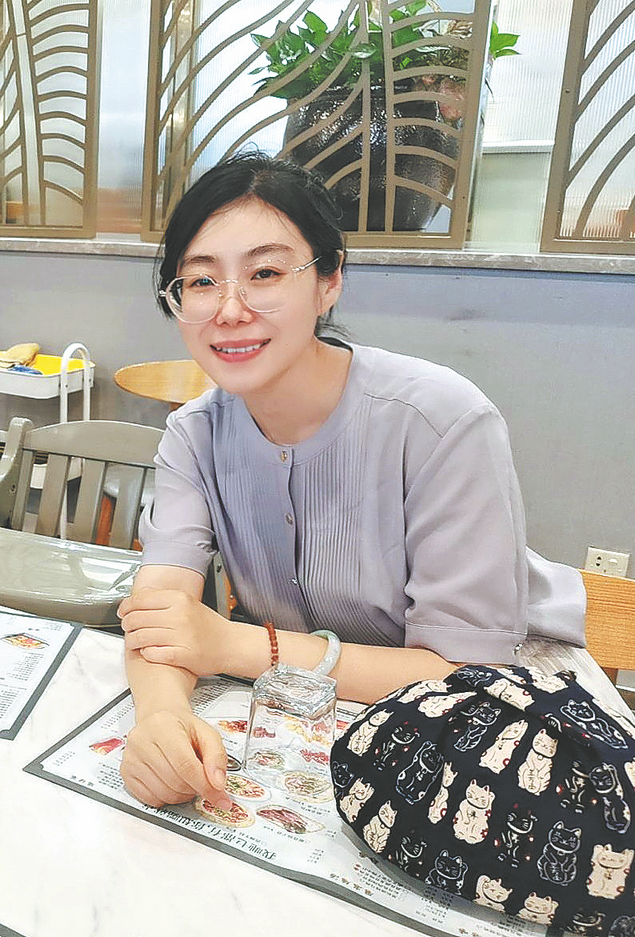
"I have always been captivated by traditional culture, and this interest led me to start painting about it. It's a natural and serendipitous process of mutual attraction," she says.
One of her iconic illustrations is from her cultural artifact series, featuring a relic unearthed in 1970 — a silver incense burner with patterns of grapes, flowers and birds, now kept at Shaanxi History Museum in Xi'an, Shaanxi province.
The incense burner is ingeniously designed with a gyroscopic structure, comprising a three-axis gimbal (pivot) that is set so that it keeps the hemispherical incense holder at the center of the burner horizontal at all times. Even if the ornament is dangled from a belt, the incense inside would not spill out.
In Wan's rendition, a young woman dressed in hanfu (a style of traditional Chinese attire) is shown to be dancing, with the incense burner floating in midair above her hand.
"At the time, a few of my followers mentioned this artifact to me, so I started researching it. Not only does it look particularly intricate and exquisite, but it also moves me greatly with the history connected to it," she says.
The Old Book of Tang records that, after Yang Yuhuan, known as Yang Guifei, an imperial consort of Emperor Xuanzong of the Tang Dynasty (618-907), was sentenced to death, the emperor sent an official to check her tomb, who reported back that "the skin has decayed but the incense burner remains".
When the object was featured on National Treasure, archaeologist Qi Dongfang said that the incense burner artifact is of the same kind that belonged to Yang.
Intrigued by the incense burner's stability, Wan thought the best way to represent it would be through the motion of dance, and there was no more fitting option than to depict one of the most famous dances in Chinese history, Nishang Yuyi Qu (song of a rainbow and feather garment) — which, according to legend, was composed by Emperor Xuanzong and performed by Yang herself.





