



Virtual power plants manage energy flow









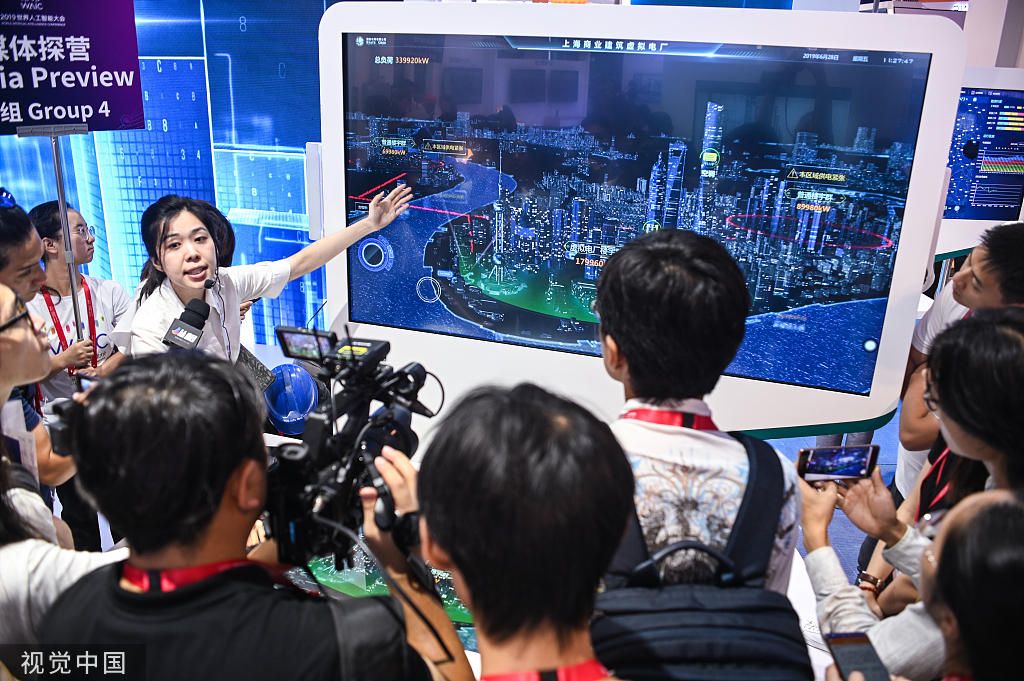
Construction of virtual power plants is on the rise in China as the country continues to move toward a more sustainable energy mix, with renewables taking up an increasing share.
A virtual power plant uses advanced technologies and software systems to collect data of electricity generated from distributed sources, such as rooftop solar power facilities, power storage systems and electric vehicles. Different from conventional power plants, virtual power plants do not generate electricity; instead, they manage the energy flow and optimize the supply of electricity.
Fifteen virtual power plants in Shanxi province have completed construction. Their combined daily electricity output of 1.568 million kilowatt-hours could supply power to about 224,000 households a day during peak time, said State Grid Shanxi Electric Power Co, a major builder of the plants.
The company said construction of virtual power plants is crucial for optimizing energy systems and ensuring the growing demand for clean, reliable and affordable power is met.
The construction followed Shanxi's launch of an action plan in June last year to regulate the building and operation of virtual power plants in case of power shortages after a large number of renewables connect to the grid.
Recently, China's first project on the research of industrial standards in the area of virtual power plants received approvals from the government, which will provide technical standards on the resource allocation and assessment of virtual power plants.
Last year, Shenzhen had established a regulation center for virtual power plants, the first of its kind in China. At present, Jiangsu province, Zhejiang province, Shanghai and other regions have implemented the practice of virtual power plants. They collect power mainly from energy storage facilities, charging piles and residential buildings, said a recent report from Sealand Securities.
"The virtual power plants have become increasingly important as a supplement to conventional power plants to ensure the reliability and stability of energy supply, especially in renewable energy systems," said Lin Boqiang, head of the China Institute for Studies in Energy Policy at Xiamen University in Fujian province.
"Virtual power plants, together with power storage systems, collect energy available from the user end, such as rooftop solar power facilities and supply them to other users in need, which makes them an important part in promoting low-carbon and energy-efficient development," Lin said.
In the past, fossil fuels like coal were often the only source of electricity. Power supply management was realized through grid operators' dispatch centers to meet demand. During peak hours, the centers would send signals to power generators, and the latter would burn additional coal to ramp up power generation.
However, as the focus of power generation gradually shifted toward renewable energy resources, such as solar and wind, problems emerged as these modalities are intermittent and not always available when needed, making it extremely difficult to manage power supply.
Under such circumstances, virtual power plants emerged as a supplement to conventional power plants in the task of allocating power generated from distributed sources in case demand surpasses supply.
Estimates from Huaxi Securities showed that by 2025, the market scale of investment and construction of virtual power plants will exceed 30 billion yuan ($4.38 billion).











