


Ancient roots
In the past, the Lord Rabbit was mainly associated with Mid-Autumn Festival, but as people move around to meet one another at Spring Festival much more than they did before, the rabbit figurines have become a trend over this period, he notes.
"It has evolved into a phenomenon where people will ask for the Lord Rabbit during temple fairs," Shuang says.
Shuang's emotional bond with the artwork is evident in his serious and exuberant promotion of its profound history.
"The Lord Rabbit's true value lies in its folk customs," Shuang says.
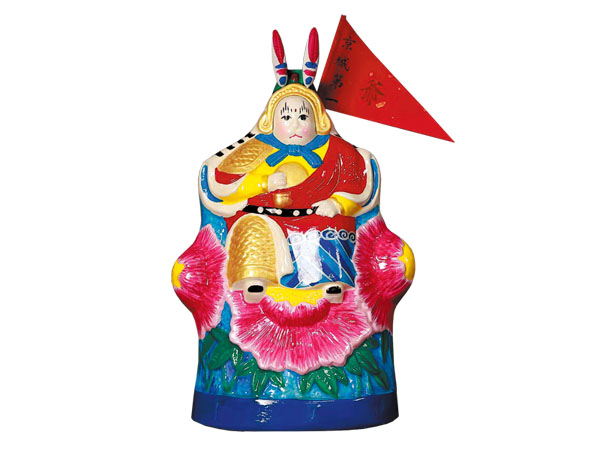
The rabbit was traditionally believed to be a deity, living on the moon, in charge of health and medicine. One legend goes that Beijing once suffered a plague before Mid-Autumn Festival. The Chinese moon goddess, Chang'e, dispatched the rabbit to cure the disease. An iconic image of the rabbit god is one wearing a golden helmet and armor, while wielding a pestle, a tool for grinding medicinal ingredients.
Lord Rabbit has made its presence felt amid the country's profound rabbit culture, with the animal long being considered an auspicious symbol of happiness and longevity.
The animal's cherished role has been found in ancient relics, such as portraits depicting jade rabbits pounding and filtering medicine from the Han Dynasty (206 BC-AD 220).
To date, the earliest mention of the Lord Rabbit was found in a written work by Ji Kun, a scholar from the Ming Dynasty (1368-1644), which painted a vivid picture of Lord Rabbit emerging and being worshiped in the capital city during Mid-Autumn Festival, the 15th day of the eighth lunar month.
But Shuang has found traces that push back the history of the rabbit god even further.
The fox tails worn on sides of the Lord Rabbit's face are indicative of an accessory worn by nomadic nobles back in the Yuan Dynasty (1271-1368), Shuang says.
"Therefore, it should at least originate from the Yuan Dynasty, before gaining greater popularity in the Ming and Qing (1644-1911) dynasties," he adds.





