


Success in the best possible taste
Large leaves give this tea a rare appearance but its refreshing attributes make it a brew to remember, Wang Kaihao reports.









Eyeing the future
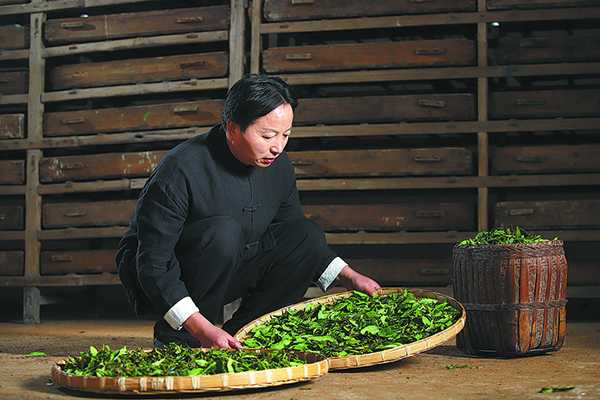
To pass down tea processing techniques to more people, in the past five years, Wang has recruited 17 apprentices. Some of them were not those farmers who have grown up on the tea-cultivating land, but young graduates who wanted to revive the tradition. He has an open mind toward teaching his formula for success to more people.
"But the younger-generation tea producers still need to learn how to grow and cultivate tea plants in the first place," he explains. "They can only understand the soul of tea by working on the soil."
According to Wang Chenyang, the director in charge of intangible cultural heritage at the Ministry of Culture and Tourism, other than clan-based and master-apprentice transmission, knowledge and techniques related to tea, particularly some specific skills and know-how, are also handed down in China through various forms, like schools and communities, and the tea producers in Huangshan have set a good example.
"The inscription of the element (on the UNESCO list) would further inspire communities, groups and individuals concerned to safeguard intangible cultural heritage more consciously and with a stronger sense of responsibility," he says. "It can foster sharing of knowledge and experience on craftsmanship, healthcare practices and food security."
For both Fang and Wang Chang, bringing tea-related courses to elementary and high schools is a crucial part of their daily work.
"Children can better understand the culture they belong to," Fang says. "Only when they love drinking tea, our traditional technique can survive and thrive in the future."
Tea competitions are annually held in Huangshan. Fang also highlights the importance of mixing traditional processing techniques with modern design, and better promotion of tea-related ceremonies among the public.
Wang Chang has already drafted a new blueprint.
"The COVID-19 pandemic has waned and we're back to the normal track of connection," he says. "I cannot wait to travel abroad, promoting Keemun to the rest of the world again, like our ancestors did."