



'Historic' COP15 deal reached on biodiversity









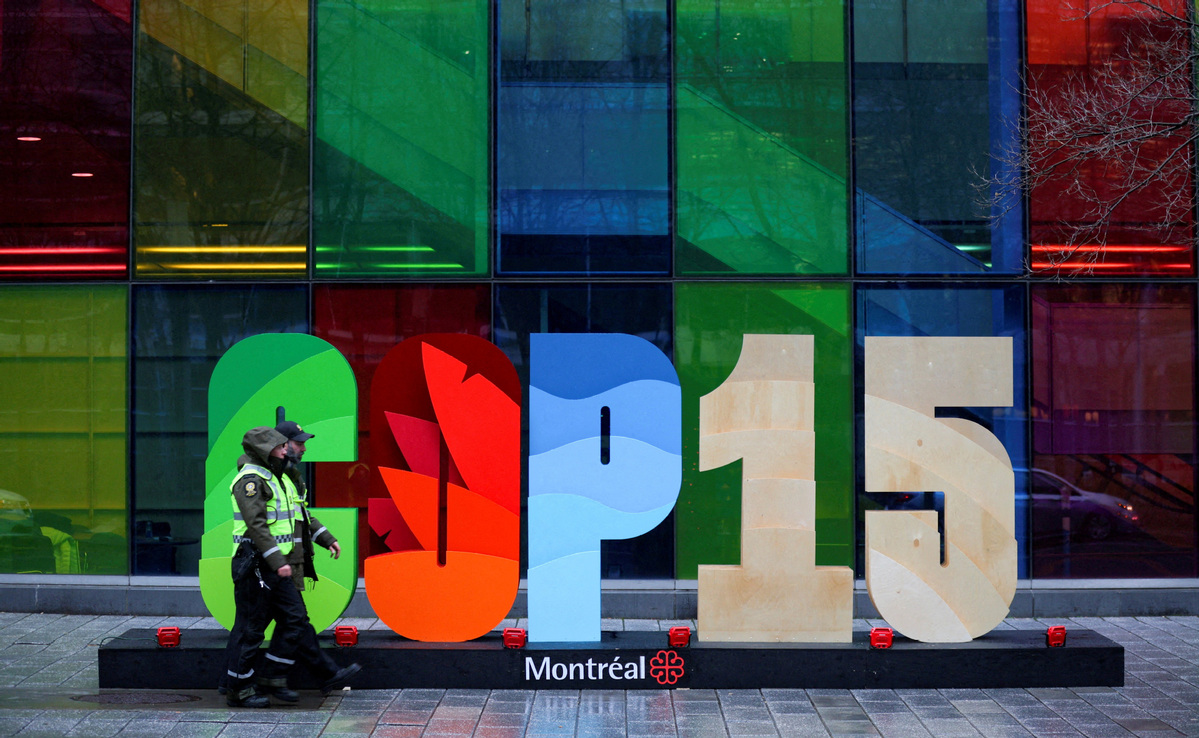
After two weeks of intense debate at the 15th meeting of the Conference of the Parties to the United Nations Convention on Biological Diversity, or COP15, delegates from around the world agreed on Monday to adopt a landmark plan to halt and reverse biodiversity loss by 2030.
"This is a historic moment," said Huang Runqiu, COP15 president and China's minister of ecology and environment, who noted that the adoption was the result of numerous efforts by all parties.
"Finally, we reached our destiny. We adopted the Kunming-Montreal Global Biodiversity Framework," he announced.
The new framework is a commitment by 196 parties to the Convention on Biological Diversity to conserve at least 30 percent of the Earth's land and ocean area by the next decade. It also will increase the expected annual financial assistance from developed countries through 2030 to help developing nations with biodiversity protection.
Furthermore, it promises to reduce government subsidies that are harmful to nature by at least $500 billion per year, addresses the rights of indigenous people, and calls for gender equity in the implementation of the framework.
Agreement on adopting the milestone Kunming-Montreal Global Biodiversity Framework came after four years of discussions and two weeks of intense negotiations. It is the first global framework on biodiversity since the Aichi Biodiversity Targets were adopted 12 years ago.
In an exclusive interview with China Daily after the agreement's adoption, Canadian Minister of Environment and Climate Change Steven Guilbeault said he was "very happy" with the outcome.
"It's a historic day for the world. Some people have compared it to the 'Paris Moment', when the Paris Agreement was adopted in 2015, and I agree it is. It is a historic moment for nature protection around the world. I congratulate the Chinese presidency (of COP15) ... They did fantastic work, we worked very closely together, and it was a great partnership," he said.
COP15 convened delegates from around the world in Montreal from Dec 7 to Monday to decide on the terms of the post-2020 biodiversity framework.
The plenary session to adopt the Kunming-Montreal Global Biodiversity Framework was originally scheduled to begin at 7:30 pm local time on Sunday, with the intention of sealing a deal early. However, the session was delayed as negotiations among top officials continued behind closed doors while delegates waited anxiously.
At around 2:45 am on Monday, the last official day of the summit, Huang entered the room to announce the start of the plenary meeting. At 3:30 am, when he said that the Kunming-Montreal Global Biodiversity Framework had been adopted, loud applause and cheers greeted the announcement.
While waiting for the outcome, Hugo Maria Schally, an adviser on international negotiations from the European Union, said that the "Chinese presidency is working hard behind the scenes to get us a deal".
Rosalind Helfand, a researcher from the University of Cambridge's Conservation Leadership Alumni Network who attended the conference on behalf of UN Women, said she hoped to see a global biodiversity framework that helps communicate the importance of a global agreement to save nature.
"And that's why I think that Section K of the framework, which is all about communication, and outreach and awareness and uptake, I think that that's actually a really important section. And I think there's some ambitious planning for that. And I really hope to see that happen," said Helfand.
Section K calls for "enhanced communication, education and awareness on biodiversity" by all actors to ensure the effective implementation of the agreement.
As COP15 president, China submitted a draft text of the Post-2020 Global Biodiversity Framework on Sunday morning that listed 23 targets for achievement by 2030.
The new framework includes consensus on several issues that were considered a sticking point throughout the negotiations, including resource commitments from developed countries. Estimates suggested that a $700 billion annual funding gap needed to be closed in the next decade for the biodiversity framework to be effectively implemented.
As part of the new deal, parties will collectively mobilize at least $200 billion per year by 2030. The money will come from public and private sources.
Specifically, countries from the Global North agreed to scale up conservation funding for developing nations, small-island states and "countries with economies in transition" to at least $20 billion per year by 2025, and to $30 billion per year by 2030.
During the first part of COP15 in Kunming in October last year, President Xi Jinping set the tone by investing 1.5 billion yuan ($215 million) to establish the Kunming Biodiversity Fund to support biodiversity protection in developing countries. He invited other nations to contribute.
Countries including Canada, the United Kingdom, the United States, Australia, Japan, Norway, Germany, France, Spain and the Netherlands, along with the European Union, have pledged to increase their financial support to developing nations.
So far, the total amount of international biodiversity commitments publicly announced by governments, philanthropists, corporations and investors stands at $8.3 billion annually, according to a tracker by several environmental organizations, including Campaign for Nature and Conservation International.
The framework creates a new biodiversity fund within the UN's existing Global Environment Facility. This came about as a compromise between developing nations, which wanted a new fund, and developed countries, which did not.
The deal also recognizes the roles and contributions of indigenous people.
In a statement, The International Indigenous Forum on Biodiversity thanked the COP15 president for including "strong language on respect for the rights of indigenous people and local communities".
All UN member states except the US have ratified the international treaty on biodiversity.
Contact the writers at teresaliu@chinadaily.com.cn










