



Guidelines issued to help patients recover









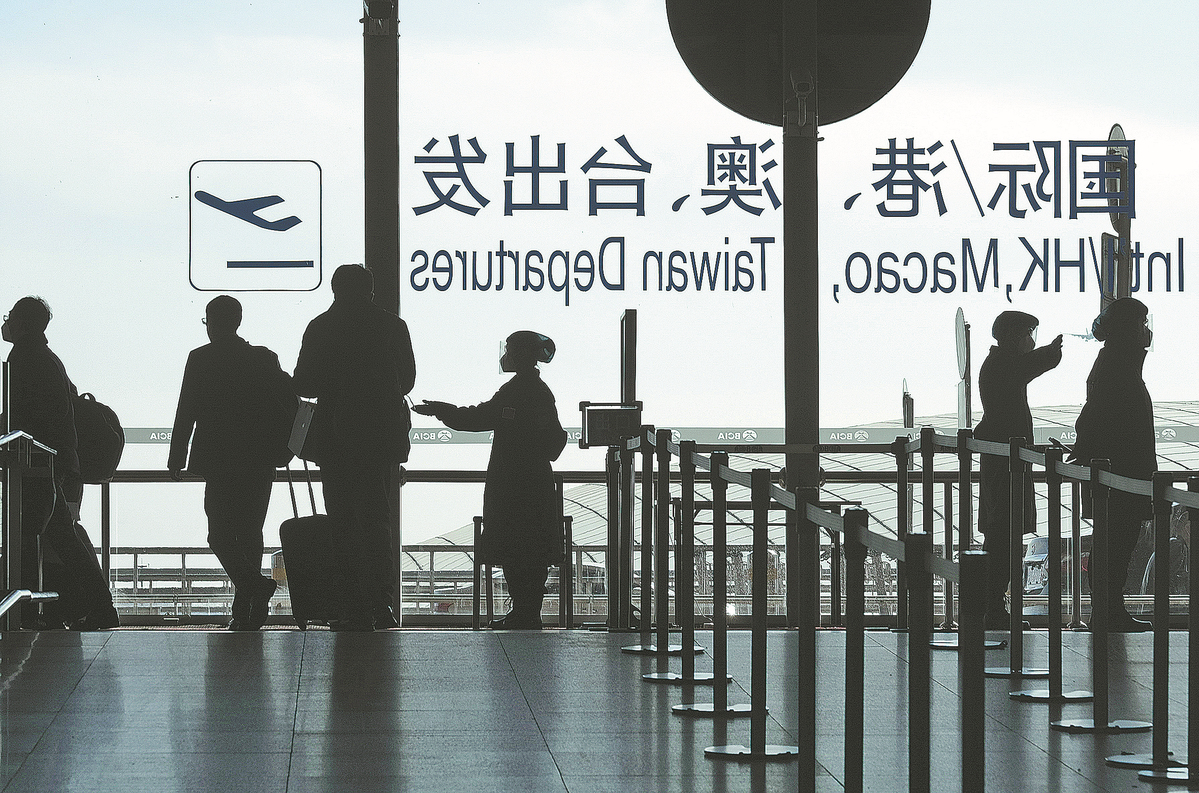
Documents detail rules for quarantine, roles of neighborhoods and hospitals
Health authorities on Thursday issued two guidelines in tandem to help COVID-19 patients with mild symptoms recover at home and to properly monitor their health with test kits.
The documents' rollout came a day after China announced more adjustments of COVID-19 control policies, such as allowing for positive cases to isolate at home, stopping mass testing campaigns and removing limits for buying cold and fever medications.
Released by the State Council's Joint Prevention and Control Mechanism, the country's COVID-19 control task force, the guidelines allowed the majority of new COVID-19 patients to stay at home, except for those with serious heart, liver, lung and brain illnesses that necessitate hospitalization.
To reduce cross-infections, the rules recommended separate rooms for homebound patients, who are encouraged to take recommended drugs based on their symptoms, and report their body temperature regularly to neighborhood authorities. Tissues, surgical masks, single-use gloves, sanitizers and a trash can with a lid are listed among the necessities for them.
To terminate isolation after recovery, people need to test negative using an antigen test kit before contacting the neighborhood authorities for formal nucleic acid tests. The isolation wraps up after test results return negative for two consecutive days.
Home isolation may be risky for vulnerable groups.
To address the problem, neighborhood authorities and grassroots clinics were tasked with keeping an eye on seniors who live alone, pregnant women or people who need blood dialysis, and advising them on medications and test kits.
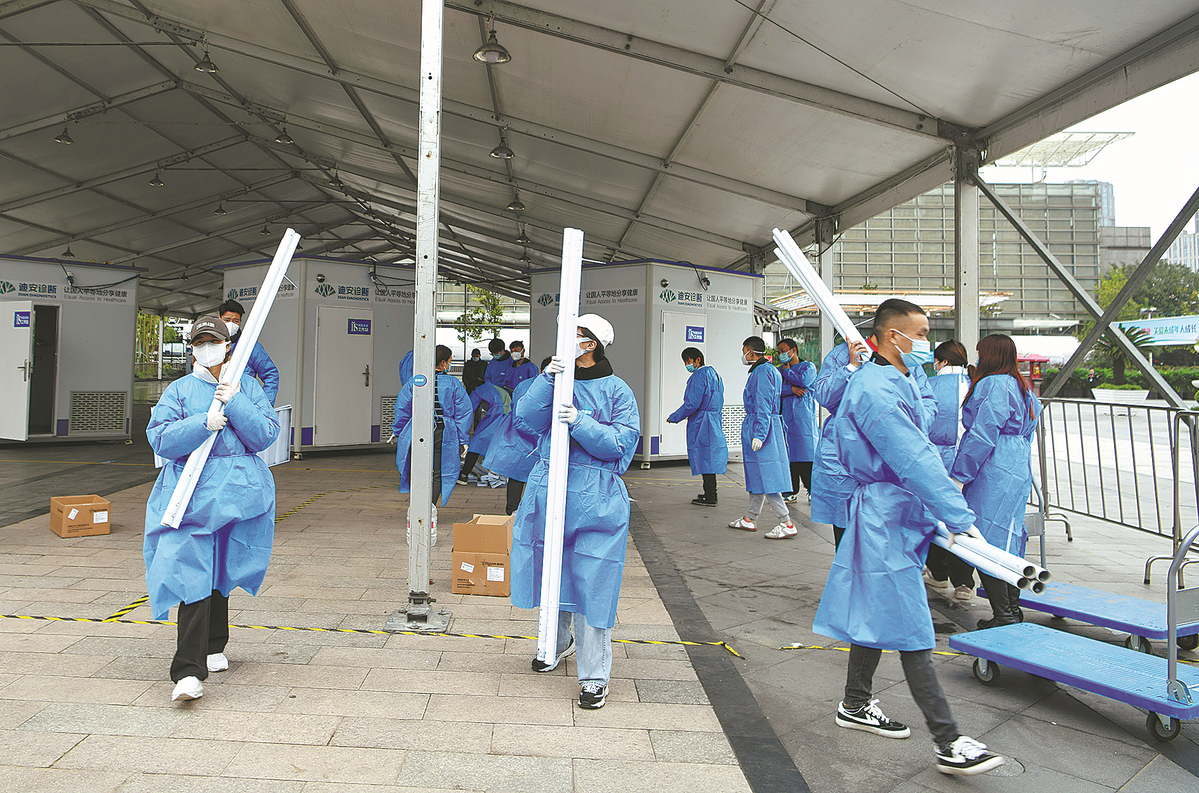
The rules suggest COVID-19 patients should not venture out of their homes.
However, those suffering worsening breathing difficulties, persistent fever or other symptoms are allowed to leave isolation for treatment, preferably by calling for an ambulance or driving to hospitals. Public transportation should be avoided.
Neighborhood authorities are also obligated to help those with worsening conditions be hospitalized. Hospitals cannot use any excuse to refuse admitting such patients, the rules said.
The rules urged local governments to step up the production of test kits and supervision over their dealers, and asked construction sites, colleges and large corporations to prepare test kits in advance in case of cluster infections.
Local health departments will also develop software so that results of home-executed tests can be reported.
Wang Guiqiang, an epidemiologist at Peking University First Hospital, told a news conference on Thursday that separate rooms are essential for home isolation to prevent the disease from spreading further.
"If there is only one room, and patients have to live together with bedridden elderly with basic diseases, home isolation is not recommended," he said.
The guidelines are part of the precautions taken by health authorities against a potential surge of COVID-19 patients after many pandemic restrictions — such as nucleic acid test proofs for travel and entering public venues — were lifted.
Keeping as many as mild and asymptomatic cases at home can help save hospital beds for critically ill patients, usually unvaccinated older adults, and keep other patients' medical plans from being disrupted by Omicron outbreaks at hospitals, experts and officials suggested.





- Team of Chinese, US scientists identifies key tumor cell state driving cancer growth, drug resistance
- China successfully conducts first metal 3D printing experiment in space
- Debt-ridden children's hospital gains strong public support, but future still uncertain
- China hands over 17 Filipino sailors from shipwreck to Philippines
- Topography, extreme rainfall causes of Guizhou landslide, report says
- Various activities held to welcome upcoming Laba Festival














