Tiger park earns its stripes for new ecoconservation efforts










Straddling the provinces of Jilin and Heilongjiang, the facility provides a dedicated home for native wildlife. Li Lei reports.
Editor's note: In the coming weeks, China Daily will be publishing special reports focusing on the ongoing development of the country's national parks system, looking at areas coming under stronger protection and the species benefiting from the new facilities.
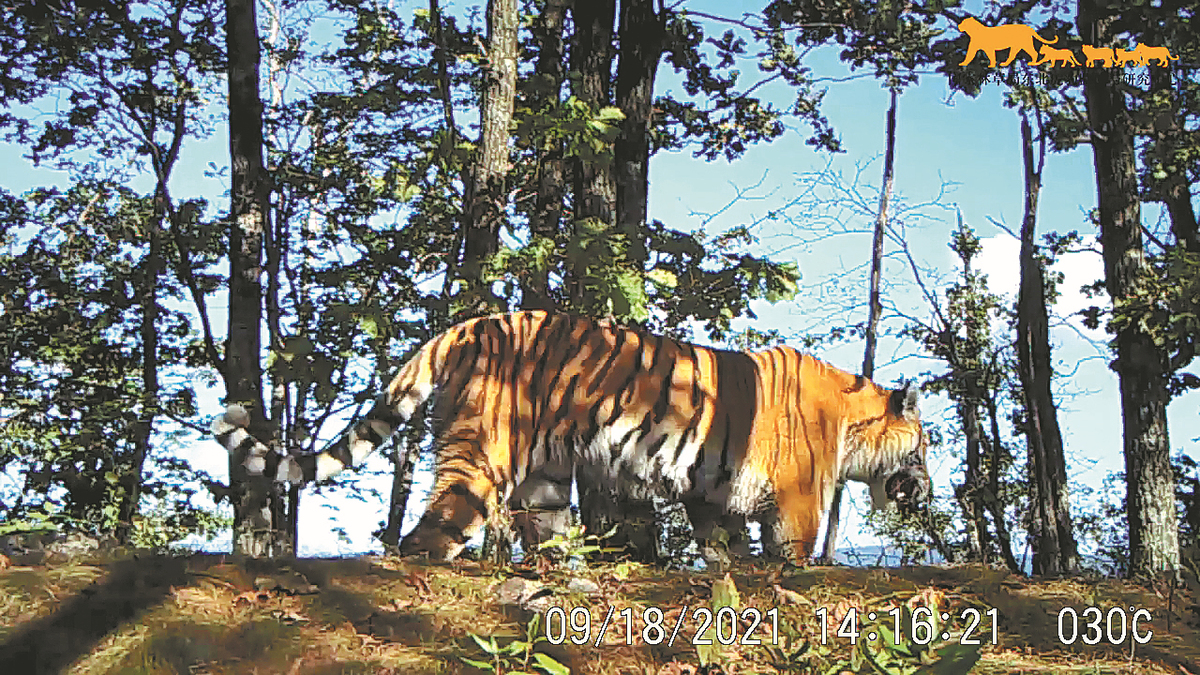
In 2015, Ge Jianping saw a fleeting window that would allow Russian Amur tigers to return to their long-lost homeland in China. Monitors had detected 35 such tigers and 70 leopards stalking a tiny patch of forest on the country's border with Russia, which was three times the number the local environment could support.
"It was like the cats were trapped on a lonely island," Ge, vice-president of Beijing Normal University, told Beijing News in 2016, after the publication of his decadelong study in the northeastern province of Jilin cast the spotlight onto the endangered animals.
On one side of the 100-plus big cats was Russia's protected space, where the predators' fast-growing communities were already testing nature's capacity. The other side was Jilin's rolling terrain of soaring pines and yew trees.
Two centuries ago, Jilin was home to most of the world's 3,000 Amur tigers — often known in China as the Northeastern Tiger — while several hundred lived in Russia. After centuries of excessive hunting and logging, the cats were teetering on the edge of extinction in China.
In 1999, a study carried out by China, Russia and the United States concluded that there were only 12 to 16 such tigers in China, compared with about 600 in Russia.
"Those cornered tigers and leopards carried the only hope for their kind to return home in large numbers," Ge, 60, said.
However, the big cats' journey home was not easy. Their leafy habitats were fractured by roads, mines and farmland. That prevented the animals from crisscrossing adjacent territories as they migrated, hunted and mated, resulting in a catastrophe for the cats' genetic diversity.
Moreover, herders and herb gatherers were encroaching on natural spaces for financial gain.