



Media Freedom Act of the EU could mean more control









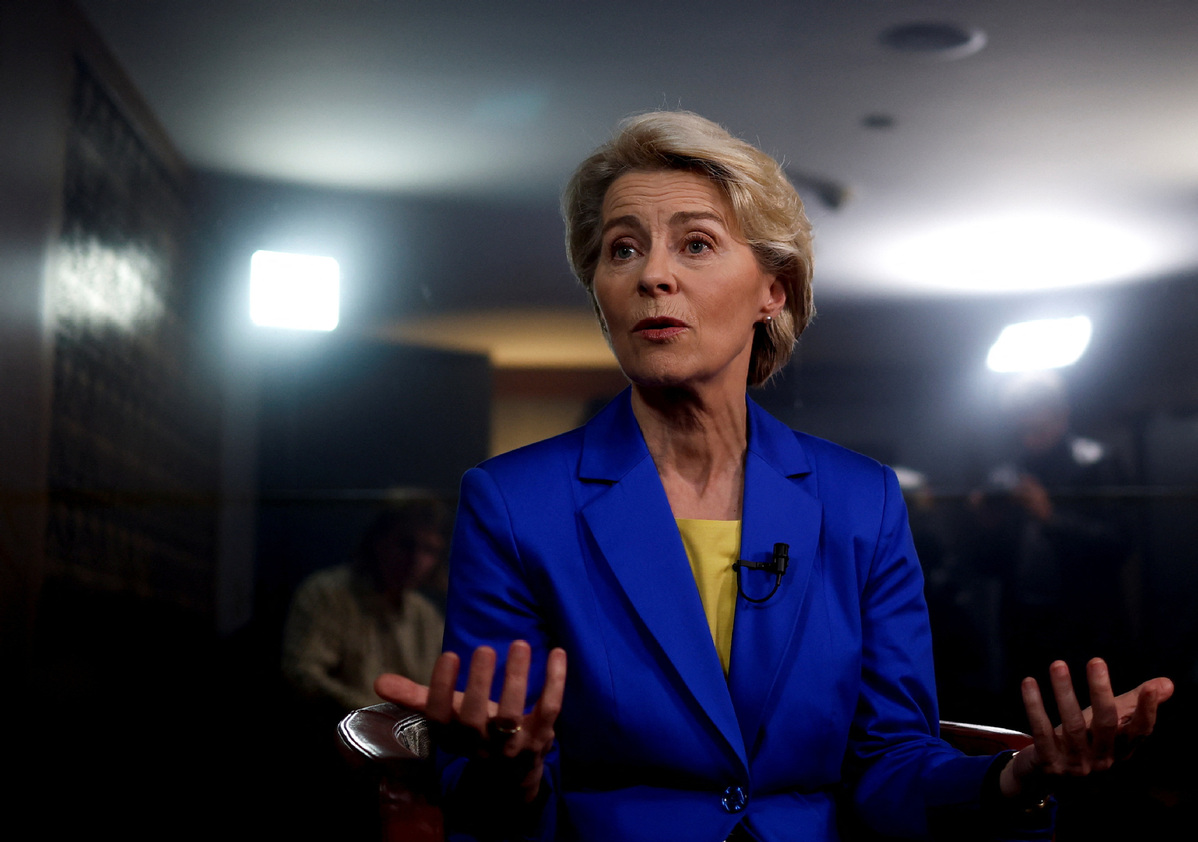
The European Commission unveiled its Media Freedom Act last week which, it said, is aimed at protecting pluralism in, and the independence of, the media in the European Union single market.
However, if you look at the EU-based mainstream media outlets' coverage of the Russia-Ukraine conflict, you will find no pluralism, only so-called political correctness. There are no lively and informative debates on the issue either in the private or the so-called public service media funded by taxpayers' money.
The EU was quick to suspend Russian TV news channels from the bloc after the outbreak of the conflict in late February, accusing them of spreading propaganda and disinformation, although Russian news outlets such as RT and Sputnik were being beamed across the EU for many years and were widely accepted by European viewers.
After the ban on Russian channels, people in the EU get only one side of the Russia-Ukraine conflict's story. When I asked the European Commission spokesman about its possible violation of media freedom, he couldn't defend the ban, and only said, "We are in a war".
However, the EU should not use even a war to deprive people in its member states of the right to know and access other sources of information, and in its place provide them with only news the European Commission wants them to read or listen to.
A scary phenomenon in Brussels these days is that officials tend to dismiss anything they disagree with or dislike as "disinformation" and "propaganda", the two most abused words. It is typical of the European Commission to call factual news story "disinformation".
For example, when the Chinese media reported that the EU didn't come to the help of Italy when the country needed the bloc's support the most in the early weeks of the COVID-19 pandemic, the European Commission in its report called it Chinese disinformation. But many European and international news outlets reported it too, and did so before the Chinese media did.
Later, European Commission President Ursula von der Leyen apologized to Italy for not coming to its aid in time.
The implications of the ban on Russian TV channels can be quite severe because it sends the wrong signal to the EU media and public — that they could do the same on other issues.
Why the European Commission believes that it can and should regulate media freedom in its member states is beyond imagination because media freedom is a domestic issue for every member state.
In the European Media Freedom Act, the European Commission has proposed to set up a new European Board for Media Services comprising national media authorities, replacing the European Regulators Group for Audiovisual Media Services. The commission said the board should act in full independence when performing its tasks, including fighting against disinformation, such as foreign interference and information manipulation.
But it has failed to convince people that independence can and will be ensured.
I have watched the Japanese government promoting its image on European TV channels. But when the Chinese authorities do something similar, it's called the Chinese government's influence campaign or Chinese propaganda.
Similarly, the funding for EU think tanks and schools by US government departments is okay but funding from the Chinese government or even private Chinese companies will be seen as Chinese propaganda. This is no media or academic freedom, but manipulation.
Some EU media organizations, such as the European Magazine Media Association, European Newspaper Publishers' Association, European Publishers Council and News Media Europe wrote a joint letter to the European Commission challenging the validity and legality of the Media Freedom Act. They have voiced deep concerns that some measures would regulate the operations of newsrooms which would inherently undermine the independence of news outlets.
To me, the lack of media plurality and independence, especially among mainstream EU media, is a result of excessive political correctness in promoting which the European Commission has played a big part.
chenweihua@chinadaily.com.cn

The author is chief of China Daily EU Bureau based in Brussels.





