



More highway charging facilities to speed up low-carbon transition









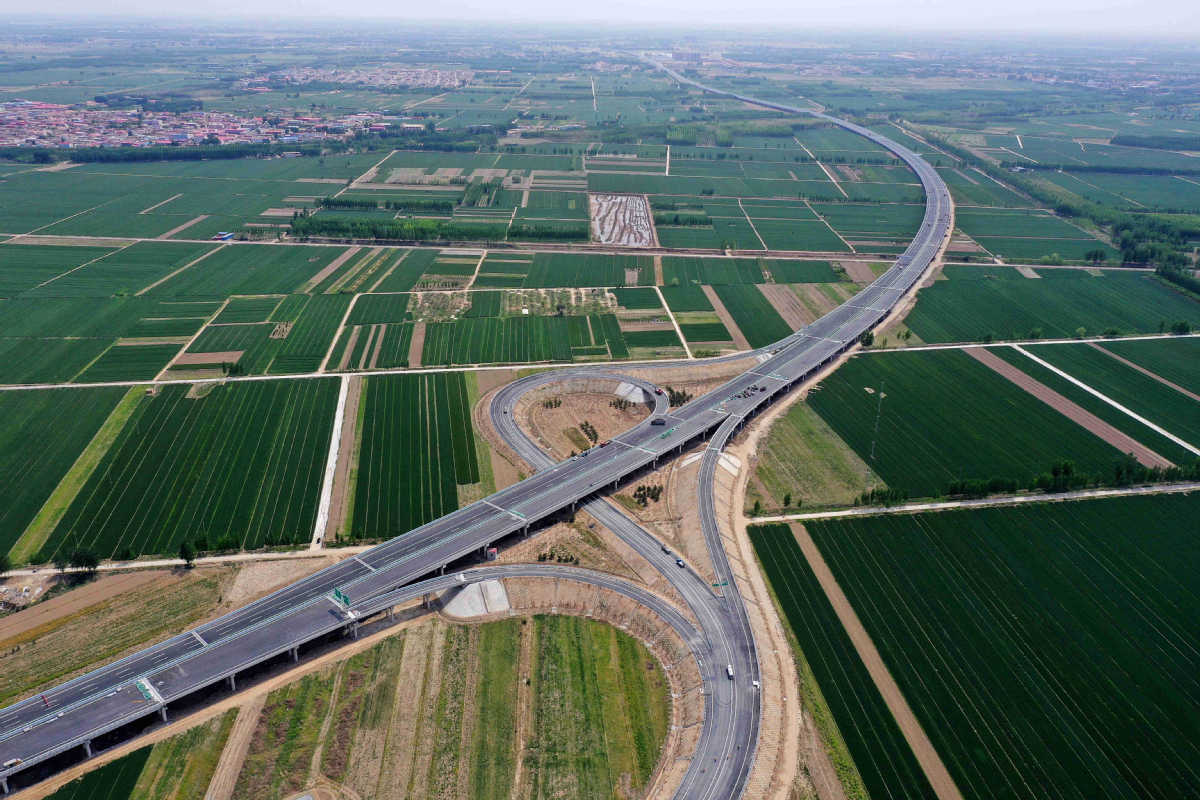
In a freshly published guiding document on the construction of charging infrastructure on highways, the Ministry of Transport vowed to enable all highway service areas to provide basic charging services by the end of 2022, except for those at high altitudes or in very cold regions.
By the end of 2023, charging services are expected to be offered at all applicable provincial-level highway service areas and the charging services will be further increased by 2025.
The plan has set a clear timetable for the construction of charging infrastructure, which is in line with the development of the new energy vehicle industry in the country. By June 2022, China had already seen its registered new energy vehicles exceed 10 million, accounting for 3.23 percent of the total number of vehicles on its roads. In the first half of this year, 2.20 million new energy vehicles were registered, double that of 2021. It is not an exaggeration to say the domestic new energy vehicle market is booming.
Yet, at the end of 2021 there were only 2.62 million charging piles nationwide. Worse, the charging piles are distributed in a rather imbalanced way among different regions, which makes it difficult for drivers in certain regions to charge their vehicles.
The plan addresses the needs of new energy drivers in several aspects.
First, it is not hard to see that new energy vehicles are fine for daily urban use, such as commuting to or from work, because the trips are short while the charging piles are plenty. However, when it comes to highways and long-distance driving, their range is dependent on the availability of charging stations, which is why the plan pays special attention to this. To equip all highway service areas with charging piles is the first step.
Second, compared with big cities and major metropolises, the charging stations in rural and suburban regions lag far behind, which discourages rural residents from purchasing new energy vehicles. The plan recognizes this and guides small towns and villages to equip parking lots with charging piles.
Third, many new energy vehicle users complain that the parking places with charging piles are often occupied by gas-powered vehicles. The document has answered this question by asking local governments to construct parking spaces for new energy vehicles only.
In order to cut carbon emissions and realize the goals of peaking carbon emissions before 2030 and achieving carbon neutrality before 2060, China has been encouraging the use of new energy vehicles via measures such as tax cuts and financial subsidies. Making it more convenient to charge new energy vehicle can help, too.





