


Commuting efficiency in urban Beijing placed under scrutiny










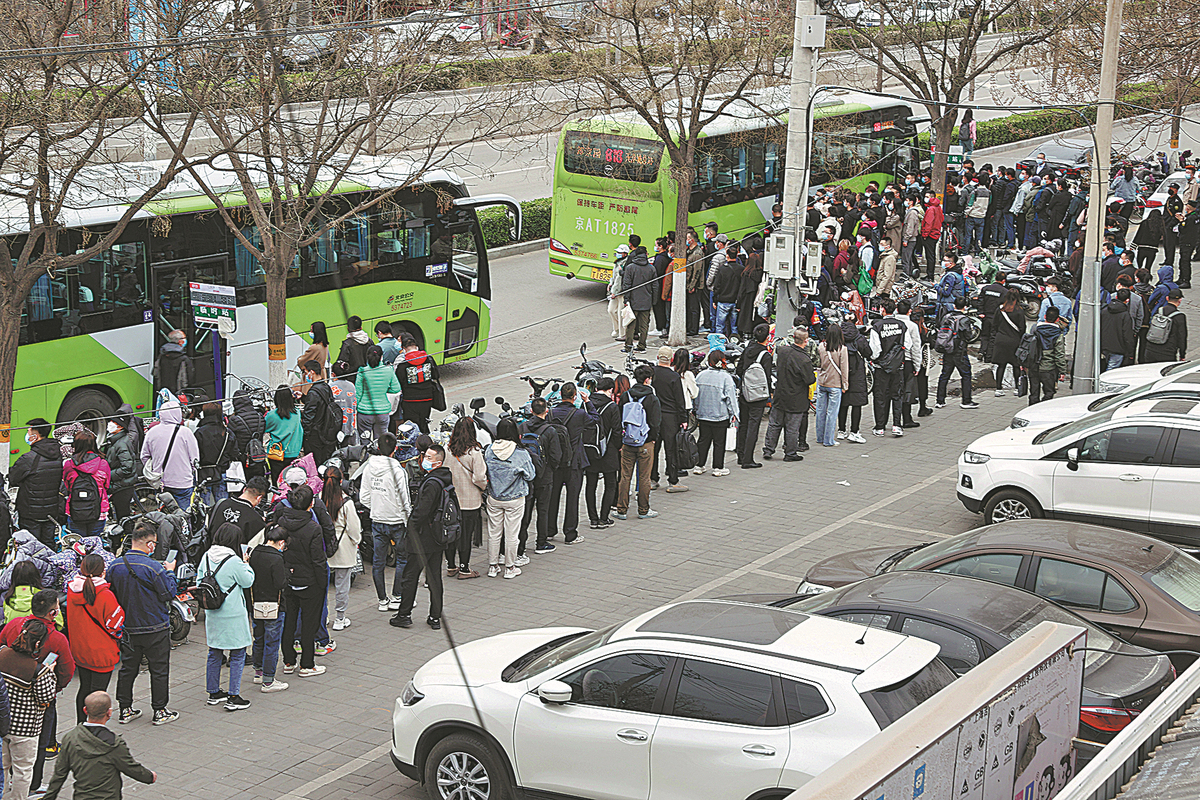
Early start
Zhang Zhixiang, who lives in Sanhe and works in central Beijing, gets up at 5:30 am and sets off for work 30 minutes later.
He usually arrives at the office at 8:30 am, traveling by bus and subway.
"Like me, tens of thousands of people spend four to six hours a day commuting. I live in a large residential community, where most of my neighbors work in Beijing," he said.
"I don't know how much longer I can stand this life of cross-city commuting, because it leaves me feeling drained. But I have a big economic burden paying for my apartment and my two kids' education, so I have to sacrifice my time and try hard to strike a balance between work and family life."
To spend more time with his family, Zhang is looking for job opportunities in Tongzhou, eastern Beijing, which is closer to his home in Hebei.
In past decades, a large number of people unable to afford high real estate prices in downtown Beijing have chosen to buy property and live in neighboring counties in Hebei.
The Beijing-Tianjin-Hebei Integrated Development plan, approved in 2015, is a national strategy aimed at helping the three provincial-level governments redistribute resources and industries from the capital to nearby regions to achieve better growth.
During the fifth session of the 13th Beijing Chinese People's Political Consultative Conference in January, Mao Daqing, a CPPCC member, said the total population of the Beijing-Tianjin-Hebei cluster is 110 million, and the area is home to 57 million commuters.
To get to work in Beijing, some 2 percent of these commuters have to cross different administrative regions, most of them neighboring the capital, Mao said.
"Around 900,000 people living in the cluster enter and leave Beijing each working day because of their jobs. Thus, the cost and time spent on commuting affect their sense of happiness to a large extent."
In Xianghe, Dachang and Sanhe, the three counties that are closest to Beijing, the total number of daily commuters has reached about 100,000. The main forms of transportation they use are cross-city buses and private cars, and they spend more than two hours on average commuting each work day.
After the COVID-19 pandemic emerged in early 2020, it took even longer for commuters from these counties to travel between home and work, as they had their health codes and nucleic acid test results checked before entering Beijing.
To provide a better service for cross-city commuters, Mao suggested the authorities should relocate checkpoints and accelerate the construction of railways between the capital and the three counties.





