



Infrastructure cooperation could be an option









There are big differences between China and the United States, but from the business and economics point of view, differences mean complementarity, compatibility and win-win cooperation, so the two countries should strive to ensure that differences become a source of strength, cooperation and common growth, not conflicts.
Sino-US trade structure still shows strong complementarity, and the US' trade deficit can be attributed more to the two countries' economic structures. Since China is at the middle and low end of the global value chains while the US is at the middle and high end, the two sides need to adjust their economic structures to cope with the changes in global supply and demand.
Currently, Sino-US economic ties are marked by contentious issues such as the widening trade deficit, differences in trade rules, and disputes over intellectual property rights. But these are inevitable in competitive cooperation.
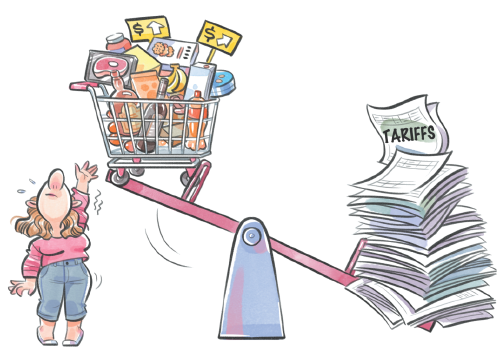
As for the US' punitive tariffs on Chinese goods, studies show they are hurting the US more than China. That's why tariff reduction and trade liberalization is in the common interest of the two countries.
Besides, as trade liberalization with other countries can alleviate or offset the negative spillover effects of Sino-US trade disputes, as analyses show, China should continue to further open up its economy, develop more global partnerships and help build an open world economy for its own benefit as well as that of the world.
Sino-US trade disputes are both a challenge and an opportunity for China. For example, the US tariffs target the "Made in China 2025" policy. And if they succeed in impairing "Made in China 2025", China's advanced manufacturing industry will bear the brunt, which will reduce the country's import scale and overall foreign trade and decelerate the advanced manufacturing industry's transformation and upgrading.
However, it also offers China the opportunity to develop its own high-end and core technologies, and prompts its high-tech enterprises to think beyond their traditional development mode, shed the heavy dependence on imports and original equipment manufacturing, and intensify research and development to facilitate innovations and move toward the middle and high end of the global value chains.
Also, when the time is right, China and the US should widen their framework for trade negotiations to include infrastructure cooperation, because such cooperation will not only ease trade tensions but also promote deeper economic integration between the two sides.
For example, given its expertise and experience in building giant, high-quality infrastructure facilities and use of advanced technologies in infrastructure construction, China is well positioned to participate in the US' infrastructure development plan. And since most of the US' infrastructure was built in the 1960s or earlier, many of them have completed their lifespan and need to be replaced or overhauled and, accordingly, US President Joe Biden's "New Deal", the largest US infrastructure modernization and expansion plan since the 1950s, includes a large-scale infrastructure construction program.
If the two sides were to cooperate on such plans, Chinese enterprises will become more familiar with international rules, get a better grasp of advanced technologies and learn to adapt to the strict business environment of developed countries, while improving their global competitiveness.
In fact, infrastructure cooperation can bring the world's two largest economies closer, which, while getting them economic benefits, will also strengthen political mutual trust and people-to-people exchanges, and promote global economic stability and prosperity.
Moreover, since China and the US face some common challenges, they should identify possible areas of cooperation. For instance, they should strengthen cooperation on epidemic prevention and control and share their experiences of containing the pandemic with other countries, because the COVID-19 pandemic has once again shown no country is immune to global public health emergencies.
The views don't necessarily reflect those of China Daily.

If you have a specific expertise, or would like to share your thought about our stories, then send us your writings at opinion@chinadaily.com.cn, and comment@chinadaily.com.cn.





