SMEs to digitalize, become resilient in face of pandemic









More efforts are needed from Chinese small and medium-sized enterprises to drive digital transformation, as digital resilience will become a key for smaller companies to quickly respond to business disruptions amid the COVID-19 pandemic, according to government officials and industry experts.
"The pandemic has made a number of companies, especially SMEs, aware of the important role of digital transformation and the competitiveness and dividends brought by digital transformation," said Xu Xiaolan, vice-minister of the Ministry of Industry and Information Technology.
Xu said during the pandemic, the industrial internet, for instance, has enabled many smaller companies to quickly resume work and has greatly improved their efficiency of pandemic prevention and control.
"Leveraging digital tools can also help SMEs in predicting market changes in advance so that they can improve intelligent decision-making to cope with market fluctuations and achieve on-demand production," she said.
Xu's words echo an example of a small clothing company from Weihai, Shandong province, leveraging Haizhiyun, a subsidiary industrial internet platform of home appliance giant Haier, for digital transformation amid the pandemic.
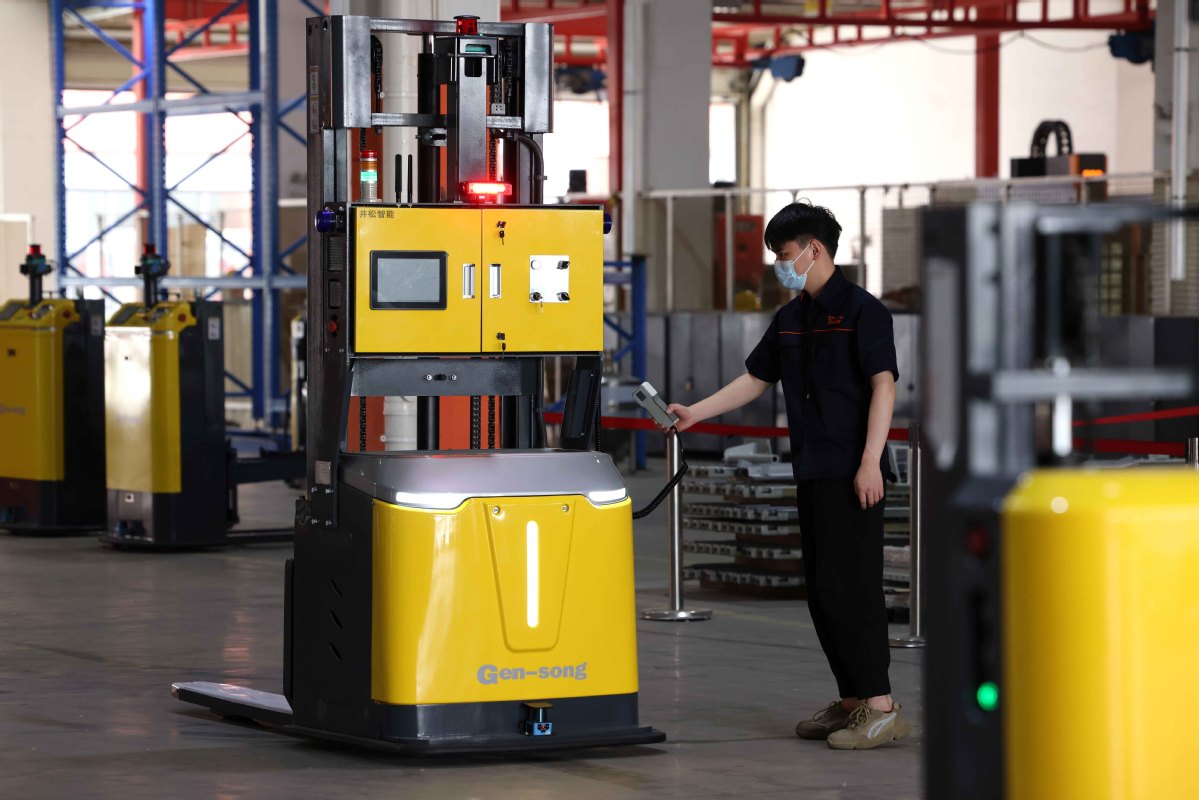
The industrial platform has helped the small company to carry out warehouse management, intelligent retrieval and sorting, and automatic inventory on the internet, which has greatly relieved limited human power in the factory.
"Given that SMEs are more vulnerable to fluctuations in supply and industrial chains, the MIIT is also encouraging digital service providers to reduce SME cloud platform costs, so that they can better leverage digital technologies to boost efficiency amid difficulties," she added.
MIIT data showed that in China, SMEs are responsible for nearly 50 percent of the nation's tax revenue and 60 percent of GDP.They also contribute to 70 percent of the nation's technology innovation and 80 percent of urban employment.
The overall digitalization level of the country's SMEs is relatively low at present. Data from the MIIT showed that only 25 percent of enterprises in the country have carried out digital transformation at the very beginning of 2021 while the proportion of small and medium-sized enterprises is even smaller. The data from this year has not yet been released.
Huo Jinjie, president of International Data Corp China, a market research firm, said digital resilience has become a key phrase for the country's enterprises to survive and grow over the past year and more.
"Digital resilience, which refers to an organization's ability to rapidly adapt to business disruptions by leveraging digital capabilities, will not only enable businesses to restore operations but also drive them toward more innovations and growth," Huo said.
The IDC predicted that 65 percent of global GDP will be driven by digitalization by 2022 and will drive over $6 trillion of IT spending from 2020 to 2023.
According to Wu Lianfeng, IDC China's vice-president and chief research analyst, national strategic technological prowess, modern industrial systems, dual-circulation development patterns, digital construction, regional development and green transformation will be the keywords for digitalization in the coming years.
Zhao Hongqiang, chief financial officer of Bairong Inc, a Chinese provider of financial big data analytics and other services, said that demand for digital and online transformation from SMEs has surged since the COVID-19 outbreak.
"As China has committed to accelerated efforts in digitalization, including safe financial digitalization, Bairong has been actively embracing supervision and striving to empower traditional banks and SMEs for digital transformation," Zhao said.
Digital economy is a key focus of the 14th Five-Year Plan (2021-25), during which China aims to push forward the digitalization of a raft of industries. The plan also highlights the necessity to promote financial digitalization to be safe and controllable.
"The country's financial sector is also transforming to serve more SMEs in the next 10 years. This trend will inject new vitality into the real economy through fintech innovations," he added.