Investment today is a question that is bitter-sweet









Editor's note: More than four decades of reform and opening-up have not only turned China into the world's second-biggest economy but also changed Chinese people's lifestyle. A veteran journalist with China Daily takes a look at the change in Chinese people's financial management.
Chinese people are known for their thrift and savings. Floods in the Yellow River and Yangtze River regions, as well as droughts over the centuries taught the Chinese people the importance of savings to survive.
When I was young, even families that could hardly make ends meet put aside a small percentage of their income for a rainy day. The sum they saved could be an insignificant 2-3 yuan (of much higher value than today), but that was enough to give my parents' generation a sense of security.
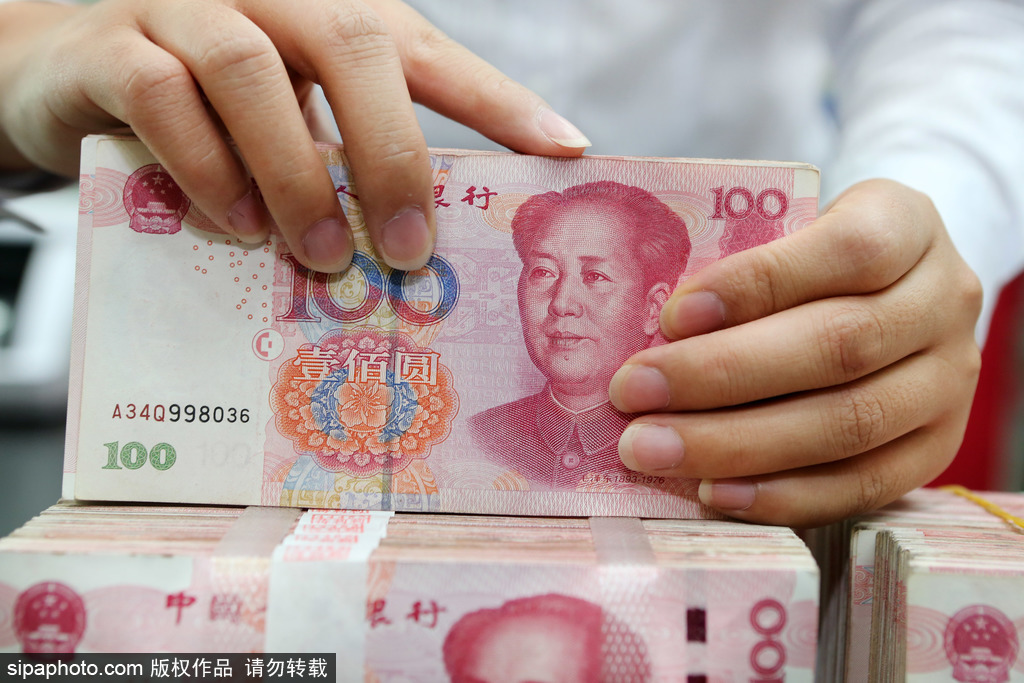
Thanks to the fast rise in incomes-the average income in China is more than 100 times compared with that four decades ago-by 2008, China had become the world's leading country in terms of individual savings. It has maintained that position even though people today save only 44 percent of their income, as compared with the high of 56 percent 10 years ago. Data show on average a Chinese person has savings of 69,900 yuan ($10,296.08).
Personal deposits kept increasing even at the height of the COVID-19 pandemic in China. In 2020, personal savings increased by 11.3 trillion yuan, meaning on average the Chinese people increased their savings by 8,000 yuan each. Some experts say people probably put aside the money they would have otherwise spent on traveling.
For many today, however, the problem is what to do with their hard-saved money.
Depositing the money in a bank is the safest bet, but the humble interest rate is often below the rising consumer price index. So grandmas favor purchasing state bonds, which again take a long time to mature and the interest rate is hardly impressive. During the 2008 global financial crisis, millions of Chinese people rushed to buy bonds, but most of them are still lying in lockers.
Some financial institutions, such as P2P companies, once offered interest rates as high as 20 percent to lure investors but many of them went belly up or were exposed as Ponzi schemes. Friends who invested their life's savings in such schemes failed to get a penny back because the operators were nowhere to be found.
Buying shares in the stock market could be an option but it carries a lot of uncertainties. When China launched the Shenzhen Stock Exchange in 1988, people didn't know much about stocks or the stock market, and hesitated to invest in it. So the local government had to compel government employees to buy shares to support the stock exchange. The early birds made a fortune, quite unexpectedly, as a result.
Millions of people made huge amounts of money in the stock market even in later years, which they have used to buy apartments thereby boosting the real estate sector. During the heydays of the stock market, a large percentage of people seemed involved in buying and selling stocks. Once I overheard some blind masseurs in a massage parlor I visited talking about the ups and downs of their shares.
The good days of the stock market came to an end when China's stocks nosedived in 2008, with the Shanghai Stock Exchange index falling from 6,124 points to the present 3,000-odd points.
When mutual funds were introduced in China at the turn of this century, people welcomed it thinking their investments, being managed by experts on their behalf, would be safer than shares. That was true until recently when many mutual funds fell below their purchase rate because of reasons such as the slowing down of the economy and the impacts of COVID-19.
When the disappointed share and fund holders turned their eyes back to the real estate, they realized housing prices were already too high to rise any further. Worse, to curtail rising housing prices, many local governments have stopped "outsiders" from buying houses.
The investment channels for many people have shrunk, which partly explains why private bank deposits are increasing against the backdrop of the pandemic-induced economic slowdown.
So, where should people invest?
That's a sweet-bitter question. It's sweet because people have money to invest. And bitter because many people have no idea how to make money out of money.
kangbing@chinadaily.com.cn
The author is former deputy editor-in-chief of China Daily.
If you have a specific expertise, or would like to share your thought about our stories, then send us your writings at opinion@chinadaily.com.cn, and comment@chinadaily.com.cn.