



Global food shortage challenge taking shape









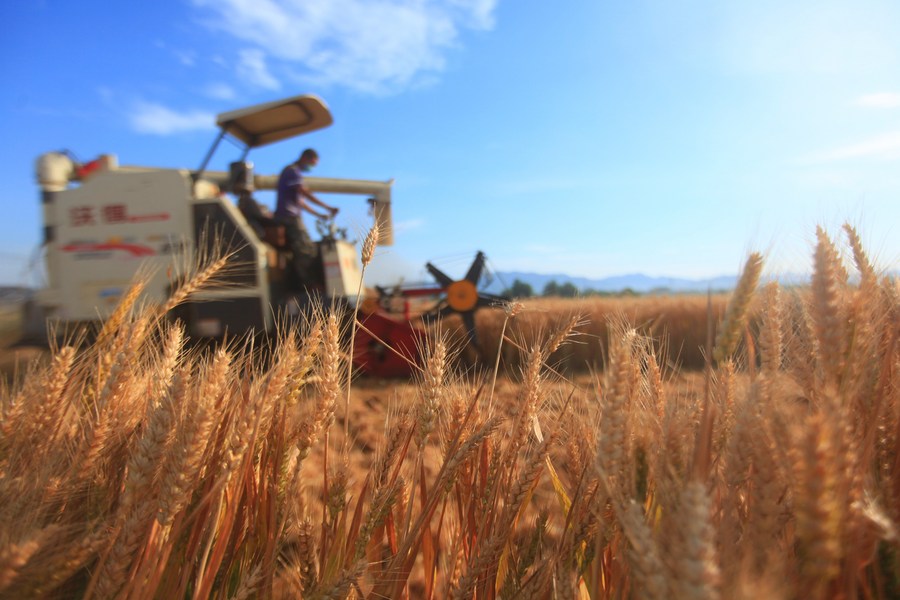
The Ministry of Agriculture and Rural Affairs recently urged local governments to stop farmers from cutting green wheat to sell it as silage to fodder enterprises.
It is necessary for the authorities to take actions immediately to put an end to the practice that, if unchecked, will necessarily affect the output of grain. The comparatively low temperatures and heavy rainfall this year, along with the higher prices of fodder and chemical fertilizers, mean the harvest this year might be affected.
It will be more difficult for the country to maintain the growth rate of its grain output this year, which it has maintained for about a decade, due to colder, wetter weather, the COVID-19 epidemic and the dramatic hikes in the prices of chemical fertilizers as a result of the conflict in Ukraine.
As such, although the country can currently satisfy 98 percent of its demand for wheat and rice, the gap will probably widen in the foreseeable future, and China will have to increase its imports of grains.
However, many main grain producers, including the United States, France and India, are also affected by unfavorable weather conditions, and supplies of grain from Ukraine and chemical fertilizers from Russia have been disrupted.
At present, the price of spring wheat in the world market has already hit the highest level since 2008, and the World Bank predicts that the global food price, which grew 31 percent last year, will continue to surge 23 percent this year.
China should not only be alert to food security issues, but also pay attention to the food crisis and the food politics it may lead to. Inflation and food shortages in Sri Lanka forced the prime minister to resign, and more countries are likely to come under pressure from the food and energy crises.
The global food crisis is closely related to the US. Historically, the start of easy monetary policy by the Federal Reserve in 2001 sharply boosted commodity prices, including agricultural goods; The outbreak of the Iraq war in March 2003 triggered a global food crisis by affecting logistics and oil prices. Now, food and energy prices have surged in the past year, fueled by the Fed's unlimited easing.
Western sanctions imposed on Russia have further pushed up international energy and food prices.
To curb its oil price hikes, the US has turned to high-ethanol gasoline, suspending a federal rule to permit 15 percent ethanol-blend gasoline to be sold at the pumps from June to September, which will likely exacerbate the global food crisis. Last year, 300 million tons of grain was used to produce biofuel.
That's why, as the most populous country and the world's major food importer and largest energy importer, China has to prepare for the coming of a world food crisis and do all it can to ensure national food security.





