



Tibetan relics show solid cultural bonds









The Potala Palace, a landmark in Southwest China's Tibet autonomous region, features a mural that illustrates a historic marriage between members of the Han and Tibetan ethnic groups.
The mural depicts ancient Tibetan officials standing in a row, holding their hands in front of their chests, to welcome Wencheng, a princess of the Tang Dynasty (618-907). The princess traveled to Tibet to marry local ruler Songtsen Gampo in the seventh century.
Similar to the mural, many other relics in Tibet have helped further uncover cultural communication between the plateau region and the rest of China.
Murals depicting the marriage between Wencheng and Songtsen Gampo are also found in the Samye Monastery, a famed Tibetan Buddhist temple in Lhokha city, Tibet.
"Princess Wencheng brought new varieties of crops to Tibet, and also helped improve local livestock breeds," says Basang, a 64-year-old monk from the monastery. "She made outstanding contributions to the unity between Han and Tibetan people."
Built in the eighth century on the northern bank of the Yarlung Zangbo River, the Samye Monastery was listed as a key cultural heritage site for national-level protection in 1996.
The temple is also a manifestation of cultural integration. The first floor of the main hall, built with rocks, features a Tibetan architectural style. The second floor, on the other hand, uses bricks and wood in a Han style, says Basang, adding that the murals and statues on each floor are also consistent with their respective styles.
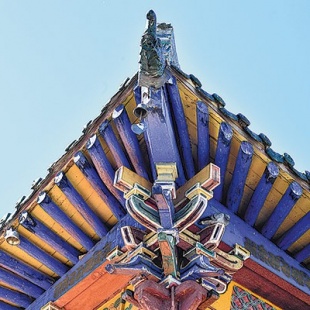
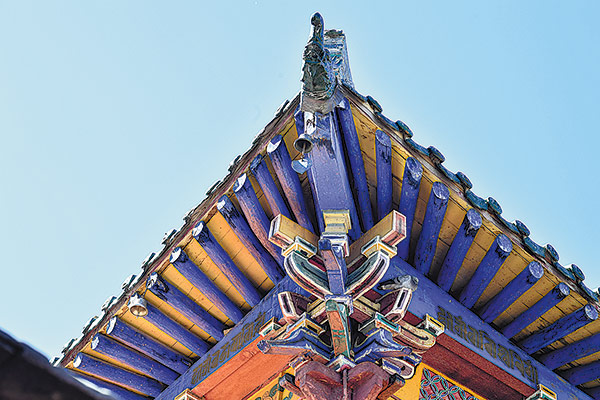
The Shalu Monastery, built in 1087 in Shigatse city, is another example of a mix of architectural styles. The first floor combines traditional Tibetan architecture with cultural traits popular in the Yuan Dynasty (1271-1368). Notable design choices from this period include the blue glazed tiles and patterns of the lion, tiger and flowers on the roof ridge.




















