Country has already made strides toward second centenary goal










As the world's second-largest economy since 2010, China has now achieved, on schedule, its first centenary goal of building a moderately prosperous society in all respects. It also has begun a new journey toward the second centenary goal of building a modern socialist country in all respects.
Determined to revitalize its economy in the post-COVID-19 era, China has demonstrated, through the Government Work Report delivered by Premier Li Keqiang at the fifth session of the 13th National People's Congress, Beijing's commitment to conquering various challenges to spur economic growth.
China's GDP grew 8.1 percent last year, the largest jump since 2011, according to the National Bureau of Statistics. For this year, China has set its GDP growth target at around 5.5 percent, and aims to maintain the consumer price index at around 3 percent-the same as last year-and create more than 11 million additional jobs, according to the Government Work Report.
China has put forth what could be seen as "strategic public goods", or the key strands for achieving the second centenary goal.
The first is the dual circulation paradigm, in which the domestic market is the mainstay and the domestic and foreign markets reinforce each other. China plans to tap into its huge domestic market of 1.4 billion people to build a high-standard socialist market economy.
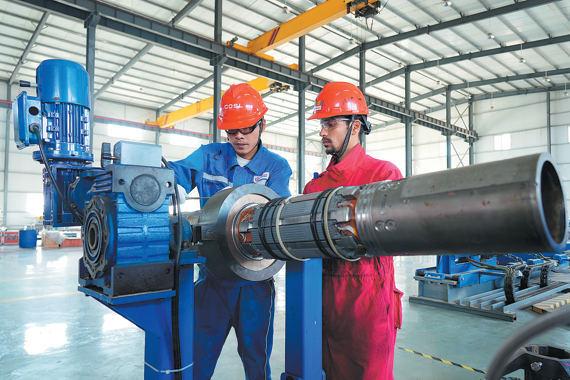
This year, China is focusing on boosting manufacturing as well as micro, small and medium-sized enterprises, or MSMEs, through the implementation of a new package of tax and fee policies.
The tax refunds and cuts are expected to total around 2.5 trillion yuan ($394.3 billion) this year. By doing so, China will be able to inject fresh vitality into manufacturing and MSMEs and, in return, the enterprises will generate employment, promote entrepreneurship and innovation, and boost domestic investment.
The second strand is the development of the digital economy. The COVID-19 pandemic has accelerated the process of enhancing digital transformation. Globally, data and cross-border data flows have increasingly become crucial to economic and social development.
This year, China plans to build more digital information infrastructure and apply 5G technology on a larger scale.
Furthermore, the nation plans to build smart cities and digital villages, advance digitalization of industries, accelerate the development of the industrial internet, build up digital industries such as integrated circuits and artificial intelligence, and enhance China's technological innovation and supply capacities for key software and hardware. All these measures will ensure viable gains for all its people and the global community.
The third is the pursuit of the Global Development Initiative.
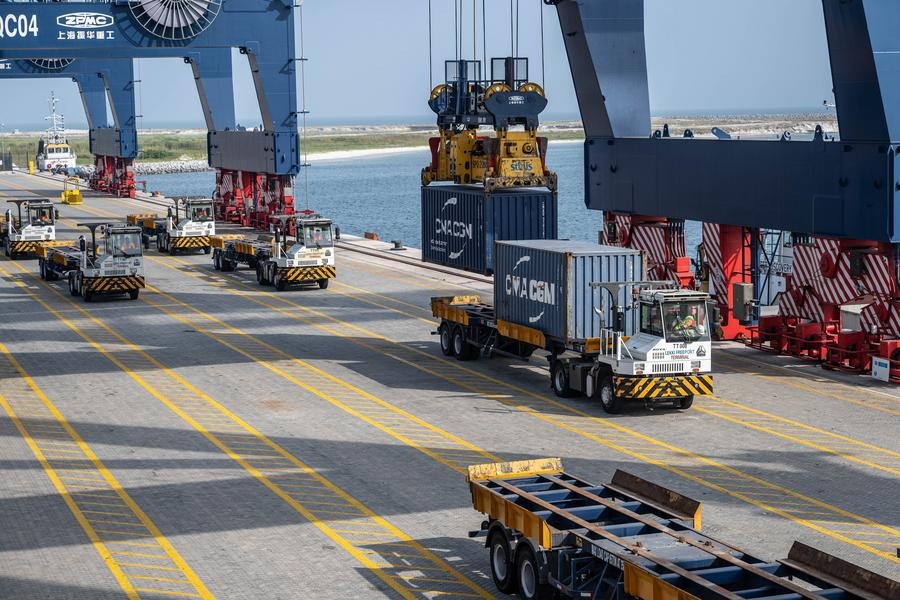
Having lifted more than 800 million people out of absolute poverty, China, as a global leader, has partnered with like-minded countries to promote the shared values of all humanity. This has seen China deepen its multilateral and bilateral economic and trade cooperation.
Committed to the principle of achieving shared growth, China by mid-January signed over 200 Belt and Road Initiative cooperation documents with 147 countries and regions, and 32 international organizations.
The fourth strand is enhancing ecological civilization.
In ensuring greater harmony between humanity and nature while pursuing development, China is committed to addressing pollution and protecting and restoring ecosystems. This will see China step up the treatment of solid waste and new pollutants and implement measures to sort refuse, reduce waste and boost recycling.
Furthermore, China is working hard to make coal use cleaner and more efficient, while reducing the use of coal and replacing it with alternative energy to achieve a carbon emissions peak by 2030 and carbon neutrality by 2060.
These "strategic public goods" are just a glimpse of China's commitment to achieving sustainable economic growth and development this year.
It is worth noting that the peaceful rise of China is not aimed at achieving global hegemony. China's goal is to achieve a modern socialist country that is prosperous, strong, democratic, culturally advanced, harmonious and beautiful, and to realize the Chinese dream of national rejuvenation.
The author is executive director of the China-Africa Center at the Africa Policy Institute in Nairobi, Kenya.