



Advancing rule of law in sports essential









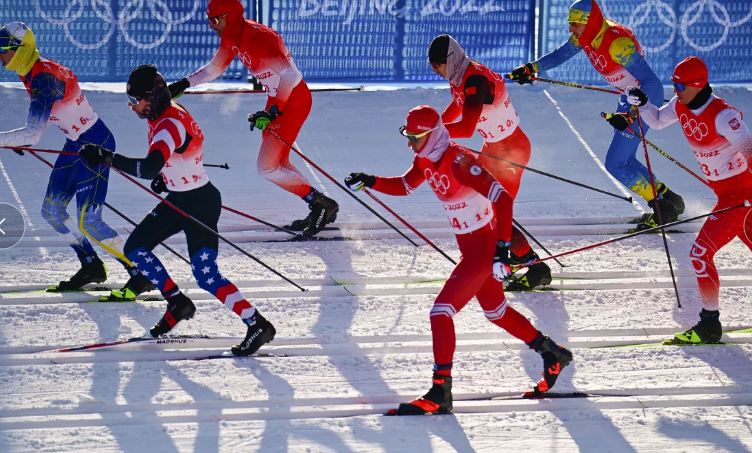
The Beijing Winter Olympics and ongoing Winter Paralympics have attracted worldwide attention and put China on the road to becoming a global sports power.
The 14th Five-Year Plan for Sports Development (2021-25) is aimed at transforming China into a global sports power. Establishing the rule of law in sports, in fact, has become an important part of the comprehensive plan of strengthening the rule of law in the country.
After implementing the Law of the People's Republic of China on Physical Culture and Sports (the Sports Law) in 1995, the government has issued several administrative regulations on sports, such as the Regulations on Public Cultural and Sports Facilities, the Regulations on Anti-doping, the Regulations on National Fitness, and the Guiding Opinions on Accelerating the Promotion of National Youth Ice and Snow Sports in Schools.
It is this commitment to follow the Sports Law and sports regulations, both domestic and international, that has helped China to successfully host the Beijing 2008 Summer Olympic Games and the 2022 Winter Olympic Games.
So far, one specialized law on sports, several sports-related laws and a series of administrative regulations on sports at the national and local levels have been issued in China.
Also, China has been revising and improving its legal system for administration of sports. For example, in 2002, China implemented the Regulations on the Protection of Olympic Symbols to protect Olympic intellectual property rights, which has played an important role in ensuring the smooth holding of the Olympic Games.
China revised the regulations in 2018 after successfully bidding for the 2022 Winter Olympics. The most important revision was aimed at extending the scope of protection of Olympic IPR to the symbols of all bidding institutions and organizations involved in hosting the Olympic Games in China. In addition, the amendments to the trademark law, the patent law and other IPR laws have increased the punishment for infringement of the exclusive rights of the Olympic logo.
In December 2021, Amendment (XI) to the Criminal Law added the crime of obstructing doping management to curb the illegal acts of promoting and abetting doping, such as organizing and forcing athletes to use banned drugs; luring, abetting and deceiving athletes into using performance enhancing drugs in major domestic and international sports competitions or providing them with stimulants.
The Sports Law of 1995, too, is being amended to facilitate the implementation of the national policy for strengthening sports and build a "healthy China", address the major problems in the development and reform of physical culture and sports, coordinate the agencies and activities related to physical culture and sports; and further promote the development of physical culture and sports according to law.
China also takes active interest and participates in international sports arbitration. Five arbitrators from China have been on the panels of the ad hoc divisions of the Court of Arbitration for Sport that were established to resolve through arbitration the disputes between parties during the Olympic Games since the 1996 Summer Olympic Games. And the Shanghai Hearing Center of the CAS was established in 2012, becoming the first alternative CAS hearing center in Asia.
The main goals of the Shanghai hearing center include conducting hearings on CAS cases, providing consultation on sports disputes, holding seminars and training programs for international and domestic sports arbitration, promoting international sports arbitration, and doing other works related to sports disputes resolution. The center has been handling cases, including international disputes in professional soccer.
However, some important issues and problems need to be addressed to comprehensively establish the rule of law in sports in China. For example, how to further protect and strengthen physical education? How to further popularize sports activities nationwide? How to deepen international sports cooperation? How to build a perfect sports arbitration system? And how to make sports activities and events safer?
The Sports Law of 1995 stipulates that in case of a dispute in competitive sports activities, sports arbitration institutions should mediate and arbitrate. Along with the rapid development of China's sports industry in recent years, sports dispute cases have been rising. So it is important to build a sports arbitration system with Chinese characteristics which is in line with international norms and practices.
In fact, the new chapter on "sports arbitration" in the revised draft of the Sports Law stipulates expanding the scope of sports arbitration, arbitration institutions and arbitration procedures. And China is committed to training high-level professional talents in sports law, including judges, arbitrators and sports law experts.
The views don't necessarily reflect those of China Daily.
The author is a research fellow with the Institute of International Law, Chinese Academy of Social Sciences.





