


Flying high










Editor's Note: Beijing is co-hosting the 2022 Winter Olympics and Paralympics with Zhangjiakou in Hebei province. From culture and cuisine to tourism and the arts, we take you to the attractions in these areas of North China for an unforgettable stay.
On a cold, frosty winter morning, craftsman Yang Liping, 59, wakes up early, driving more than an hour to a community service center in Beijing's Tongzhou district.
There, he begins his workshop for elderly residents, unpacking his well-worn toolkit as he introduces them to the traditional shayan (swallow) kite and guides them in a hands-on experience of the popular, quintessentially Chinese craft.
"Swallows fly from the north to the south when it gets cold, and migrate back to the north when spring arrives. The bird can, to some extent, symbolize the bond between the north and the south in China," says Yang.
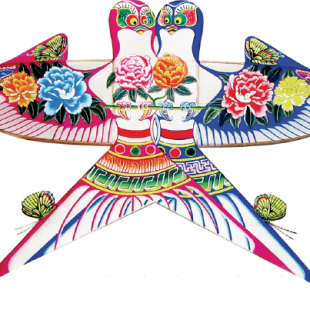
Swallow shapes and images are widely used in making shayan kites. Those sporting a thick girth represent brawny men, while wasp-waisted ones symbolize graceful ladies; a pair of inseparable birds, of course, portray an affectionate couple.
Shayan kite-making can be traced to skills practiced by Cao Xueqin during the Qing Dynasty (1644-1911). Cao, better known as the author of Chinese literary classic A Dream of Red Mansions, designed swallow-shaped kites, with their patterns, colors and symmetrical structure reflecting Chinese people's traditional aesthetic preferences.
Cao also wrote a book in which he used catchy rhymes to explain the complicated process of making different styles of swallow-shaped kites. The book details how to paint the outer coverings of the kites, and how to choose suitable raw materials for their frames to better help the kite keep balance when the wind changes direction.
Many Beijing residents went on to enjoy the beautifully designed kites first laid out by Cao, attracting craftsmen to master and perfect the skills needed to make them through the years.
Yang is one of the inheritors of the time-honored craft. After his brief introduction of the shayan kite, Yang demonstrates the use of silk fabric, bamboo chips and paper to form the base of the kite, encouraging workshop participants to add colorful paint to decorate kite coverings.
Tang Ling, deputy director with the folk artists association of Beijing's Dongcheng district, assists Yang with his kite-making classes.
The association regularly organizes sessions by artists and craftsmen like Yang to teach folk crafts such as paper-cutting and dough figurine-making in schools and communities, she says.
At the end of his workshop, Yang uses a rag to carefully remove any paint left on desks in the room. He has been conducting more kite-making classes in communities, centers for the elderly and schools in recent years.
For Yang, kite-flying is a nostalgic pastime. "In the past it was common to see parents and their children go out to fly kites of various sizes and colors in parks and squares across Beijing during springtime," he says.
As a Beijing native who once lived near the Temple of Heaven Park, Yang himself used to take his son out to fly kites there.
One day in 1996, when Yang and his son were flying their kites, he came across Fei Baoling, a veteran craftsman of shayan kites who also had a hand in transcribing and illustrating the kite-making book written by Cao.
Yang was impressed by the elaborately designed kite templates collected by Fei and showed a growing interest in the kite-making craft.
He later left his construction industry job and became an apprentice of Fei.
"The craft strongly appealed to me as I never imagined that there was such a great deal of knowledge and expertise in kite-making," he recalls.
Yang learned to draw swallows of various styles and integrate different design features into the birds' image to express good wishes. For example, in traditional Chinese culture, peach-shaped decorations symbolize longevity and bats represent good fortune. Drawing a kite with peach and bat motifs can express the wish-"may you enjoy good fortune and a long life".
"The kite is captivating and I am eager to learn how to draw more delicate ones," says Yang.