RCEP will be biggest driver of global growth









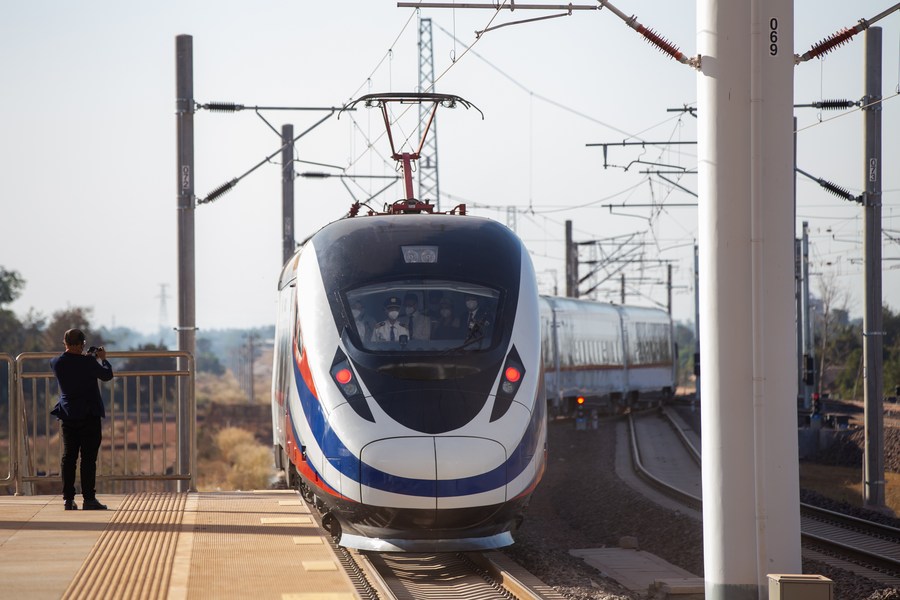
The Regional Comprehensive Economic Partnership, which entered into force on Jan 1, is a landmark achievement of regional cooperation and will give a strong boost to global economic recovery.
The RCEP agreement, an unparalleled, large-scale regional trade arrangement, conforms to the interests of the 15 signatory countries, reflects their common desire to bolster economic cooperation, and demonstrates the global trend of multilateral cooperation and free trade.
Accounting for roughly 30 percent of the world's population, GDP and trade, the RCEP creates the world's largest free trade bloc by economic size, making it the biggest driver of global economic growth.
The member economies of the Association of Southeast Asian Nations will play a leading role in pushing forward the follow-up work regarding the implementation of the RCEP pact, with China having an important part in the process. To accelerate the RCEP's development, ASEAN should accelerate its integration process, and the other RCEP members should collaborate and firmly support ASEAN as it continues to play its leading role in promoting regional economic integration.
At the Special Summit to Commemorate the 30th Anniversary of China-ASEAN Dialogue Relations, held in November, the two sides announced the establishment of the China-ASEAN Comprehensive Strategic Partnership. China also proposed starting negotiations on further upgrading the China-ASEAN Free Trade Area, with the aim of a higher level of trade and investment liberalization and facilitation.
China-ASEAN FTA version 3.0 will create favorable conditions for the RCEP's development. It will also provide reference for the upgrading of the FTAs that ASEAN has with Australia, Japan, New Zealand and the Republic of Korea, thus laying a solid foundation for the development of the RCEP in years to come.
The China-ASEAN FTA enjoys good conditions for further upgrading. Since the FTA was established on Jan 1, 2010, China-ASEAN political and business exchanges and communications have intensified, resulting in ever-expanding trade and investment. The bilateral trade value has more than doubled over the past 12 years, from $292.78 billion in 2010 to $789.53 billion in the first 11 months of 2021.
China and ASEAN have been opening wider to each other, not only boosting their respective economic growth and cementing good neighborliness and friendship, but also expediting regional economic integration in East Asia and making a great contribution to the recovery and growth of the world economy.
The China-ASEAN FTA was upgraded in 2016, and the results delivered by China-ASEAN economic and trade collaboration have fully demonstrated the strong growth momentum injected by upholding multilateralism and free trade. It has also had realistic, far-reaching significance, not just within the region but globally as well.
The advancement of the Belt and Road Initiative over the past nine years has greatly promoted and facilitated the development of the China-ASEAN FTA. Cooperation under the BRI framework has yielded plentiful and substantial fruit, with the concrete outcomes promoting the building of a China-ASEAN community with a shared future.
With a large number of effective cooperation models coming into being, over the past two years, in the face of the grim international trade situation caused by the COVID-19 pandemic, China and ASEAN have made notable progress in economic and trade collaboration against the headwinds.
ASEAN has become China's largest trading partner since 2020, a milestone achievement that has caught domestic and overseas attention. Looking ahead, China and ASEAN will strengthen their close economic cooperation, as the common desire for bilateral cooperation is strengthening, and the opportunities outweigh the challenges.
Noticeably, policies implemented by China for widening its opening-up-such as the continued expansion of its pilot free trade zones, the construction of the Guangdong-Hong Kong-Macao Greater Bay Area and the building of Hainan province into a globally influential and high-level free trade port-offer benefits to the development of both the China-ASEAN FTA and the RCEP.
In the same vein, the Guangxi Zhuang autonomous region recently released a series of measures to carry out better matchmaking with RCEP implementation, encouraging local businesses to set up warehouses in ASEAN countries such as Vietnam and Thailand.
For the development of the RCEP, signatory countries should honor the agreement, jointly inject more positive energy and momentum into their cooperation, solve problems that emerge in the implementation process, and create a more favorable environment for the agreement's implementation.
Signatory countries also need to improve their coordination to ease their respective concerns and synergize their economic plans and industrial policies, so as to find the best focus for their cooperation and further enhance their economic complementarity. Their capacity building needs strengthening, too.
Governments at all levels, business councils and enterprises should substantially enhance their ability to make full use of the RCEP rules and increase the capacity for international cooperation.
In addition, the countries need to promote innovation in their cooperation models and strengthen innovation to propel growth, factoring in new conditions, new changes and, in particular, the new normal of coping with COVID-19.
By rising to the challenges, RCEP members can reap the benefits of their mutually beneficial cooperation and share the dividends of the agreement with the entire world.
The author is executive president of the China-ASEAN Business Council and chairman of the RCEP Industry Cooperation Committee.