



China, Germany show the way to mutually beneficial cooperation









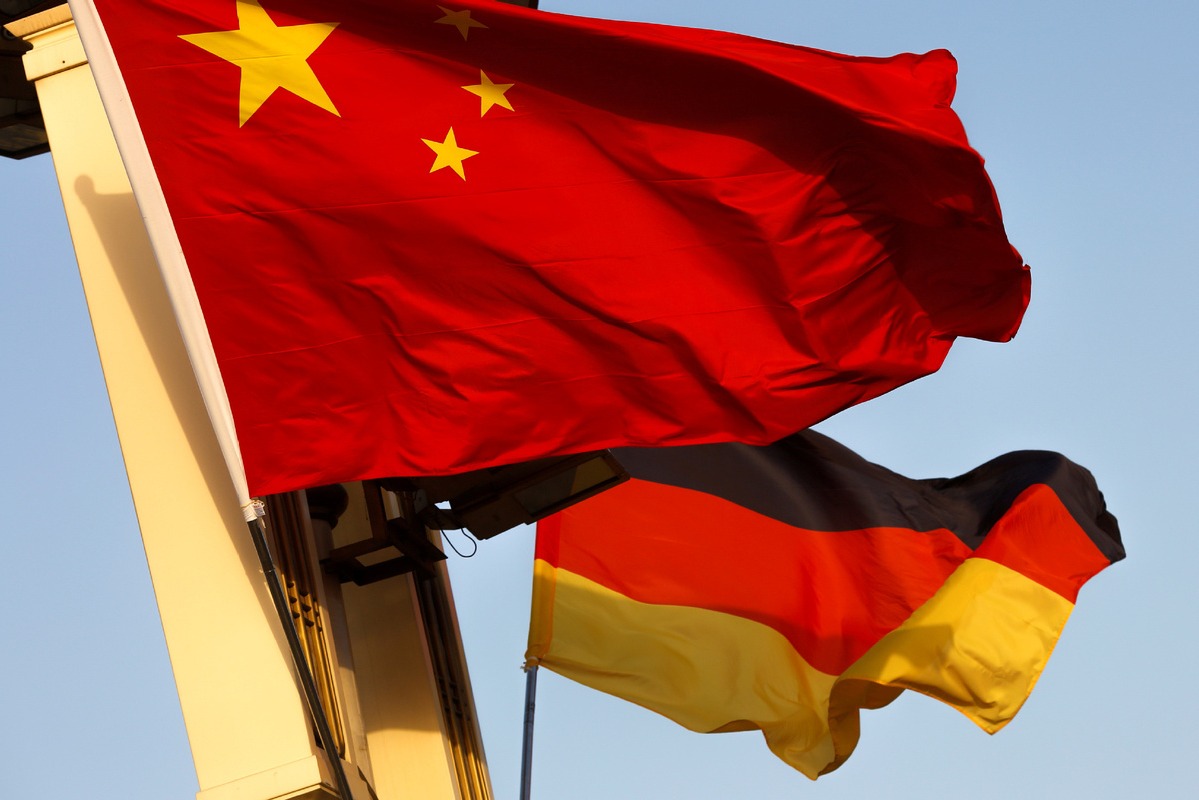
The first phone talk between President Xi Jinping and German Chancellor Olaf Scholz on Tuesday has injected new vitality into China-Germany, and possibly China-European Union, relations.
As the world's second- and fourth-largest economies, China and Germany have developed a strong bilateral relationship in trade and investment, with China being Germany's largest trade partner since 2015, and Germany becoming China's fifth-largest trade partner country last year.
German enterprises, such as Volkswagen, Audi, BMW, Daimler, Siemens, Bosch and Adidas, have become household names in China. And Sino-German cooperation has benefited not just the two countries but the world beyond as well, by helping create jobs, boosting their economies and reviving the global economy given the highly integrated global supply chains.
Duisburg, a city in western Germany, which I visited last month, is an apt "showcase" for such cooperation. The world's largest inland dry port has become the most important hub of China-Europe freight trains linking Chinese and European cities. Which, incidentally, is just the beginning of the huge potential that can be tapped, according to the officials and business leaders I interviewed there.
As former Hamburg mayor and former German finance minister and vice-chancellor, Scholz is a pragmatic leader, and understands well the benefits of Sino-German cooperation. That's is why he has his fingers crossed for an early ratification of the China-EU Comprehensive Agreement on Investment. It took the two sides seven long years to conclude the negotiations on the agreement in December last year.
Unfortunately, the European Parliament has put its ratification on hold due to the tit-for-tat sanctions which started with the EU imposing sanctions on China in March.
Yet Scholz is not the only leader wanting to see the investment agreement ratified. In June, European Council President Charles Michel defended the agreement, saying it is a "huge step in the right direction". And in an interview aired on Wednesday, Sabine Weyand, EU director-general for trade, called it "a good agreement" that will benefit EU businesses, and hoped the ratification process will be revived soon. She also spoke positively about China's 20 years as World Trade Organization member.
But some members of the European Parliament have politicized and hijacked the investment agreement at the cost of EU businesses, especially those hit hard by the COVID-19 pandemic.
Indeed, China and the EU and its member states don't see eye to eye on some issues given their different cultures, histories, political systems and development stages. But most EU and Chinese leaders believe open dialogue and engagement based on mutual respect are a better way to address even contentious issues than disengagement, imposing sanctions on each other and launching smearing campaigns.
Although many politicians in Washington have adopted the latter approach, despite it being counterproductive, to deal with China which incidentally has intensified Washington's zero-sum geopolitical rivalry with Beijing, Germany and the EU should not tread that mutually destructive path, for it could lead to a new Cold War.
Volkswagen CEO Herbert Diess's remarks on Monday reflect the pragmatism shown by many German politicians and business leaders. Diess said: "We need more cooperation and presence in China, not less! It would be very damaging if Germany or the EU wanted to decouple from China."
The fact that previous German chancellor Angela Merkel had been the most respected global leader for years is proof of her successful economic policy and diplomacy. In this regard, Scholz's pledge that he will continue Germany's established foreign policy is good news for Sino-German relations, China-EU relations, as well as international relations.
The potential for cooperation between China and Germany is huge, as is evident from the phone talk between Xi and Scholz — the potential extends from renewable energy and digital technology to nuclear non-proliferation, combating climate change, containing the pandemic and upholding multilateralism.
I'm sure there are a lot more areas China and Germany can cooperate on and learn from each other. That was also the message from Tuesday's phone talk between the Chinese and German leaders.
The author is chief of China Daily EU Bureau based in Brussels. chenweihua@chinadaily.com.cn





