Prudent money policy, stable credit growth to sustain real economy









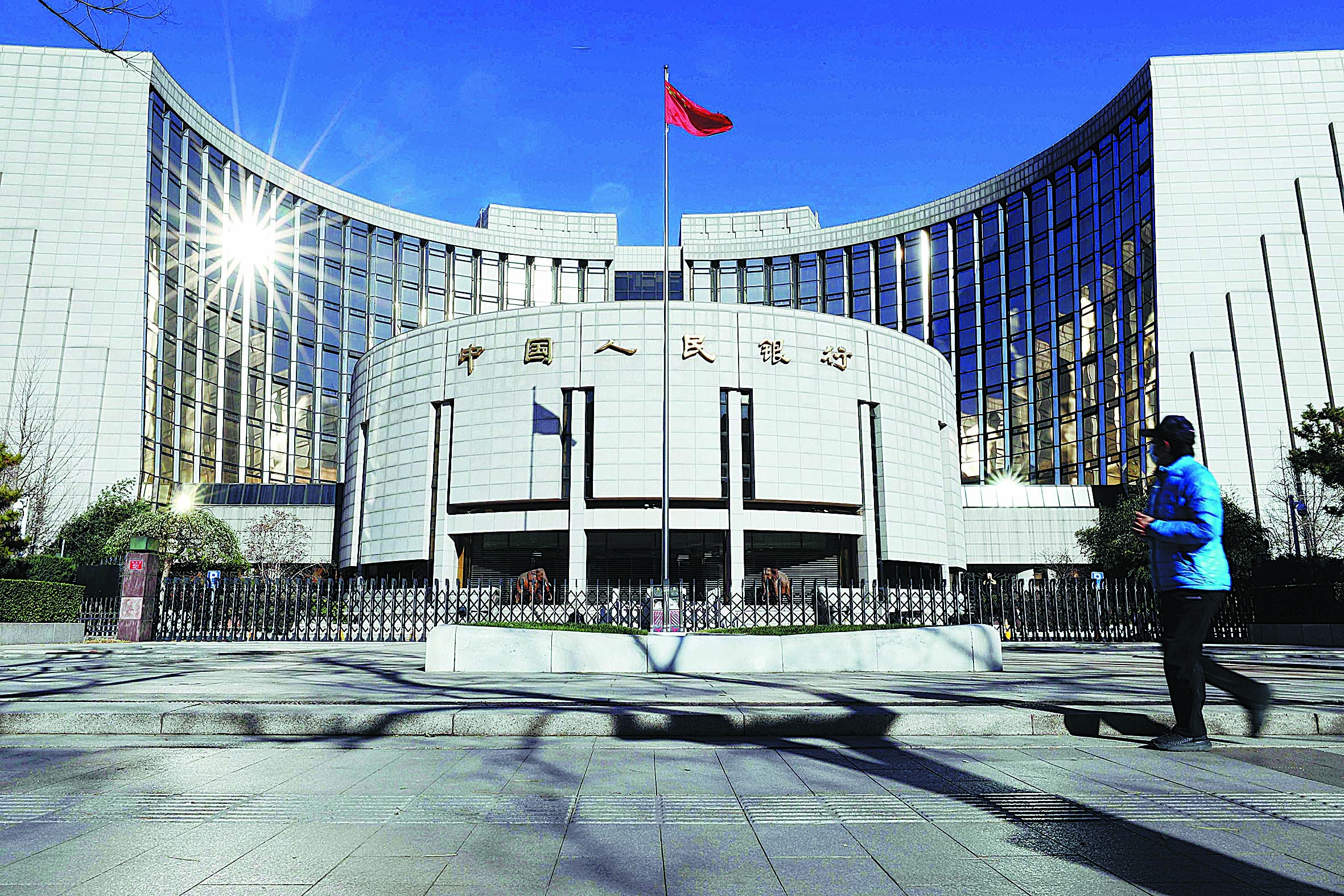
The People's Bank of China, the central bank, said it will implement a prudent monetary policy and stabilize growth of credit to support the real economy.
Like any central bank, the PBOC will take necessary action when inflation risk becomes intolerable, it said.
Monetary measures should strengthen cross-cyclical adjustment, focusing on maintaining liquidity at a reasonable and ample level, as well as keeping the growth of money supply and social financing in line with the nominal economic growth rate, said PBOC Governor Yi Gang at a meeting on Thursday.
According to a statement issued after the meeting, Yi's view is that it is important to stabilize the growth of credit and optimize its structure, in order to keep enterprises' financing cost at a lower level.
The meeting reiterated that China has adopted a prudent monetary policy this year, which is flexible and targeted. The level of companies' financing cost has decreased steadily, and the financial support to the real economy is stable, the PBOC said in its statement posted on its website.
Countercyclical tools seek to offset possible negative effects of economic cycles like a slowing economy by adding stimulus to stoke growth. Such tools could involve tax, credit, monetary, government expenditure and industry policy.
Cross-cyclical tools like interest rate cuts/hikes and higher/lower investment in infrastructure underline small but prompt measures to achieve long-term goals, depending on whether the economy is slowing or accelerating currently.
A day before the meeting, Premier Li Keqiang announced China will double down on financial support for micro, small, and medium-sized enterprises or MSMEs, a move that analysts said will help cushion the current downward economic pressure.
According to a Xinhua report, Premier Li chaired an executive meeting of the State Council, China's central government, on Wednesday where it was decided that from the beginning of next year till the end of June 2023, the PBOC will provide funds to local banks that issue inclusive loans to MSMEs and the self-employed equivalent to 1 percent of the increase in their loan balance, to encourage them to issue more such loans.
The report also indicated that from next year, inclusive credit loans to MSMEs will be incorporated into the relending program for agriculture and small firms. The 400 billion yuan ($63 billion) relending quota previously designated for MSME inclusive credit loans can be rolled over and expanded, if needed.
Analysts from China Construction Bank said on Friday the latest signals and the PBOC's open market operations indicate that the monetary policy stance is still stable and in line with the tone set by the Central Economic Work Conference last week.
"It is expected that financial institutions may increase loans for inclusive and manufacturing financing. Meanwhile, the nation's benchmark lending rate, the loan prime rate, is likely to be reduced this month by 5 basis points, in order to achieve a steady decrease in financing costs," said a research note of China Construction Bank.
The International Department of the PBOC recently authored a research report for China Finance magazine, which indicated that countries have divergent views on whether or not the current trend of inflation is temporary, and whether policymakers need to prepare in advance to act quickly if inflation expectations show signs of "de-anchoring".
Once the expectation of inflation is de-anchored, it could mean the monetary policy will no longer help in achieving the economic growth goal through intermediate adjustment targets, analysts said.
Economists said monetary policy responses are becoming more divergent among central banks. When the PBOC promised to strengthen financial supports for the real economy, the European Central Bank was predicted to maintain interest rates unchanged through 2023, while the US Federal Reserve is expected to raise interest rates in September 2022.
"There are now signs that price level shocks related to pandemic shortages are starting to morph into ongoing inflation. With monetary policy settings still super loose, this is worrying central bankers," said Brian Coulton, chief economist of Fitch Ratings.
The sharp rise in global consumer goods prices since March primarily reflects a surge in goods demand, fuelled by stimulus measures, particularly in the United States, said Coulton. "Goods prices should stabilize in 2022, as spending switches back to services, strong investment boosts goods supply, and fiscal stimulus unwinds."