About 50 kilometers from the venues of the upcoming Winter Olympic Games in Zhangjiakou, Hebei province, a Neolithic archaeological site is telling a much older story about different cultures coming together.
On the Dengcaogouliang site in Chongli district of Zhangjiakou, where excavations have been taking place since 2015, various discoveries, spanning in age from 8,000 to 4,000 years ago, are helping to piece together an intricate picture of prehistoric communication.
According to Wang Gang, a researcher with the Hebei Provincial Institute of Cultural Relics and Archaeology, the findings, including house ruins, pottery, stone tools and ancient city walls, belong to four separate periods: around 8,000 years ago; 6,500 years ago; 5,100 years ago and 4,200 to 4,000 years ago.
"Zhangjiakou is located on a transition zone from the Inner Mongolia plateau to the North China plain, and thus became a crossroads for nomadic and agrarian cultures which mixed with each other in ancient times," Wang says. "This valley site became a trove of relics from different types of cultures."
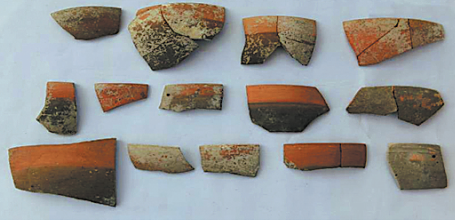
The findings were summarized during last week's online conference of the National Cultural Heritage Administration. A selection of 8,000-year-old pottery items was among highlights from the site. The plain pottery jars, without glaze or paint, are cylindrical. Wang says it may represent a previously unknown archaeological cultural system when combined with studies of findings from other sites in Hebei province.
Pottery is a key indicator marking different cultural types in Chinese archaeology.
The 26 unearthed architectural foundations are a great help to archaeologists determining how dwellings evolved in the area throughout the millennia. New findings at the Dengcaogouliang site also connect many other monumental archaeological cultures in China, Wang says. For example, a house built partly underground, along with painted pottery, believed to date back 5,100 years, bear a striking resemblance to their counterparts from the late period of Yangshao Culture. First discovered in Henan province in 1921, the Yangshao site is widely regarded as the birthplace of modern Chinese archaeology.
The ruins of a city, built with stone and rammed earth, from about 4,000 years ago, were also excavated. Architectural foundations, pottery and jade were unearthed. The city walls were as thick as 13 meters. A defensive system and road networks, newly cleaned out this year, also provide an example for researchers to decode urban construction technology back then.
Wang explains that the city reminds people of the contemporaneous Shimao site in the northern part of Shaanxi province. Nearly 700 kilometers away from the Dengcaogouliang site, the prehistoric city ruins unearthed at Shimao are the largest ever found in China.