



Nation helps BRI regions' tourism recovery









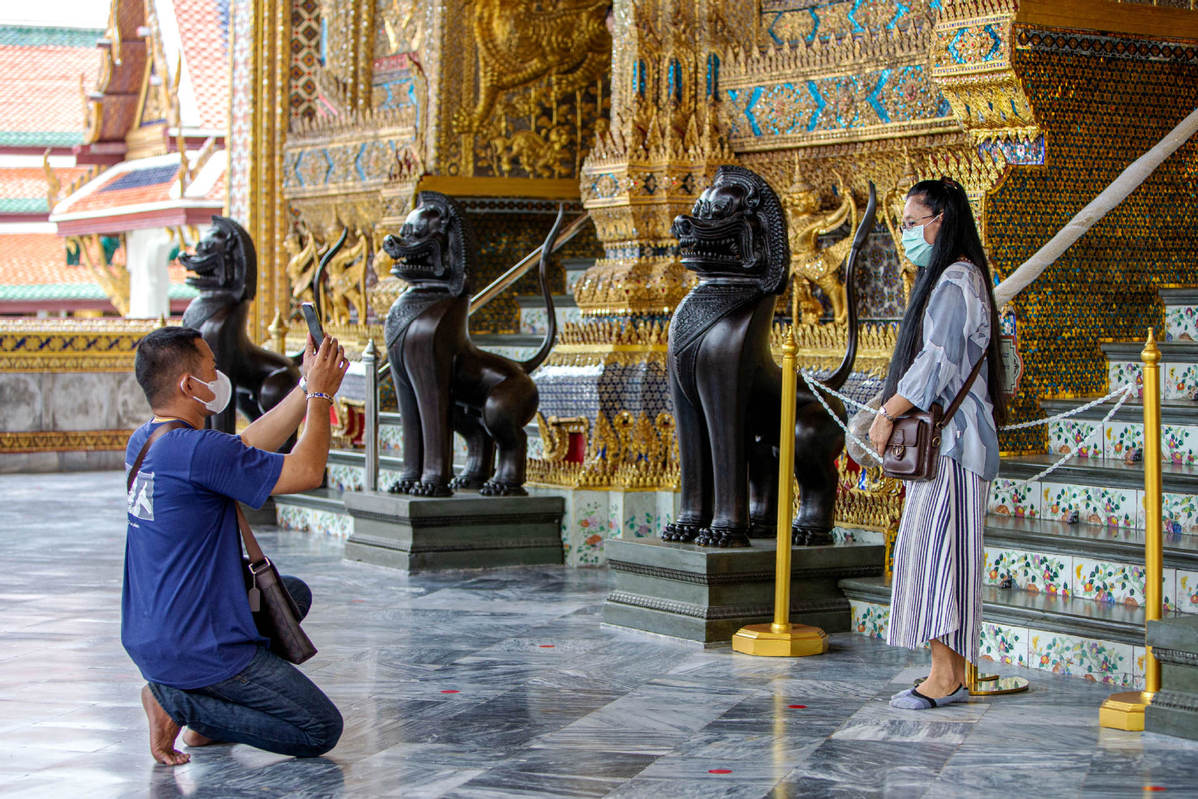
While the rampant novel coronavirus pandemic has been a heavy blow to tourism in nations involved in the Belt and Road Initiative, China has taken positive measures to help relieve their pressures, aiming to balance control and prevention work and the development of domestic travel markets.
A recent report by the World Tourism Alliance and Beijing International Studies University in late October shows that the number of travelers to BRI countries and regions was halved to 447 million in 2020 from the previous year. For perspective, that number is roughly 60 percent of 2013's figure.
Some countries that rely heavily on the tourism industry, such as Thailand and the Philippines, have suffered the most due to the pandemic, the report said. Island nations, including the Maldives and Singapore, saw international travel decline by 77 percent on average last year.
The report said that strict control and quarantine policies-with time spans ranging from seven to 28 days, depending on countries' rules-that affect international travelers are the main causes of plunging tourist numbers.
Zou Tongqian, dean of the China Academy of Culture and Tourism at Beijing International Studies University, said that to solve the problem, BRI nations must try to find a way to balance the need for prevention and control work and tourism development.
"These nations have so far shown different attitudes toward opening their borders, depending on how doing so will benefit them," he said.
"China has taken its people and travelers' health as the priority, so it's understandable that it still maintains quite a strict border management policy. Meanwhile, to some countries involved in the BRI, huge economic losses brought on by the pandemic have made them eager to open their borders.
"It depends on whether a nation is giving short-term consideration on recovering its economy or long-term thought for safety," he added.
Though China maintains strict border management, it has advised BRI countries and regions on ways to develop high-quality tourism strategies and has continued to channel investment to these areas, he said.
According to the alliance's report, China has placed emphasis on developing the online tourism industry to maintain people's passion for travel through methods such as livestreaming and offering consumers e-coupons.
Such methods have also been applied at some global events. For example, at the 17th China-ASEAN Expo, held in Nanning, Guangxi Zhuang autonomous region in November last year, foreign exhibitors from BRI countries were invited to introduce their products online to Chinese people and consumers worldwide.
Nongovernmental organizations in China are also working with BRI nations.
Qunar, an online travel agency, said that it has cooperated with some airlines and embassies of BRI countries such as Russia and Singapore to livestream their epidemic control policies and give guidance to Chinese people who have traveled to these nations.
Deng Qingbo, deputy head of the China International Development Cooperation Agency, said at a news conference late last month that the BRI is an important platform on which to build a community with a shared future.
"We've initiated many assisting and cooperation programs with countries and regions involved in the BRI. Though some of these programs have been affected by the novel coronavirus, they have not been closed or suspended," he said.
"China's nonfinancial direct investment to these countries and regions has increased by 18.3 percent amid the pandemic year-on-year."
Zou, the dean of the culture and tourism academy, said that while the world's tourism experts and industry insiders hold various opinions on cross-border travel, he is confident that more and more BRI countries and regions will reopen their travel markets in the near future.
"Some of them are already doing so because of economic pressures, as people have maintained strong passion for taking international trips," he said.
"As long as there is a cure for the pandemic, the tourism market will bounce back quickly."


- Zero-tariff policy opens door wider for African imports
- Respect for honest labor emphasized
- BASE-jumpers take flight over Yunnan's Nizhuhe Grand Canyon
- 5.4-magnitude quake hits waters off China's Taiwan region: CENC
- Shanghai offers 'first cup of coffee' to May Day arrivals at airports
- China predicts over 344m inter-regional trips on first day of holiday





