



National parks practical biodiversity protectors









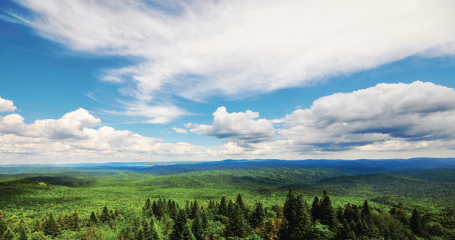
While addressing the Leaders' Summit of the 15th Meeting of the Conference of Parties to the Convention on Biological Diversity on Tuesday, President Xi Jinping pointed out that China has established a batch of national parks covering an area of 230,000 square kilometers that are home to nearly 30 percent of the wildlife species under national protection.
The national parks refer to special land or sea areas put under protection with the aim of conserving the ecosystem and realizing the rational utilization of their natural resources.
In recent years, the development of national parks in China has accelerated, which is inseparable from the drive to continuously promote the building of an ecological civilization.
The establishment of the first batch of national parks is a practical move by China to further intensify its efforts to promote natural ecological protection and conserve biodiversity.
This move reflects the high starting point and strict requirements of the central authorities, indicating that the country has taken a solid step toward establishing a comprehensive national park system.
The first batch of national parks all have typical ecological functions in common.
For example, Sanjiangyuan National Park in Qinghai province mainly protects important ecological function areas on the Qinghai-Tibet Plateau, where the Yellow, Yangtze and Lancang rivers originate.
The Giant Panda National Park across Sichuan, Shaanxi and Gansu provinces, and the Northeast Tiger and Leopard National Park across Jilin and Heilongjiang provinces protect precious and endangered wildlife such as the giant panda, Siberian tiger and Siberian leopard, as well as the important ecosystems that are the habitats of these flagship species.
The Hainan Tropical Rainforest National Park in Hainan province, and the Wuyishan National Park across Fujian and Jiangxi provinces mainly protect important tropical and subtropical forest ecosystems.
Different from parks in the general sense that are only for sightseeing and leisure, commercial developments are prohibited in the national parks, which are all put under the control of the national redline for ecological protection, and subject to the strictest protection.
The national parks are not only home to the most important and the unique natural geological landscapes and essential natural heritage, but also the foundation for the country's efforts at biological diversity conservation.
These national parks are ideal sites for the popularization of science, research and education. More national parks of such scales will be established in the foreseeable future. They will be legacies passed down to future generations.





