


Mass migration
Despite the fact that merchants from India had come to Mombasa long before the railway, it was the railway line construction and the need for labor that first brought a mass migration of people from the Indian subcontinent into Africa.
Having started construction on railway lines in India nearly 50 years earlier, Indian engineers and laborers had the skills the British required. It is believed that more than 30,000 Indian workers were enticed to sail to Mombasa and a new life in East Africa during this period.
The Nairobi Railway Museum's gallery also has records on the later development of rail transport after East African countries gained independence. What started as the Uganda Railway was merged into Kenya and Uganda Railways and Harbours in 1929 and later into the East African Railways and Harbours Corporation, or EAR&H, in 1948. EAR&H operated transportation links for Kenya, Uganda and Tanzania until the East African Community was dissolved in 1977 when Kenya's portion of the railway became the Kenya Railways Corporation.
The last line to be built was the Chinese-funded Tazara line from the port of Dar-es-Salaam to Tunduma on the border of Zambia. It was intended to give Zambia an outlet for its exports after its independence. With that, the railway line came to a full completion in 1976.
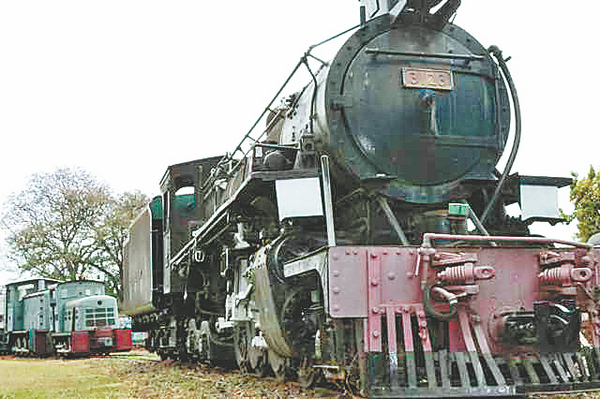
The museum's gallery might give visitors a sneak peek into the tumultuous past of railway travel in East Africa, but to get a hands on experience, one has to visit the old and rickety locomotives on display at the museum's well maintained old rail connection in the yard.
The outdoor yard has a collection of rolling stock, steam engine locomotives, wagons, coaches and ship models in various stages of disrepair. One of these engines, the mountain class, the most powerful meter-gauge locomotive at that time, weighs 254 metric tons.
Museum records indicate that in one trip, it could move 1,200-tons off rolling stock. The steam train which was christened No 301 and operated between 1923 and 1971 is also prominently displayed at the compound. This particular train is of great pride to the museum since one can see it in the famous movie Out of Africa, that won seven Academy Awards.





