



High-tech can help put bribe-givers on 'blacklist'









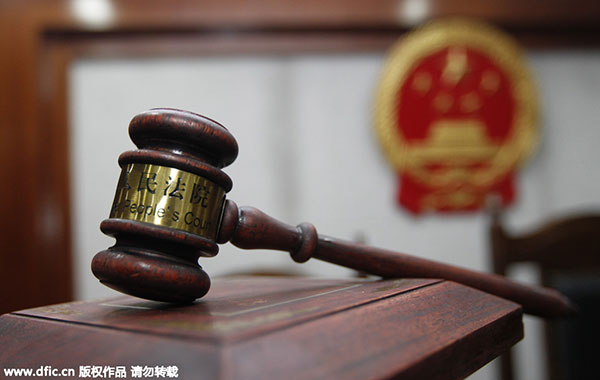
The Central Commission for Discipline Inspection of the Communist Party of China and the National Supervisory Commission, the nation's top anti-corruption watchdogs, as well as the judicial and other departments, including the Supreme People's Court and the Supreme People's Procuratorate, recently issued a joint guideline asking the authorities to take legal measures against and to "blacklist" those offering bribes.
The idea of blacklisting bribe-givers is not new. The Beilun district procuratorate of Ningbo, Zhejiang province, launched such a blacklist also in 2002.
Anti-corruption authorities in Guangdong, Fujian, Shaanxi, Jiangsu and Hunan provinces have used similar mechanisms to fight corruption.
In 2006, the Supreme People's Procuratorate piloted a system at the national level to blacklist those offering bribes in the fields of construction, finance, medicine and healthcare, education and government procurements. It expanded the blacklist to include all sectors in 2009. And in 2012, a nationwide inquiry system to deal with bribery cases was established.
However, the previous mechanisms to blacklist bribe-givers had some shortcomings. For example, different regions used different standards and time limits for punishments, and the mechanisms didn't have cross-provincial binding force. As such, some bribe-givers could not be identified once they changed their personal information.
This, however, does not mean blacklisting is not an effective means to fight corruption. Since the 18th National Congress of the CPC in 2012, the crackdown on corruption has been more systematic and effective thanks to the efforts of the authorities.
Yet corruption has not been eradicated, as the bribe-givers always find ways to lure even the relatively upright officials to accept some form of bribe in exchange for favors. Worse, those people caught offering bribes have rarely received exemplary punishment.
So there is a need to investigate both those giving bribes as well as those receiving them, and bring them to book. A"blacklist" of people found offering bribes will act as stronger deterrent than merely imposing fines on them.
The authorities' suggestion to "blacklist" bribe-givers is aimed at coordinating multi-department efforts to strengthen the top-level anti-corruption design.
With the help of big data, artificial intelligence and other advanced technologies, the problems of data sharing and communication that previously hampered the establishment of such a "blacklist" for bribe-givers can also be solved.





