



Rural toilet revolution flush of vitalization









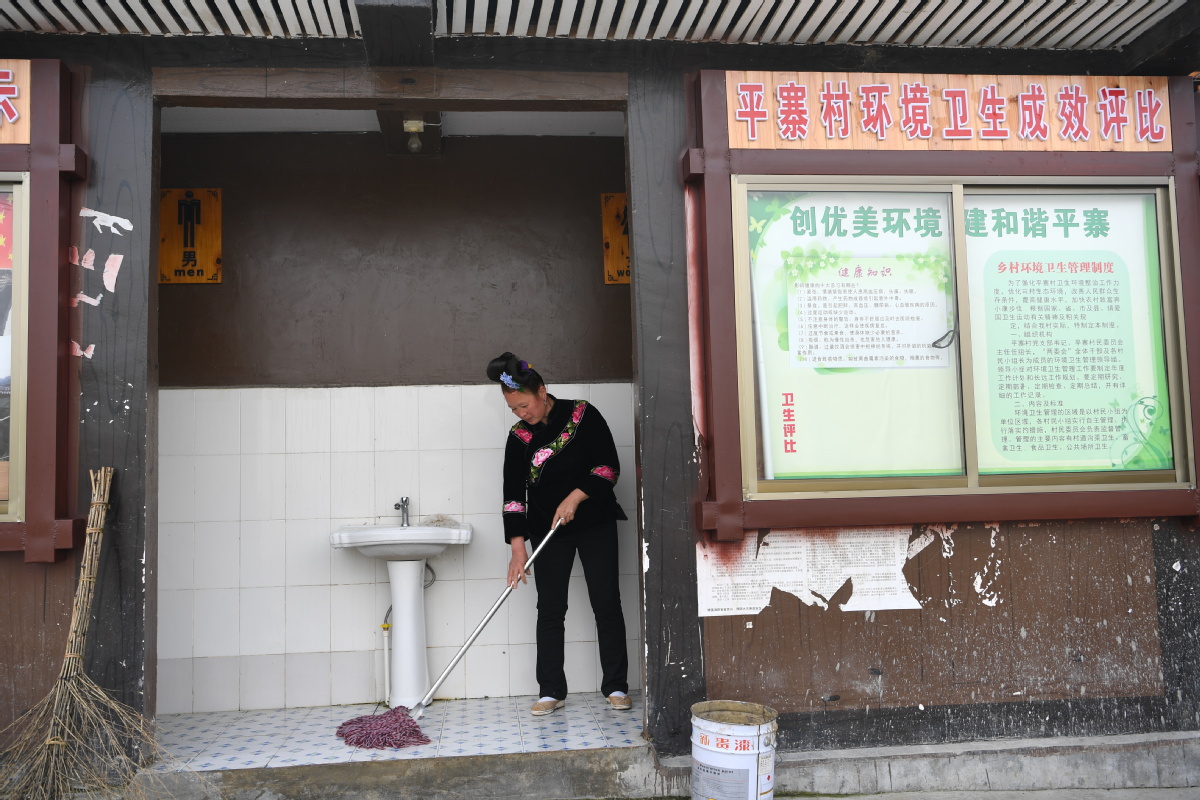
President Xi Jinping made an instruction on Friday urging the authorities of various levels to press ahead with the "rural toilet revolution" during the 14th Five-Year Plan (2021-25) period.
Since toilets are not a feature in the traditional rural courtyard houses in China, villagers have used communal pit privies that not only provide a place for the farmers to answer the call of the nature, but also serve technically as a collector of raw materials to make farm manure. Yet, with chemical fertilizers now replacing the use of "night soil", the pit privies have lost an important part of their function, and become increasingly incompatible with the times.
To make clean and flush toilets accessible to rural residents, as Xi has stressed, should be regarded as an important job in rural vitalization, and a new national project building on the success of the poverty alleviation campaign. The grassroots governments should not only increase the number of toilets in a village, but also take the opportunity to upgrade the underground pipe network, and guarantee the quality of their construction, their maintenance and their practical usage rate.
When Xi worked in the countryside in Shaanxi province in the 1970s, he took the initiative to lead villagers to build public toilets, and when he worked in Zhengding county, Hebei province, in the early 1980s, he also initiated a project to renovate the public toilets there.
The toilet issue is no trivial matter, as it represents an important facet of the image of a civilized society. Thanks to the "rural toilet revolution" the country initiated in 2012, as of the end of last year, 68 percent of villages now have well-managed public toilets.
That has directly improved the public hygiene conditions and living environment in the villages concerned. No wonder many farmers and village heads say that the small change has brought a big improvement in living standards.
The central authorities' deployment of the rural toilet renovation project indicates that policymakers hope the project can raise the rural residents' awareness of public hygiene, prompting them to embrace modern and healthy lifestyles, as well as contribute to the overall improvement of the living environment and public hygiene conditions in the countryside, so as to attract more tourists and investment to the villages.
Local governments, at the township level in particular, should extensively consult with the villagers to determine the sites and scale of the public toilets to be built, and make sure that the toilets are well maintained to prevent them from becoming only symbols of the victory of the revolution, rather than truly useful public facilities.
The disciplinary watchdog and audit departments need to play their due roles in overlooking the spending on the projects to avoid the five-star village toilets that are only opened during the inspection visits of upper-level authorities.





