



Nation to streamline wealth management market









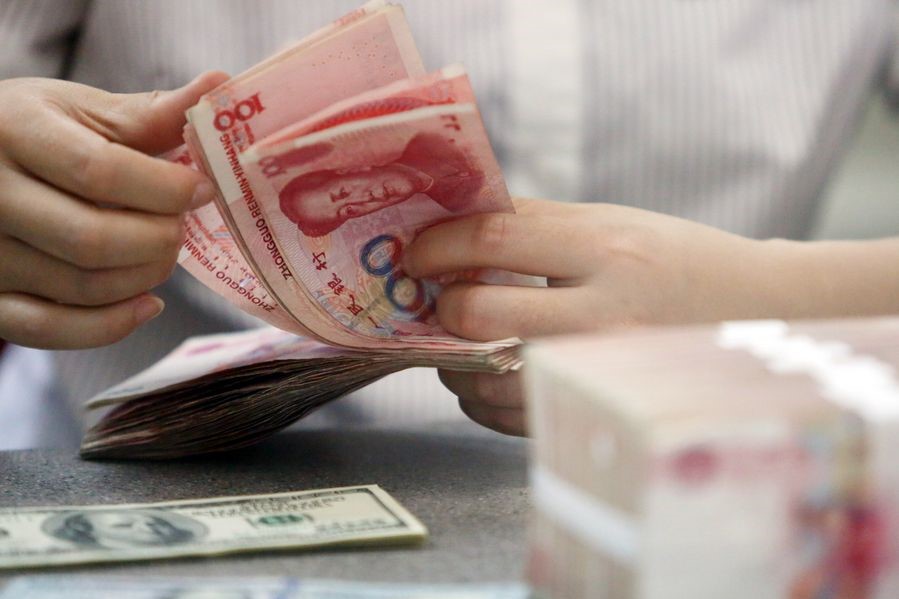
China is expected to form a standardized, unified and highly efficient wealth management market with fair competition and high standards, said a recent report by Zhixin Investment Research Institute.
The country's new asset management rules will have a deep impact on its wealth management market, which will enter an increasingly regulated track of development, and will push leading players to become more professional by enhancing the quality of products and services, the China Wealth Management Report released on Thursday said.
As of the end of 2020, assets under management in China's wealth management sector reached 85.01 trillion yuan ($13.1 trillion), up 10.98 percent year-on-year. The growth of the wealth management sector in China was backed by government policies-such as the 14th Five-Year Plan (2021-25), its continuous, stable and sustainable macroeconomic measures, and the development of regional wealth management centers as a new growth driver in the sector.
It is estimated that investable assets in the country will increase by 200 to 300 trillion yuan by 2030, up from the current level of 200 trillion yuan, as the population of high net worth individuals may more than double during this period, said Lian Ping, chief economist at Zhixin Investment and head of the Zhixin Investment Research Institute.
A growing number of leading asset managers will speed up their deployment in the China market as the country has accelerated the opening up of its financial sector since 2018.
More and more asset managers are actively exploring how to provide their clients with personalized one-stop wealth management services across businesses, markets and currencies. At the same time, China is expected to become a front-runner in developing wealth management technology applications, the report said.
The wealth management sector has made significant contributions to corporate direct financing in support of the development of the real economy-the part of the economy that produces goods and services-as well as China's economic transition and technology innovation.
Last year, the mutual funds industry increased its equity asset allocation by 2.72 trillion yuan and bond asset allocation by 2.16 trillion yuan. By the end of 2020, total assets under management of science and technology-themed mutual funds and exchange-traded funds tracking China's sci-tech innovation board, also known as the STAR Market, amounted to nearly 65 billion yuan.
The outstanding balance of assets allocated by bank wealth management products, or WMPs, to the real economy also reached 22.2 trillion yuan by the end of last year. Among the total, 18.5 trillion yuan was invested in bonds, up by more than 18 percent year-on-year, said Pan Guangwei, executive vice-president of the China Banking Association.
Up to now, commercial banks' wealth management subsidiaries have issued a number of environmental, social and governance-themed WMPs, with a focus on supporting green and low-carbon development in the fields of energy saving, environmental protection and clean energy, Pan said. Many experts expect green and ESG-themed WMPs will continue to be popular among investors and regulators.
Looking ahead, Pan advised wealth management institutions to strengthen their capabilities in regulatory compliance, internal control, asset allocation, financial technology and operations with distinguishing features. In this way, they will strictly adhere to the bottom line of being free of systemic risks, give further support to China's economic transition and develop WMPs which will meet the investment demand of the general public.
"China's wealth management sector should establish a unified ratings system as soon as possible and conduct comprehensive and multidimensional ratings of various wealth management products," Lian said.
It is necessary to not only disclose the information and risk conditions of WMPs in a timely manner but also disclose more sufficient information on relevant financial institutions' corporate governance, shareholder structures, risk management systems and regulatory implementation practices, he said.
- Foreign investors expected to boost domestic financial markets
- Understanding the new development stage, applying the new development philosophy, and creating a new development dynamic
- For retail investors, global play is the new normal
- Investing from China to benefit the world
- China's wealth management population gets younger




















