



Trade deals in RMB coast on better ecosystem









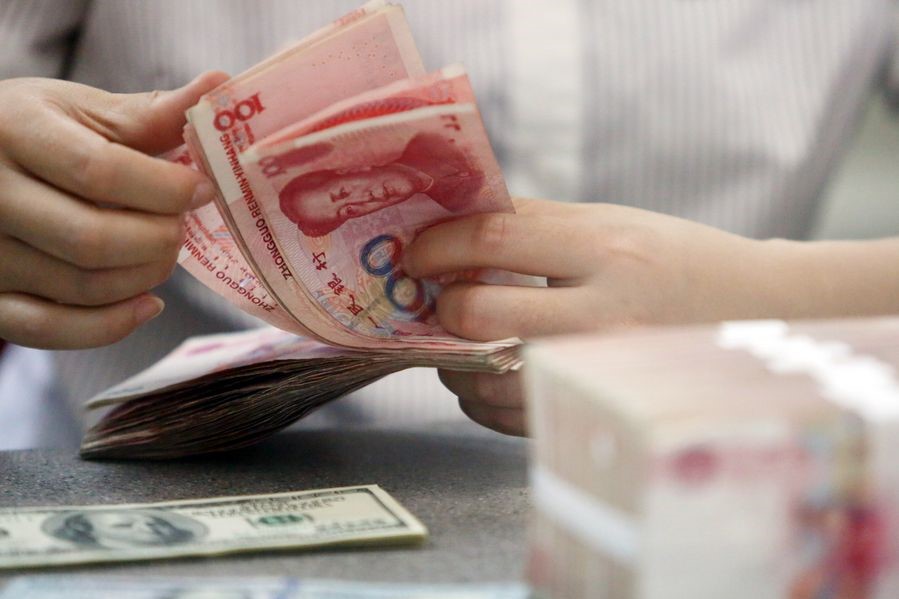
Cross-border trade settlements in renminbi have grown noticeably since the beginning of this year, thanks to the improvement of the ecosystem promoting the use of the Chinese currency overseas, a banker said.
In the first quarter of this year, the Standard Chartered Renminbi Globalisation Index (RGI), a measure of international renminbi usage that is computed on a monthly basis, rose 13 percent from the previous quarter, recording the biggest quarterly rise in five-and-a-half years. The increase followed a 10.4 percent growth in RGI for the full year 2020.
The index is based on four components-offshore renminbi deposits, trade settlement and other international payments, Dim Sum bonds and certificates of deposit issued, and foreign exchange turnover-all from an offshore perspective and renminbi-denominated.
The rise in the RGI is strongly linked to China's rapid recovery from the COVID-19 pandemic, the basically stable exchange rate of the renminbi and increasingly more open Chinese capital markets, said Jean Lu, co-head of corporate, commercial and institutional banking at Standard Chartered China.
"China has created an ecosystem promoting the use of the renminbi abroad. A growing number of overseas financial institutions joined the country's Cross-Border Interbank Payment System directly or indirectly, as further improvement of the system made cross-border trade settlements in renminbi much more convenient. In addition, the renminbi has become a world reserve currency under the mechanisms like China's currency swap deals with some other countries," she said.
As of May 17, the Cross-Border Interbank Payment System had 1,171 participants from 100 countries and regions. Its business covered more than 3,400 legal banking entities in nearly 200 countries and regions, the Shanghai Securities News reported.
"International trading counterparties of Chinese companies are more willing to accept renminbi than before, not only because the exchange rate of the Chinese currency is relatively stable compared with other currencies, but also because they can invest their renminbi assets in China more conveniently through multiple channels like Bond Connect, a mutual market access scheme allowing investors from the Chinese mainland and overseas to trade in each other's bond markets through a market infrastructure linkage in Hong Kong. Moreover, China removed restrictions on the investment quota of Qualified Foreign Institutional Investors and RMB Qualified Foreign Institutional Investors in 2020," Lu said.
For those companies whose main accounting currency is the renminbi, settling cross-border trade in renminbi will help them control foreign exchange risk.
During their communications with bankers at Standard Chartered, many Chinese executives said they are looking forward to a more mature offshore renminbi market, in which all the local financial institutions will accept the renminbi, renminbi deposits will generate earnings, and the exchanges between local currencies and the renminbi will be conducted smoothly.
The People's Bank of China, the central bank, needs to further cooperate with other central banks and overseas financial institutions, to foster such an offshore renminbi market and promote the vigorous development of the market, Lu said.
She also advised the Chinese government to encourage more companies to issue offshore renminbi bonds and consider building trading platforms overseas for renminbi assets.
The internationalization of the renminbi has made great achievements, but it still has a long way to go, said Liu Ligang, managing director and chief China economist at Citigroup.
SWIFT-the Society for Worldwide Interbank Financial Telecommunication-data show that the renminbi was the fifth most active currency for global payments by value in May, with a share of 1.9 percent.
Economists at Citi estimated that the renminbi will replace the British pound as the world's third-largest payment currency by 2030, with its share increasing to about 7.9 percent.




















