



Sharing economy also means meeting customers' needs









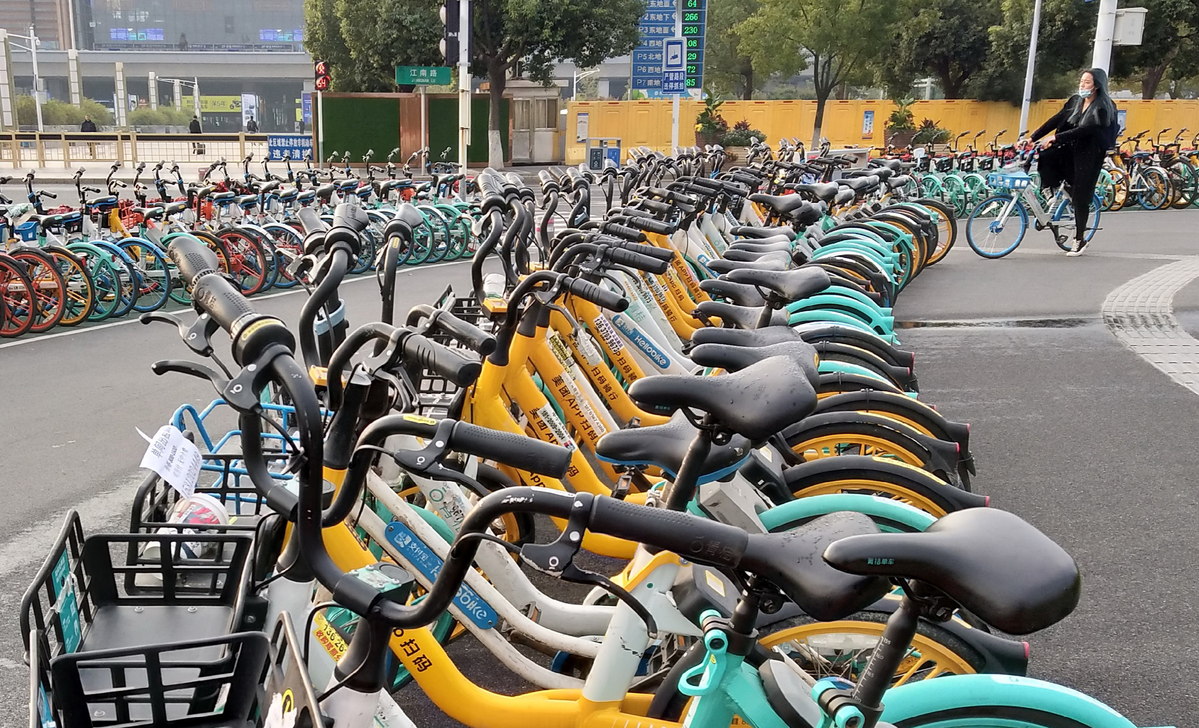
The State Administration for Market Regulation held a meeting with major domestic brand operators on June 3 to discuss shared consumption and pricing, making it a landmark event in the development of China's sharing economy.
The industry considers 2014 as the start year for China's sharing economy. That was the year when the concept of sharing of bicycles, portable chargers and cars entered our lives. While it has made life convenient for many, it has also created municipal management, environmental protection and consumption safety problems.
With the sharing economy booming in China, its social value has been generally recognized and the industry has entered a relatively stable period. However, the recent price hikes in the sector are a matter of concern. For example, shared portable chargers, costing 1 yuan ($0.15) per hour, are now available at 6-10 yuan per hour at some scenic spots.
Even the cost of bike sharing has gone up from 1.5 yuan for half an hour to 6.5 yuan per hour in some places.
It is against this background that the top market regulator met the brand operators in the hope of promoting healthy and sustainable development of this industry.
The price rise itself is not a problem. After all, market players have the right to set prices for the products and/or services they provide. This is a basic rule of the market economy that cannot be ignored.
However, the unusual collective price rise in this sector in recent months reflects a malaise that must be looked into. If these problems are not solved, it will be difficult for China's sharing economy to develop in a healthy and sustainable way.
China's sharing economy once experienced a capital-driven and ultra-low price competition, but the collective price rise in recent days shows there is no free lunch forever. However, if the sharing economy cannot overcome the challenges, it is unlikely to realize long-term development.
The essence of the sharing economy is to reduce costs and bring about consumer welfare through the efficient use of resources. But disorderly capital expansion in the sector will make it unsustainable for the consumers. To gain long-term sustainable development, China's sharing economy must make improvement in consumers' welfare its goal, and win their trust by providing more convenient service and create value for society.





