Cosmetics and personal care products that can beautify world









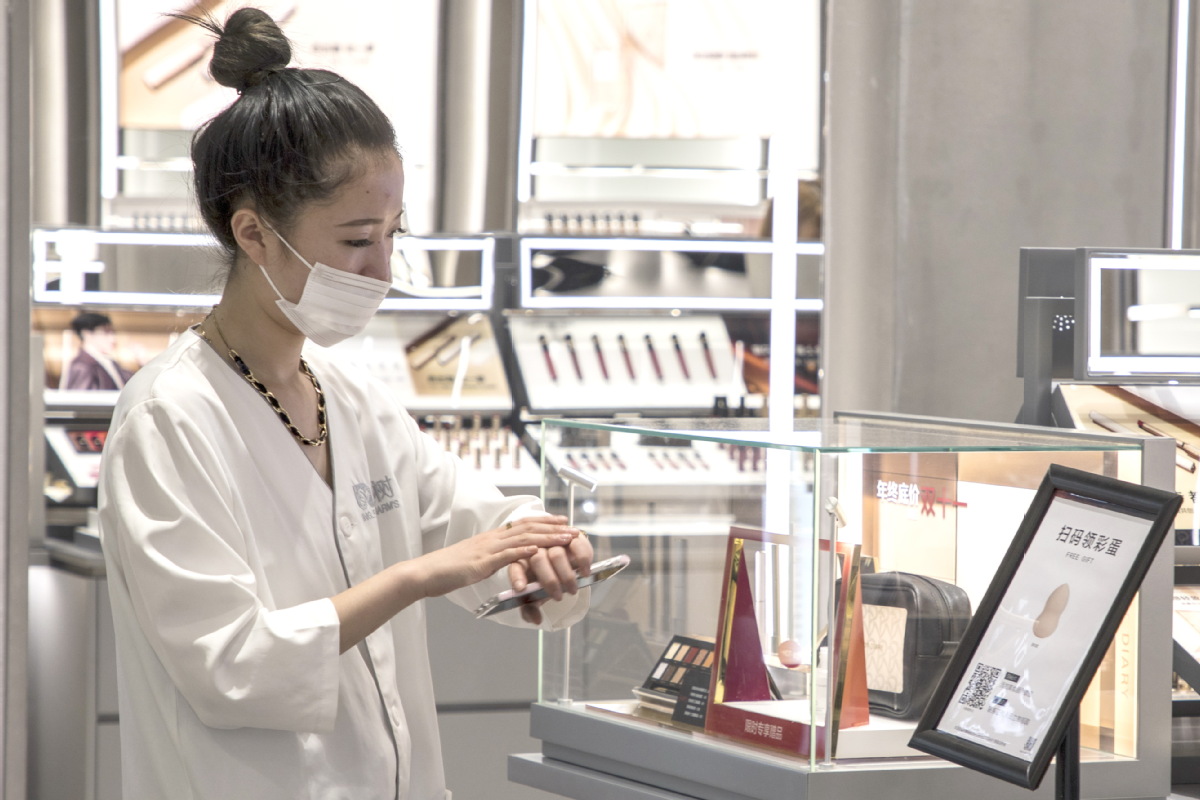
Chinese producers of makeup eye overseas markets after winning hearts on home turf
China's cosmetics industry is on a fast trajectory of growth, fueled by Chinese female consumers' increasing pursuit of beauty and the trend of consumption upgrade.
More glad tidings come from the Regional Comprehensive Economic Partnership agreement, which is expected to create new business opportunities for the export of Chinese cosmetics.
China's imports of cosmetics and personal care products are believed to have peaked last year at $20.2 billion, up 29.4 percent year-on-year, making the country the second-largest cosmetics consumption market globally, according to the General Administration of Customs. This happened despite the cloud cast by the COVID-19 pandemic.
In comparison, the export value of China's cosmetics to overseas markets came in at $4.2 billion last year, which was about one-fifth of the import value. But now, the export business is set to rise.
The RCEP agreement was signed in November 2020. The signatory bloc covers roughly 30 percent of the world's gross domestic product, trade and population. When it takes effect, the deal will progressively eliminate tariffs on 91 percent of goods and introduce common rules on investment and intellectual property to promote free trade.
By 2030, the RCEP is expected to drive a net increase of $519 billion in exports of its member countries, and China is foreseen to increase exports by $245 billion, which is about 5 percent of its current export trade value, according to the projections of the Peterson Institute for International Economics, a US think tank.
China will gradually lower the tariffs for various Japanese products, including Japanese cosmetics, after Japan became the latest member in late April to approve the RCEP, the world's largest free-trade deal, which now covers 15 Asia-Pacific countries.
"The RCEP will drive huge market growth potential, and it will inject long-term impetus into the development of different industries, including the cosmetics industry in China," Fu Bo, an official at the Ministry of Commerce, said at the China International Cooperation Summit on Cosmetics in April in Beijing.
"China's domestic cosmetics retailers should raise their R&D capabilities and brand impact, and utilize the opportunities brought by the RCEP to purchase raw materials from Japan and South Korea at lower costs and further raise product quality," Fu said.
The conference discussed the latest trends in the cosmetics industry. It was organized by the China Chamber of Commerce for Import and Export of Medicines and Health Products and the China Health Care Association.
Fu said Chinese makeup retailers should actively expand the export markets in Southeast Asian countries.
Currently, Indonesia and Singapore stand among the top five export destinations in terms of value of China's cosmetics exports. A number of domestic brands have considered Southeast Asian countries their important potential markets.
"Southeast Asian countries are lowering tariffs on China's cosmetics exports and opening up the investments in cosmetics R&D and production. Chinese enterprises could consider expanding their investments and production in the region accordingly," Fu said.
"Given the ongoing pandemic, promoting products through livestreaming sessions and e-commerce shopping has created enormous growth potential for cross-border retailing of cosmetics, and the RCEP will help with fast and convenient Customs clearance," Fu said.
Consumers from the Association of Southeast Asian Nations have shown an increasing demand for high-quality cosmetics and personal care products. Indonesia and Vietnam are now among the fastest-growing markets, industry experts said.
Particularly, ASEAN consumers have a significant demand for Islamic cosmetics, and more people have fostered a habit of online shopping.
Chinese enterprises can focus on developing natural, herbal and organic products to meet local demand, said Hamidah Minhaj, director of global regulatory affairs at Colgate-Palmolive Asia-Pacific.
Executives of Nox Bellcow, a Chinese wet wipes and facial mask manufacturer based in Zhongshan, Guangdong province, said the company has been exporting facial masks to European countries. Its products were sold at multiple German supermarkets before the pandemic. It continues to export some of its products in spite of the difficult situation created by the pandemic.
Founded in 2004, Nox Bellcow has been focusing on using green raw materials and developing innovative products. Its facility boasts the world's largest capacity to make facial masks.
"For instance, we use colorful cloth made by super fiber for facial masks. We can also add some natural elements such as mint, aloe, isatis root, marigold and centella into the making of cloth," said Qiu Xiaofeng, vice-president of Nox.
Qiu has guided the R&D of several facial mask products such as clay facial masks, and has obtained nine patents, with another 13 waiting for approvals.
Currently, the company is using multiple compositions of Chinese herbal medicines and other plant extracts in making facial masks, and the manufacturer said it hopes to export more products with Chinese features to countries and regions globally, especially to the ASEAN countries by leveraging the opportunities brought by the RCEP.