


Paging the book doctors









Science and skill
Most awardees of the national competition, like Tian and Hou, were born after 1980.
"It's great to see restorers of ancient books don't have to be someone in our age," says Du Wei--sheng, 69, a veteran restorer who has worked at the National Library of China for nearly half a century. "Young blood is the key for revival of the traditional technique, and they usher more scientific approaches in restoration."
As restoration of books was for a long time simply considered a craft, which relied on experience rather than education background, none of the 100-some restorers, including Du, had bachelor's degree.
A sharp contrast among today's younger restorers is that, in recent years, many graduate students who majored not only in the arts and history, but also natural sciences, including biology and chemistry, entered the industry.
"Today's restoration needs comprehensive expertise, which is also reflected through the awardees," Zhang adds. "Scientific research plays a bigger and bigger role, which almost equals the importance of traditional craftsmanship in restoration."
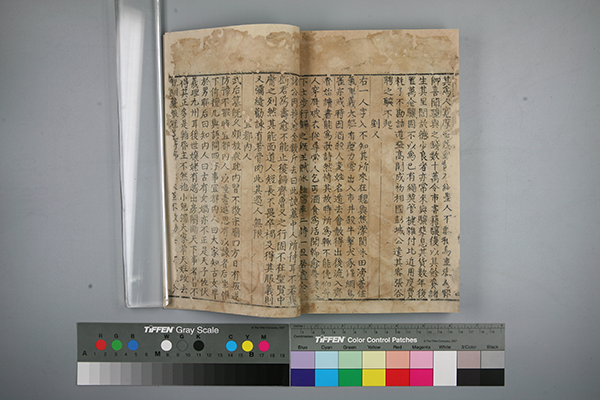
For restoration of a Southern Song Dynasty (1127-1279) book on the appraisal of antique bronzeware, which also won the second prize in the recent national competition, restorers from the Fudan University library in Shanghai collected over 3,000 pieces of relevant data from the paper when drafting a tailored restoration plan.
From the viscosity of the glue and the possible influence of dyes, to the color difference between original pages and prepared new materials, analysis in the library provides a convincing reference to make the best choice.
And, in Shanghai Library's awarding-winning project, restorers did experiments to explore suitable dyeing ingredients to yellow the newly added paper in a natural way. They got the best formula by mixing black tea, plant seeds and minerals from traditional Chinese painting pigments.
"In the past, only previous experience told us what should be done and what shouldn't, but we didn't understand why," Du says. "Now, research in the lab can provide an explanation and more creative solutions."
Older restorers have their regrets. The 900-year-old Zhaocheng Jin Tripitaka, one of the pillar collections of ancient books of the National Library of China, was restored between 1949 and 1965. It was the first, and among the biggest, ancient book restoration projects in the history of New China, but not a single character written about how it was restored remains.
"I really admire today's restorers' approach of keeping detailed logs of every step in their work," Du says. "The reference will hugely benefit such work in the future."