



Caution required on Fukushima water disposal: China Daily editorial









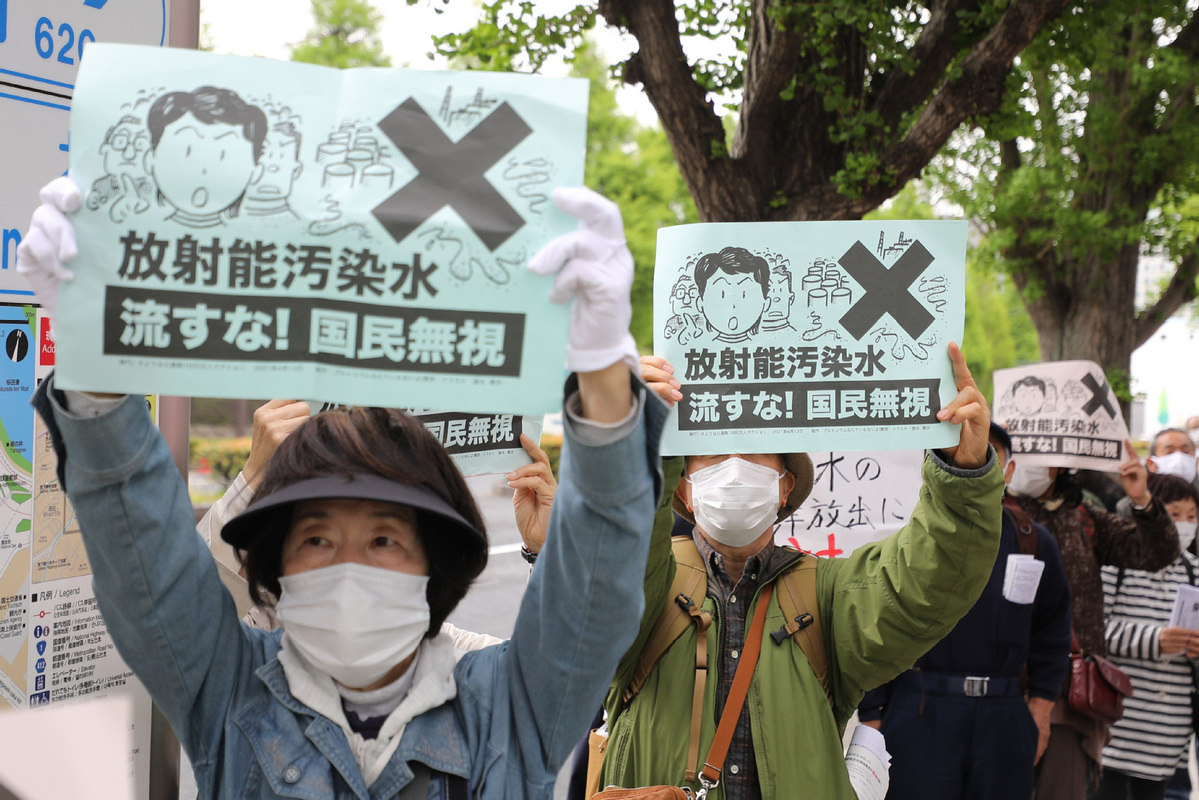
Japan's decision early this month to release the contaminated water stored at the Fukushima nuclear power plant into the sea has not been without controversy. Many countries including China have, with good reasons, expressed grave concerns about the possible long-term impacts of the radioactive water on the marine environment and human health.
Tokyo has justified its decision by claiming that the wastewater will be treated and diluted before being discharged. Support for its plan from the International Atomic Energy Agency and the United States has emboldened Japan to proceed with it despite domestic and international opposition.
Yet what Japan has said concerning the water's safety is no substitute for science, especially since the country's handling of the huge nuclear disaster has not been transparent. The existing arrangement provides little reason for public confidence given that the Tokyo Electric Power Company, the operator of the plant, has a record of covering up and falsifying information about the disaster.
An investigation after the March 11, 2011, disaster found that the company had tried to cover up the Fukushima accident, by avoiding using the word "meltdown", and instead describing the reactors' condition as less serious "core damage" for two months, even though it already knew what had happened.
As of December 31, 2019, 73 percent of the nuclear wastewater still exceeded Japan's discharge standards even after treatment by an advanced liquid processing system, which is said to be capable of removing most radioactive contaminants. At the very least, this calls for independent verification of its claims that the water will be safe to discharge after treatment.
Japan bears an unshirkable international responsibility to make sure that its cleanup actions at Fukushima do not pose any threats to the environment and human health.
The rest of the world deserves to know what contaminants are in the contaminated water and in what concentrations, as well as whether all of the wastewater has been treated with the best technologies available to minimize their potential hazards.
Whether the contaminated water is safe to be discharged into the sea requires not just verbal assurances, but scientific assessment by an international team of truly independent nuclear experts free from external interference and whose results can withstand the test of time.
Thus it is good to hear that IAEA is forming a working team with experts from China and other stakeholders to evaluate and supervise Japan's disposal of the contaminated water. Japan is obliged to address the concerns of the international community before carrying out anything unilaterally, it should give its full support to the work of the team.





