Tradition and transformation ensure cultural harvest










Statistics from authorities show that since 2017, more than 35.64 million yuan ($5.46 million) has been invested in the heritage site to facilitate the transition to the rice-fish-duck ecosystem on more than 2,100 hectares of farmland. It has driven 7,320 households to embrace modern farm life, generating more than 152,600 yuan per hectare.
New projects, agricultural modes and ways of life have emerged. Despite the sweeping changes taking place, the Hani people still proudly embrace their traditional culture.
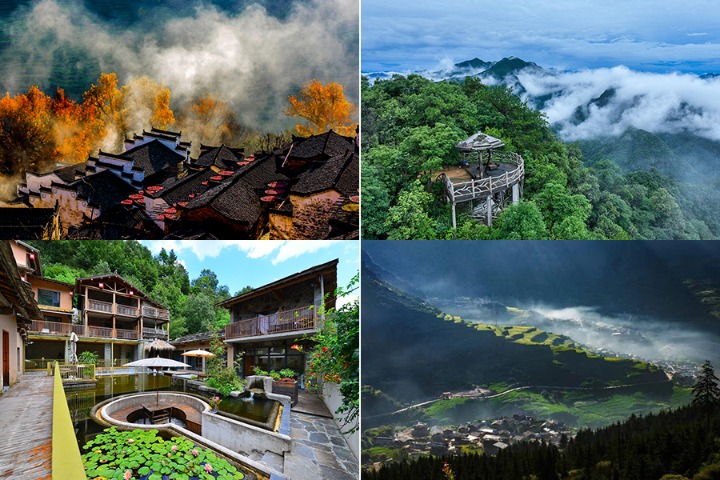
Azheke, a village located in a core area of the heritage site, is a living museum displaying the Hani people's traditional housing-mostly consisting of mud and wood with straw roofs.
In the past, the income of the villagers was so meager that most young people chose to work outside their village. The old houses were crumbling, posing a threat to the inheritance of the Hani traditions and culture.
In January 2018, a team led by Bao Jigang, a professor at Sun Yatsen University in the southern province of Guangdong, came to investigate the traditional housing at the invitation of the local government.
The team proposed an "Azheke plan"-motivating villagers to protect their traditional houses via a dividend system.
A tourism company was set up in 2018, with 65 households receiving 70 percent of its share. In 2020, the per capita net annual income of the villagers through the system exceeded 6,300 yuan.
In late March, villagers received the latest dividends totaling 168,000 yuan.
Wu Canxi, a senior student at Sun Yat-sen University, has seen remarkable changes in the lives of the villagers since she came to the village to conduct a field study and survey in January.
Now, most can speak Mandarin, and some also speak a few words of English and skillfully use computers to settle accounts.
Wu has provided advice for the tourism company's operation and training programs for villagers.
"The key is that everyone knows that they can protect their culture while earning a living, so they voluntarily devote themselves to it," says Wu.